What Causes Garage Door Jerks When Opening
Discover the common causes of jerky garage door opening and follow a step-by-step troubleshooting plan to diagnose tracks, rollers, springs, and opener settings. Safe, expert guidance from GarageDoorAdjust.


Jerky opening is usually caused by binding tracks, worn rollers, or misaligned springs. Start with safe checks: lubricate wheels and tracks, tighten loose hardware, and verify track alignment. If the door still jerks, stop and call a pro for springs or sensor issues. Do not attempt to adjust torsion springs yourself.
Why a garage door jerks when opening
A jerky opening is a common symptom of friction, misalignment, or binding somewhere in the door's drivetrain. In many homes, the problem traces to the tracks, rollers, or springs, but it can also come from the opener's settings or safety sensors. According to GarageDoorAdjust, the most frequent causes are track misalignment, swollen or dirty rollers, and binding springs, with poor balance increasing the jerking effect. The GarageDoorAdjust team found that even small deviations in track angles or roller wear can translate into difficult starts and abrupt pauses as the door moves. This is not just annoying; it points to wear or misadjustment that could lead to a more serious failure or risk if ignored for too long. Before you begin, ensure the area is clear, the door is parked closed, and you disconnect the opener if you plan to test manually. Safety first: keep hands away from the track near moving parts and never ride the door with a manual override engaged.
Quick checks you can safely perform
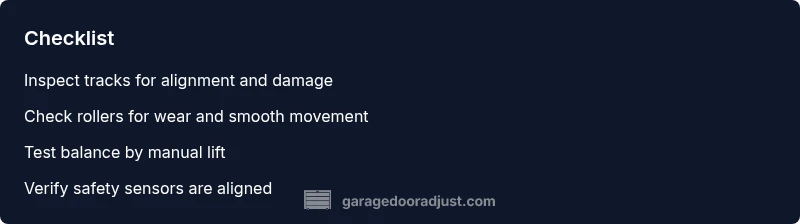
Start with non-invasive checks you can do without tools. Unplug the garage door opener to avoid unexpected movement. Then test the door manually: lift with both hands to feel if it stays balanced or if it drifts, which indicates a balance issue. Inspect the floor for any obstruction. Check the track alignment by eye; look for dents, loose screws, or sagging sections. Look at the rollers—if they are cracked or very worn, they will cause friction and jerking. Lubricate the rollers and the axles with a silicone-based spray; avoid petroleum-based lubricants on nylon rollers. Check weather stripping at the bottom; a swollen seal can bind against the track. Finally, verify the fasteners on the path of motion—loose screws can cause erratic movement. Note: do not attempt to lubricate torsion springs; leave spring maintenance to a pro.
Inspect mechanical components in detail
Track condition: straightness and alignment are critical. If the track angles are off, the door will bind and jerk as it moves. Check for dents, kinks, or bent brackets; realign carefully or replace damaged sections. Roller wear is another common culprit—look for flat spots, wobble, or cracks in metal or nylon wheels. Inspect hinges for looseness and ensure cables are intact and not frayed. Weatherstripping should be intact and not snag the bottom of the door. Note that if you see exposed springs or loose cables, do not attempt a repair yourself; springs are under high tension and require professional handling. Finally, confirm there are no obstructions in the track path, such as debris or ice in cold weather.
Check the opener settings and safety sensors
The opener's travel limits and force settings control how fast the door lifts and where it stops. If these are out of spec, the door can start with a hard jolt. Inspect the photo-eye safety sensors: misalignment or dirty lenses can cause the opener to react with jerky stops. Check that the safety sensors face each other and that nothing blocks the sensor's beam. Test the opener with the wall button and the remote; if only one control works, the issue may be with the remote or receiver. If you have a belt drive, note that worn gears or binding can contribute to jerking; chain drives have similar wear patterns. After adjusting, retest the door slowly to ensure smooth movement.
Diagnostic tests you can perform
This section outlines a practical path to isolate the cause. First, perform the manual balance test: disconnect the opener and lift the door halfway; if it stays in place, balance is good; if it falls or rises, balance is off and the springs or cables may be fatigued. Next, test track and roller friction by sliding the door along the track with the opener reconnected; note any binding or noises at specific points. If you identify a worn roller, damaged track, or bent bracket, replace or repair as needed. Do not attempt spring replacement unless you are trained; springs carry dangerous tension. If the jerking persists after these checks, schedule a professional diagnostic with a GarageDoorAdjust certified technician. The goal is safe operation and balanced movement without excessive stress on components.
Steps
Estimated time: 60-75 minutes
- 1
Disconnect power and test manual lift
For safety, unplug the opener and attempt to lift the door manually by grasping the door’s handle or a sturdy edge. Check if it stays in the middle position or drifts up or down. If it moves, the door is unbalanced and requires spring or cable inspection.
Tip: Keep hands away from springs and the door’s closing edge. - 2
Inspect tracks and rollers
Visually inspect the tracks for dents, bends, or loose brackets. Rollers should move freely without sticking or squealing. If you notice flat spots or wobbling, plan for replacement. Do not force a stuck roller; instead, inspect for debris or obstructions.
Tip: Look for debris and clean it out before testing movement. - 3
Lubricate moving parts
Apply a silicone-based lubricant to metal rollers, track joints, and hinges. Wipe away excess to prevent dust buildup. Do not lubricate nylon rollers with petroleum-based products, and never spray lubricant directly onto pulleys or springs.
Tip: A light coat goes a long way; avoid over-lubrication. - 4
Check track alignment and hardware
Ensure tracks are vertical and parallel. Tighten loose screws and brackets, and adjust any misaligned sections gently. If a bracket is bent, replace it rather than forcing the track back into alignment.
Tip: Use a level to confirm vertical alignment as you tighten. - 5
Test opener settings and sensors
Reconnect power and test the door with the wall control and remote. Observe the door’s travel: if it jerks or stops abruptly, check limit switches and force settings in the opener’s menu. Confirm the photo-eye sensors are clean and aligned.
Tip: If angles or sensors seem off, recalibrate following the opener’s manual. - 6
Decide when to call a professional
If jerking persists after these steps, or if you notice damaged springs, cables, or exposed wiring, call a GarageDoorAdjust certified technician. Springs require specialized safety procedures and should not be adjusted by homeowners.
Tip: Safety first: schedule a professional inspection when in doubt.
Diagnosis: Garage door jerks or shudders as it opens
Possible Causes
- highTrack misalignment or damage
- highWorn or dirty rollers
- mediumBinding springs or cables
- lowSafety sensor misalignment or malfunction
Fixes
- easyRealign tracks, tighten brackets, replace damaged rollers
- easyLubricate and clean tracks and rollers
- mediumCheck balance manually and avoid spring adjustment
- mediumTest and adjust safety sensors and limit switches via the opener settings
Got Questions?
Why does my garage door jerk only when opening and not when closing?
Jerk on opening is often caused by binding components or an unbalanced door. Inspect tracks, rollers, and safety sensors, and test balance. If the problem persists, springs or other safety devices may need professional inspection.
Jerk on opening usually comes from binding parts or an unbalanced door; check tracks, rollers, and sensors, and test balance. If it continues, springs may need a professional look.
Is it safe to lubricate the tracks myself?
Yes, silicone-based lubricant on metal tracks and rollers is generally safe. Avoid petroleum-based products on nylon rollers and never lubricate springs.
Yes—use silicone-based lubricant on tracks and rollers and don’t lubricate springs.
What should I do if the door is unbalanced when I test manually?
An unbalanced door usually indicates worn springs or cables. Do not attempt to adjust springs yourself; call a professional to evaluate spring wear and overall system balance.
If the door doesn’t stay in place when you lift it, springs or cables may be worn. Don’t try to fix the springs yourself—get a pro.
Can sensors cause jerky motion?
Yes. Misaligned or dirty safety sensors can cause the opener to stop suddenly or jerkily. Clean and align the sensors and test beam operation from the control panel.
Yes—misaligned sensors can trigger jerky starts. Clean and realign them and test.
How often should I service my garage door?
A professional inspection once a year is recommended, along with monthly visual checks for track cleanliness and hardware tightness.
Have a pro check it yearly and do quick monthly checks on the tracks and hardware.
When should I replace my garage door opener rather than repair it?
If the opener is old, noisy, or frequently failing despite maintenance, replacement can be safer and more cost-effective than ongoing repairs.
If it’s old or failing often, replacement might be the best option.
Watch Video
Quick Summary
- Address jerky motion with safe lubrication and alignment first
- Do not adjust springs yourself—call a professional
- Balance and track integrity are critical for smooth operation
- Maintain regular inspections to prevent future jerks