Why Does My Garage Door Make Noise When Closing? A Fast Troubleshooting Guide
Urgent troubleshooting guide to stop your garage door from making noise when closing. Learn quick checks, diagnostic flow, and trusted fixes from GarageDoorAdjust to restore safe, quiet operation.


Most noise when closing comes from worn rollers, loose hardware, or dry lubrication. Start with quick fixes: 1) lubricate moving parts and tighten visible bolts; 2) inspect tracks for obstructions or dents and correct if safe; 3) test the safety sensors and reset the opener. If noise persists, call a pro.
why does my garage door make noise when closing
If you’re asking why does my garage door make noise when closing, you’re not alone. Noise is the first clue that something is out of balance or wearing down. According to GarageDoorAdjust, most closing noises come from simple issues like loose hardware, worn rollers, dry lubrication, or track misalignment. Understanding these culprits helps you target a safe, quick fix before more expensive repairs become necessary. This overview explains common sources and how to approach them safely, so you can reduce or eliminate the racket without risking injury or damage to the door. A careful first look often prevents a cascade of problems, especially when springs or cables are involved. By approaching the problem methodically, you’ll know when to proceed at home and when to call in a professional.
Quick Home Checks (Safety First)
Before touching any moving parts, unplug the opener or switch off the circuit. With the door closed, perform these checks: 1) Tighten visible bolts on hinges and brackets; 2) Spin and inspect rollers for smooth rotation; 3) Look along the tracks for debris, dents, or obstructions; 4) Inspect cables and springs from a safe distance without touching under tension. If you see damage or the door seems unbalanced, stop and call a professional. This moment of caution reduces the chance of costly injuries and keeps pets and kids out of harm’s way. Always recheck safety sensors after any adjustment to ensure the beam passes correctly.
Common Noise Causes When Closing
Squeaks often indicate lack of lubrication on hinges, rollers, or springs. Grinding or rumbling usually signals worn rollers or a track out of alignment. A sharp bang at the bottom can indicate a binding track or an overly tense spring, both of which demand careful handling. Loose hardware can create rattling sounds that worsen over time. By distinguishing the sound, you can narrow the likely culprit and target your fix more accurately. Remember that even small misalignments can compound into bigger issues if ignored over weeks or months.
How to Diagnose by Sound Pattern
Categorize the noise you hear during closing: squeak, grind, bang, or rattle. Squeaks are typically lubrication issues; grinding suggests component wear; bangs point to track or spring tension; rattles can come from loose hardware. Cross-check with visual inspection and operation tests. Use a simple rule: if a sound changes after you lubricate, you’ve likely addressed the root cause. If it persists, move to the next diagnostic step. Keep notes of when the noise occurs (time of day, temperature, door position) to help pinpoint cause.
Step-by-Step Repair Focus (Most Likely Cause)
Knowing the most common cause helps you fix it faster. In many cases, the top culprit is dry lubrication plus loose hardware. The fix sequence below mirrors how a pro would approach it, but you can do it safely at home if you follow safety practices. Begin with the simplest action that yields results and progress to more advanced steps only if the door remains noisy. If you encounter tension or parts you’re unsure about, pause and seek professional help to avoid injury or further damage.
Safety and When to Hire a Professional
Working with garage doors can be dangerous because of springs, cables, and high-tension components. If you notice signs of excessive wear, frayed cables, or a drastic misbalance, stop and call a licensed technician. Do not attempt spring adjustments yourself. When in doubt, a professional evaluation protects your home and reduces the risk of injury. Regular safety checks reduce the chance of sudden door failures, which can cause property damage or personal harm.
Maintenance to Prevent Future Noises
Create a simple monthly maintenance routine: wipe tracks, lubricate rollers and hinges with a garage-door-friendly lubricant, tighten hardware, and test safety features. Keep weather-stripping intact to prevent debris buildup. Replace worn components promptly, and schedule annual professional inspections to extend the life of the door and opener. Small, proactive steps today save bigger repairs tomorrow and help you avoid noisy surprises.
Quick Troubleshooting Recap
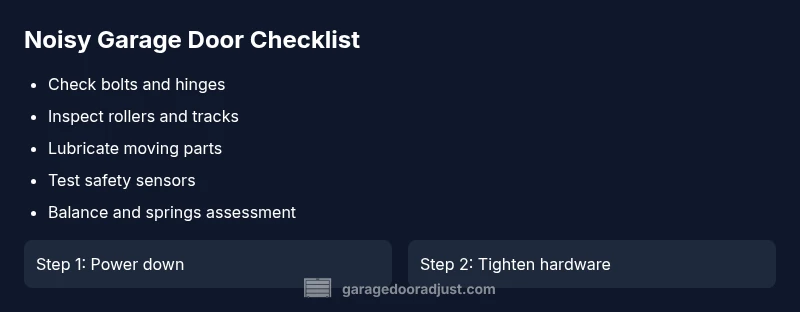
- Start with the easiest fixes: tighten bolts and lubricate moving parts. - Check tracks for debris and misalignment. - Test safety sensors and balance. - If sounds persist, inspect springs only with professional help. - Safety first: unplug the opener before any inspection.
Steps
Estimated time: 60-90 minutes
- 1
Power down and secure area
Turn off the opener and unplug the unit. Safely secure the door to prevent it from dropping while you inspect. Use a flashlight to examine tracks, rollers, and hinges for obvious issues.
Tip: Always remove power before touching any moving part. - 2
Tighten hardware and inspect hardware
Tighten all visible nuts, screws, and bolts on hinges and brackets using the appropriate tool. Check for worn or cracked components and replace if necessary to prevent further noise.
Tip: Do not over-tighten plastic fittings or adapters. - 3
Lubricate moving components
Apply a garage-door-safe lubricant to hinges, rollers, and contact points on tracks. Wipe away excess to prevent dust attraction. Re-check performance after a full cycle.
Tip: Avoid using general-purpose sprays on springs. - 4
Check tracks and alignment
Inspect tracks for dents and ensure they are straight. Gently nudge misaligned sections back into place and confirm smooth, unobstructed operation across the entire track.
Tip: Never strike tracks with metal tools. - 5
Test safety sensors and closing balance
With the door closed, run a test of the safety sensors and listen for the motor returning smoothly without unusual strains. If the door feels unbalanced, avoid forcing and seek professional help.
Tip: Place a small object in the path to verify sensor response. - 6
Decide on next steps
If noise persists after these steps, perform a staged re-check or call a professional for a thorough inspection, especially if springs or cables are involved.
Tip: Pro tip: keep a log of noises and corrections for reference.
Diagnosis: Garage door makes noise when closing
Possible Causes
- highLoose hardware or worn rollers
- mediumTrack misalignment or dented tracks
- highLack of lubrication on rollers, hinges, and springs
- mediumTension spring wear or imbalance
Fixes
- easyTighten visible bolts and hardware; replace worn rollers if needed
- easyLubricate moving parts with garage-door-safe lubricant
- mediumRealign or gently adjust tracks; clear obstructions
- hardConsult a professional for spring tension or cable repair
Got Questions?
What is the first thing I should check when my garage door makes noise when closing?
Start with safety and basic checks: unplug the opener, inspect hardware, tracks and rollers; small fixes like lubrication can reduce noise. If the noise continues, you may need professional help.
First check safety and hardware. Unplug the opener, inspect the tracks and rollers, and try lubrication. If the noise continues, consider professional help.
Is lubrication safe on all moving parts?
Use a silicone-based or lithium-based garage-door lubricant. Avoid oil-based products near belts or pulleys and wipe away excess to prevent dust buildup.
Lubricate hinges and rollers with a silicone-based lubricant, and wipe away excess to avoid dust.
When should I replace tracks?
If tracks are bent, cracked, or visibly binding the door, replacement or precise realignment is needed. For bent tracks, contact a pro.
If the tracks are bent or binding the door, it's time to replace or realign, and consider a professional.
Can noise indicate a dangerous spring problem?
Yes. If you hear bangs or see excessive resistance near the springs, do not adjust them yourself. Call a licensed professional immediately.
Bang or resistance near springs can be dangerous—don’t adjust them yourself; call a pro.
How often should I service my garage door?
Have a professional inspect and lubricate annually. Regular checks help catch wear early and prevent noisy failures.
Annual professional inspection and lubrication keeps noises down and parts healthy.
What if lubrication reduces the noise but doesn’t eliminate it?
If lubrication helps but doesn’t fully fix the noise, proceed to inspect tracks, balance, and sensor alignment. If unresolved, book a pro visit.
Lub helps but if the sound remains, check tracks and balance, then get a pro if needed.
Watch Video
Quick Summary
- Tighten and lubricate first to stop many noises
- Track alignment and balance are common culprits
- Use safety sensors tests to confirm operation
- Call a pro for springs or cables to avoid injury