Why is My Garage Door So Loud? A Homeowner's Troubleshooting Guide
Discover why your garage door is loud and fast, safe fixes to quiet it, and a step-by-step diagnostic flow. Learn maintenance tips to prevent future noise and know when to call a pro.


Most garage doors that sound loud come from dry rollers, worn bearings, loose hardware, or misaligned tracks. Do a quick check: tighten visible screws on hinges and rollers, lubricate rollers and hinges, and wipe away grime from tracks. If the noise continues, check the door balance and track alignment; if you hear grinding or the door seems off-balance, stop and call a pro.
Understanding the Noise: Why It Happens
If you’re wondering why is my garage door so loud, you’re not alone. Noise usually stems from components that work hard and wear out with time. The most common culprits include dry rollers or bearings, loose hardware, and tracks that are slightly out of alignment. A louder-than-normal door can also signal a balance issue or a misadjusted opener. The GarageDoorAdjust team notes that regular maintenance dramatically reduces these sounds and extends the life of the door. By recognizing the patterns—rattling, grinding, squealing, or thudding—you can target the right parts and fix the problem efficiently. Early action is the best defense against big repairs later.
Key takeaways:
- Dry or worn components are top offenders
- Loose hardware can amplify even small movement
- Alignment and balance problems often show up as unexpected noises
In this guide we’ll walk through a safe, structured approach to diagnose and fix the most common causes of a loud garage door while keeping you and your family safe.
Quick Checks You Can Do Today
Before diving into tools or replacements, perform these fast checks that often quiet a loud garage door. They are the easiest and most cost-effective fixes.
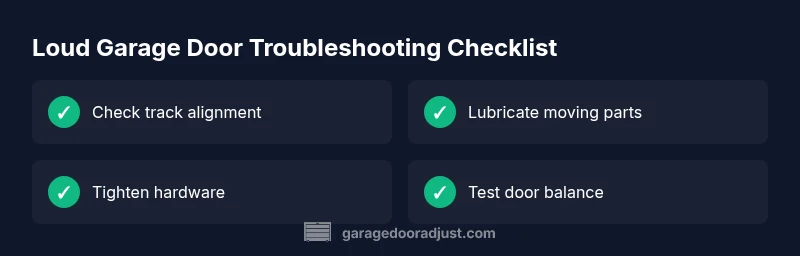
- Tighten visible hardware: hinges, brackets, and roller mounts. Loose screws can rattle and amplify noise.
- Lubricate moving parts: apply silicone-based lubricant to rollers, hinges, tracks, and torsion hardware. Avoid oil-based lubes on plastic parts.
- Clean the tracks: remove dirt and debris that can cause binding and friction.
- Test balance with the door open and closed: an imbalanced door will sound loud and feel heavy to lift.
If you’ve completed these steps and the door is still loud, move to the next diagnostic phase. Remember to unplug the operator and to keep hands away from springs while you inspect.
Safety First: How to Inspect the Drive System Safely
Working with garage door hardware can be dangerous, especially around springs and cables. Always unplug the garage door opener before inspecting the track, springs, or cables. Do not attempt to adjust torsion springs yourself—these are under extreme tension and require professional tools and training. When inspecting the drive system, look for loose cables, frayed wires, or cracked pulleys. If anything looks damaged, stop and call a qualified technician. GarageDoorAdjust emphasizes safety as the first rule of any home repair plan.
- Disconnect power to the opener
- Keep hands clear of springs and moving parts
- Wear safety glasses and gloves during inspection
- If in doubt, hire a pro for spring or cable work
Common Causes in Order of Likelihood
Most homeowners notice noise due to wear or setup issues rather than a catastrophic failure. The main categories are:
- Dry or worn rollers and bearings (high likelihood): squeaks and grinding come from friction.
- Loose hardware (high likelihood): rattling is often heard at startup or shutdown.
- Track misalignment or binding (medium likelihood): a slight angle can cause scraping sounds.
- Balance or torsion spring issues (low to medium likelihood but high risk): improper balance makes the door work harder and noisier; springs require professional service.
Understanding these causes helps you focus your troubleshooting and avoid unnecessary fixes.
Step-by-Step Fixes for Common Causes
This section provides actionable steps to address the most common noise sources. Follow each step in order and stop if you encounter a safety concern.
- Step 1: Tighten all accessible screws and mounting hardware (easy). Tip: use a cordless drill with a screwdriver bit to speed up the process.
- Step 2: Lubricate moving parts (easy). Tip: apply a small amount and wipe excess to avoid attracting dust.
- Step 3: Clean and inspect tracks (easy to medium). Tip: remove any obstructions and check for kinks or dents.
- Step 4: Check door balance with the door closed and opened halfway (easy). Tip: if the door feels heavy or unbalanced, do not operate the opener further without a professional check.
- Step 5: Realign tracks if you notice scraping or binding (medium). Tip: adjust one side at a time and test after each adjustment.
- Step 6: Inspect rollers and bearings for wear and replace if needed (medium). Tip: replace in pairs to maintain symmetry.
- Step 7: Reevaluate door operation with the opener (easy to medium). If noise remains, consider professional inspection for springs or cables (hard).
- Step 8: Establish a maintenance routine to prevent future noise (easy). Tip: schedule lubrication and inspection every 6–12 months.
Estimated total time: 60-90 minutes depending on door condition and access.
Prevention Tips to Keep It Quiet
Proactive maintenance dramatically reduces garage door noise. Implement a simple routine:
- Lubricate tracks, hinges, rollers, and pulleys every 6–12 months.
- Tighten hardware annually and after any heavy use or impact.
- Clean tracks and inspect alignment occasionally to prevent friction.
- Balance the door periodically with a helper to ensure even load across springs.
By integrating these practices, you’ll minimize future noise and prolong the life of the system.
When to Call a Professional
Some noises or symptoms require professional intervention. If you notice any of the following, schedule a service call promptly:
- Grinding, screeching, or clunking sounds from springs or cables
- Visible wear on cables, pulleys, or torsion components
- A door that feels off-balance, even after lubrication and track alignment
- The door refuses to stay in place or moves unevenly under the opener’s operation
A professional can safely assess and replace high-risk components like springs, cables, and track hardware. The GarageDoorAdjust team emphasizes safety first when deciding to DIY or hire expert help.
Troubleshooting Summary: Quick Reference
- Most loud noises are from dry rollers, loose hardware, or misaligned tracks.
- Simple fixes (tightening, lubrication, cleaning) are often enough.
- If there’s grinding or unbalanced movement, stop and consult a pro.
- Preventive maintenance is the best way to avoid future noise and costly repairs.
This section serves as a quick reference. Use it to guide your repairs and ensure you cover the most likely culprits first.
FAQ Summary for Quick Reference
This section is a helpful follow-up to the main article and offers quick pointers for common questions homeowners have about loud garage doors. Use these cues to decide if you can DIY or if a pro is needed.
The Experts' Guide to Quiet Doors
Regular maintenance, proper lubrication, and timely part replacements extend the life of your garage door and keep it quiet. Always prioritize safety when dealing with springs and cables, and never improvise with high-risk components. GarageDoorAdjust’s approach blends practical guidance with safety-first principles to help homeowners fix common issues quickly.
Steps
Estimated time: 60-90 minutes
- 1
Tighten hardware
Power down the opener, then tighten all exposed screws on hinges, brackets, and roller mounts. Use a drill with a screwdriver bit for consistent, snug fits. Recheck after a gentle operation cycle to confirm the rattle is reduced.
Tip: Over-tightening can strip threads; snug is enough. - 2
Lubricate moving parts
Apply silicone-based lubricant to rollers, hinges, and track joints. Wipe away excess to prevent dust buildup. Move the door a few times to distribute the lubricant evenly.
Tip: Lubricate every 6–12 months to maintain smooth operation. - 3
Clean and inspect tracks
Brush out dust and debris from tracks, then wipe with a damp cloth. Look for dents or bends; a slight misalignment will cause scraping sounds.
Tip: Use a level to verify tracks are straight. - 4
Check balance
With the door closed, disconnect the opener and raise the door manually. It should stay in place; if it drifts, the balance is off and springs may be under tension.
Tip: Never adjust springs yourself; call a pro if balance is off. - 5
Realign tracks if needed
Loosen mounting brackets slightly, align tracks so they run parallel and evenly spaced from the door edges, then retighten. Test door operation after each small adjustment.
Tip: Small nudges can correct misalignment without major work. - 6
Inspect rollers and bearings
Replace worn rollers in pairs to maintain balance. If bearings feel rough or feel gritty, replace accordingly. Recheck door operation afterward.
Tip: Order matched-size rollers for uniform wear. - 7
Test with opener reconnected
Reconnect the opener, run a few cycles, and listen for residual noise. If noise persists, note the type of sound (grinding vs squealing) to help identify the cause.
Tip: Record a short video to show a technician if needed. - 8
Schedule professional help if needed
If you notice grinding from springs, frayed cables, or the door not staying in place, stop DIY work and book a pro. These areas pose serious safety risks.
Tip: Safety first: do not attempt high-risk fixes yourself.
Diagnosis: Loud operation of the garage door
Possible Causes
- highDry or worn rollers/bearings
- highLoose hardware or brackets
- mediumTrack misalignment or binding
- lowDamaged springs or cables (unsafe to DIY)
Fixes
- easyTighten all accessible screws on hinges, brackets, and rollers
- easyLubricate rollers, hinges, tracks, and pulleys with silicone spray
- easyClean tracks and remove debris causing friction
- mediumTest door balance and realign tracks if needed
- hardInspect springs/cables and call a pro if you suspect wear or damage
Got Questions?
What is the most common cause of a loud garage door?
The most common causes are dry or worn rollers and bearings, combined with loose hardware. Inadequate lubrication and misaligned tracks also frequently contribute to loud operation. Fixing these parts usually quiets the door quickly.
Most loud doors come from dry parts or loose hardware. Lubricate, tighten, and realign first, and call a pro if it still sounds off.
Is lubrication a permanent fix?
Lubrication reduces friction and noise but is not a permanent fix. Worn components will still need replacement. Regular maintenance helps keep noise low over time.
Lubrication helps now, but worn parts will need replacement. Keep up with regular maintenance.
When should I call a professional?
Call a professional if you hear grinding from springs, observe frayed cables, or the door remains unbalanced after maintenance. These signals indicate high-risk components that require expertise.
Call a pro if you hear grinding or see damaged springs or cables.
Can I DIY track alignment?
Track alignment can be DIY for slight misalignments, but avoid bending or forcing tracks. Use a level and small, gradual adjustments. If you’re unsure, hire a pro to prevent further damage.
Small realignments can be DIY if you’re careful; don’t force bent tracks.
How can I prevent loud doors in the future?
Set a maintenance schedule: lubricate, tighten hardware, and inspect tracks every 6–12 months. Address wear early and replace dual components in pairs to maintain balance.
Keep up with regular maintenance and replace worn parts in pairs.
Watch Video
Quick Summary
- Identify the loud source quickly: dry rollers, loose hardware, or misalignment
- Use safe, step-by-step maintenance before calling a pro
- Balance checks and track alignment are critical for quiet operation
- Springs and cables require professional service when worn or damaged