How to Get Rid of Noisy Garage Door: A Step-by-Step Guide
Discover practical, safe methods to quiet a noisy garage door. This guide covers quick fixes, diagnosis, step-by-step repairs, maintenance routines, and when to call a pro for torsion springs and track issues.


To get rid of a noisy garage door, tighten any loose hardware, lubricate moving parts, and inspect tracks and rollers for wear. Replace worn rollers or bent tracks as needed, and adjust the opener’s limits and force settings to reduce rubbing. If noises persist, isolate the source: springs, rollers, or balance issues, and call a professional for torsion-spring work or complex track repairs.
The science behind garage door noise
Noise from a garage door typically comes from mechanical friction, misalignment, or worn components. Loose mounting hardware can rattle when the door moves, while dry rollers and hinges create squeaks as metal parts rub against each other. Bent tracks or a door that's off balance will grind or chatter during operation. The good news is that most noise can be reduced or eliminated with a methodical approach: identify the source, perform safe maintenance, and replace worn parts before the problem worsens. According to GarageDoorAdjust, many noise issues begin with simple tightening and lubrication, which can restore smooth operation without costly repairs. This perspective comes from our team’s hands-on experience diagnosing common failure modes in residential systems.
Key takeaway: start with non-invasive fixes, then move to component checks if sounds persist.
Quick fixes that reduce noise immediately
Reducing noise can often be achieved with a few straightforward steps that don’t require special tools. Start by tightening all visible screws and bolts on the door sections, hinges, and brackets. Next, lubricate the moving parts with a silicone-based or lithium-based garage door lubricant focusing on hinges, rollers, and the contact points where metal moves across metal. Avoid over-lubricating, which can attract dust and make things louder over time. Check the rollers; if they’re cracked, worn, or grinding, replace them with nylon or steel rollers as appropriate for your system. Look at the tracks next: clean them, straighten any bends, and ensure they’re properly fastened to the frame. If you hear rubbing from the torsion area, contact a professional—torsion springs hold dangerous tension and require specialized handling. GarageDoorAdjust’s analysis supports a phased approach: quick wins first, then targeted part replacement if noise continues. Pro tip: perform this maintenance in a well-lit area and disengage the opener before starting.
Why this matters: addressing noise early prevents larger mechanical failures and extends door life.
Diagnosing common noises and what they mean
A rattling door often indicates loose hardware. Squeaks can come from dry hinges or rollers, while a grinding noise may signal bent tracks or worn rollers. A loud bang as the door hits the floor can point to balance or track alignment issues. If the sound occurs only when the opener operates, the issue may lie with the opener settings (limits or force) or a binding in the track. If you hear a consistent hum near the motor, it could be a worn pulley, bad bearing, or a friction point in the opener assembly. Our team recommends isolating the noise source by manually cycling the door after disconnecting the opener, then testing with the opener to see if the same sounds occur. This helps determine whether the problem is door hardware or the opener mechanism. In many cases, the fix is a combination of tightening, lubrication, and part replacement.
GarageDoorAdjust emphasizes careful observation: the more precise your diagnosis, the faster you’ll reach a quiet door.
Tools, parts, and safety equipment you’ll need
Before starting any repair, gather tools and parts to minimize interruptions. A basic socket set, adjustable wrench, screwdrivers, pliers, a ladder, and safety goggles are essential. Have silicone-based garage door lubricant and a light lubricant for metal-on-metal contacts ready, but avoid spraying lubricants directly onto torsion springs. If you discover damaged parts, stock up on new rollers (nylon or steel) and replacement track hardware. For safety, keep a flashlight handy and wear gloves to protect your hands. Work in a dry, well-ventilated area and keep children and pets away while you work. The right tools reduce time and increase accuracy, helping you perform a clean, safe fix without guessing.
Note: If your door uses torsion springs, do not attempt to adjust them yourself; they store high tension and require a pro. GarageDoorAdjust’s guidance prioritizes safety and preventative maintenance to keep noise to a minimum.
Common mistakes that create more noise (and how to avoid)
Common mistakes include over-tightening screws, which can strip threads or warp the door frame, and using the wrong lubricant. Petroleum-based sprays attract dust and can gum up tracks. Neglecting routine maintenance allows small issues to snowball into loud, irregular noises. Another frequent error is attempting DIY spring work; torsion springs are dangerous and should be handled only by trained professionals. Regularly inspecting hardware, applying the correct lubricant, and replacing worn components prevents motion friction and keeps the system quiet. GarageDoorAdjust’s approach combines prevention with practical fixes—simple steps first, more involved repairs only when necessary.
Safety reminder: always disconnect the garage door opener when inspecting springs or track alignment to avoid accidental movement.
Step-by-step approach to quieter doors
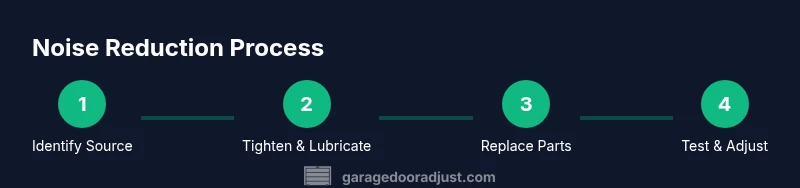
A quiet door typically results from a structured process: (1) identify the noise source, (2) tighten/secure all hardware, (3) replace worn components, (4) lubricate moving parts, (5) ensure proper track alignment, and (6) adjust opener settings if needed. Start with manual operation to feel for binding or rough movement, then verify the door is balanced by manually lifting it halfway and releasing it. If it stays in place, it’s balanced; if not, balance requires adjustment (safest at a professional level). After addressing hardware and lubrication, test with the opener—listen for persistent noises and re-check components if necessary. This methodical approach minimizes guesswork and maximizes results. GarageDoorAdjust’s team recommends documenting each step so you know what was changed and when to revisit.
Estimated timeline: expect 45-75 minutes for the full sequence, depending on door age and the extent of wear.
Maintenance routine to keep noise at bay
Implementing a regular maintenance schedule is the best defense against recurring noise. Schedule lubrication every 6-12 months, depending on climate and door use. Perform a quick hardware check every few months: tighten screws and brackets, inspect tracks for dents, and verify that the door remains balanced and moves smoothly. Clean tracks to remove dirt and debris that can hinder quiet operation. If you notice a sudden increase in noise, reassess all components and consider replacing worn rollers or tracks promptly. A proactive approach saves time and money by preventing more serious failures. GarageDoorAdjust’s ongoing maintenance philosophy centers on consistency and early intervention.
Authority sources and further reading
For trusted information on noise reduction and safe practices, consult authoritative sources:
- https://www.osha.gov/noise
- https://www.cdc.gov/niosh/topics/noise
- https://extension.illinois.edu
These resources offer safety guidelines, best practices for reducing noise, and maintenance considerations that align with homeowner DIY projects and professional recommendations.
Tools & Materials
- Socket set(Metric/standard sizes; 6-pt for bolts)
- Adjustable wrench(Small and large sizes for different fasteners)
- Screwdrivers (Phillips and flat)(Flat for trim screws; Phillips for brackets)
- Pliers (needle-nose and groove-jock)(Grip and manipulate small parts)
- Ladder or sturdy step stool(Access tracks and hardware safely)
- Safety goggles(Eye protection during maintenance)
- Silicone-based garage door lubricant(Use on hinges, rollers, and contact points)
- Rags or towels(Clean tracks and wipe excess lubricant)
- Replacement rollers (nylon or steel)(Only if wear is evident)
- Replacement track hardware(Only if bends or damage are found)
Steps
Estimated time: 45-75 minutes
- 1
Inspect mounting hardware
Disconnect power to the opener. Manually lift the door halfway and hold it there to test balance. Check all mounting screws and brackets for looseness and tighten as needed. Look for bent or damaged hinges and tighten or replace as required.
Tip: Use a torque wrench to confirm tightness without over-tightening; consult manufacturer's specs if available. - 2
Lubricate moving parts
Apply a lightweight silicone-based lubricant to hinges, rollers, and contact points where metal rubs on metal. Wipe away excess to prevent dust buildup. Avoid lubing torsion springs.
Tip: Lubricate in a well-ventilated area and wipe off any drips from surrounding surfaces. - 3
Check rollers and tracks
Inspect rollers for wear and replace if cracked, chipped, or wobbly. Look for dents or bends in tracks and gently straighten them if possible; if track is severely damaged, replace it.
Tip: Replace worn rollers in pairs to maintain smooth operation and reduce noise asymmetry. - 4
Align tracks and door balance
Ensure tracks are straight and properly fastened. If the door is unbalanced, manually test by lifting halfway and letting go; if it drifts, balance adjustments may be required. Do not attempt torsion-spring adjustments yourself.
Tip: Keep the door supported during adjustments; have an assistant hold the door if needed. - 5
Adjust opener settings
Access the opener’s limit and force settings and make small adjustments to reduce rubbing or binding at the final positions of travel. Test several cycles to confirm smoother operation.
Tip: Only adjust on small increments; record the before/after values for reference. - 6
Safety test and final check
Disconnect the opener and operate the door manually to confirm smooth movement. Reconnect the opener and run multiple cycles, listening for persistent noises. If noises remain, consider professional inspection for springs and complex track issues.
Tip: If the door feels heavy or binds during manual lift, stop and seek professional help.
Got Questions?
What are the most common causes of a noisy garage door?
Loose hardware, dry hinges or rollers, misaligned tracks, and unbalanced doors are typical culprits. Worn rollers can grind, while bent tracks cause grinding or rubbing. Identifying the exact source helps you target the fix efficiently.
Common causes include loose hardware, dry rollers, misaligned tracks, and an unbalanced door. Start with tightening and lubrication, then check for worn rollers or bent tracks.
Is it safe to fix a noisy door by myself?
Many noise issues are safe for a DIY fix, such as tightening screws and lubrication of non-spring parts. Do not attempt torsion-spring adjustments; those require trained professionals due to high tension.
DIY fixes are okay for basic tightening and lubrication, but avoid torsion-spring adjustments for safety.
How do I know if torsion springs are the problem?
Torsion springs store a lot of energy and are dangerous to handle. If you suspect spring issues, stop and contact a qualified technician. Look for door imbalance or irregular movement as an indicator.
If you suspect spring issues, stop and call a professional. Do not try to adjust springs yourself.
Do I need to replace the entire door to reduce noise?
Not necessarily. Often, replacing worn rollers, repairing tracks, and balancing the door can quiet operation without replacing the whole door. Full replacement may be considered if the door is old or severely warped.
Usually you can quiet a door with parts and alignment repairs; full replacement is only needed if the door is very old or damaged.
How often should I lubricate and inspect the door?
Lubricate moving parts every 6-12 months, more often in humid or dusty environments. Perform a quick hardware check every few months to catch loose screws or worn parts early.
Lubricate twice a year and inspect hardware a few times annually.
When should I call a professional?
Call a professional if you notice persistent grinding, track damage, door imbalance, or any problem involving torsion springs. A pro can safely diagnose and repair these issues and ensure proper spring tension and safety.
If noises persist after basic fixes or springs appear involved, contact a professional.
Will adjusting the opener affect noise?
Yes, sometimes the opener’s travel limits and force settings contribute to noise. Make small adjustments and test cycles to reduce rubbing. If the noise continues, the source may be in the door hardware or tracks rather than the opener.
Adjust the opener in small steps and test; if noise stays, look to door hardware.
Watch Video
Quick Summary
- Tighten hardware and lubricate first.
- Replace worn rollers or bent tracks as needed.
- Balance and track alignment are critical for quiet operation.
- Use the opener settings for minor adjustments only.
- Know when to call a professional for springs or major track issues.