Garage Door Grunts: Diagnose and Fix
Struggling with a garage door that grunts on opening or closing? This GarageDoorAdjust guide helps diagnose, troubleshoot, and fix common causes with safe, step‑by‑step instructions.


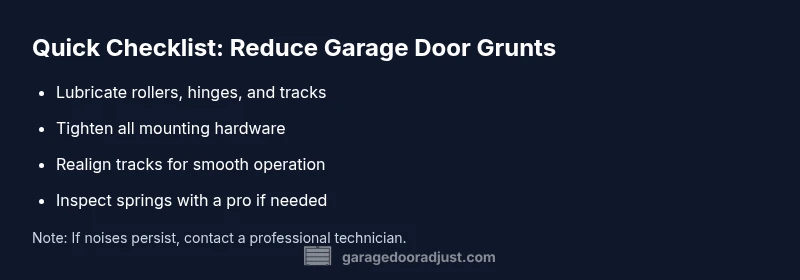
The most common causes of garage door grunts are dry rollers, worn bearings, loose hardware, or misaligned tracks. Begin with simple fixes: lubricate moving parts, tighten brackets, and realign the track. If the noise persists after these steps, inspect springs and cables only if you’re trained; otherwise contact a professional.
Understanding why garage door grunts happen
Grunt-like noises from a garage door are usually a signal that something inside the system is fighting against the door’s movement. Most homeowners notice these sounds when opening or closing the door, often at the beginning of the cycle. According to GarageDoorAdjust, many noises stem from everyday wear and simple maintenance gaps rather than catastrophic failures. The GarageDoorAdjust Team has observed that dry roller bearings, stiff hinges, and loose mounting hardware are the most common culprits in typical garages. In many cases, a consistent grunt that progresses to a squeal indicates that lubrication is overdue or a bracket has shifted slightly, altering the door’s balance. Before you reach for power tools, confirm that the door is disconnected from the opener and supported safely so it cannot move unexpectedly. This keeps you and your family safe while you diagnose the first steps. The goal is to restore smooth motion and reduce stress on the door’s springs and tracks, which, if neglected, can lead to bigger problems and higher repair costs.
Common culprits and quick fixes
Most grunts fall into a handful of repeatable causes. Here are the top culprits homeowners encounter, with fast fixes you can try today:
- Dry rollers and bearings: lubricate with silicone-based lubricant and replace worn wheels if needed.
- Loose hardware: tighten screws on hinges, brackets, and the track hanger brackets.
- Misaligned tracks: ensure tracks run parallel and are centered over the door, then retighten.
- Worn springs: if you hear grinding near the springs or notice imbalanced balance, stop and call a pro—springs are dangerous to adjust.
- Damaged opener components: inspect the chain/belt and trolley for wear; replace if necessary and within your skill level.
If you try these fixes and the grunting persists, the problem may be deeper, involving the torsion system or a faulty opener. In that case, prioritize safety and reach out to a qualified technician. GarageDoorAdjust emphasizes safe, incremental fixes that protect you from injury while preserving door balance.
Safety considerations and when to call a pro
Safety should always come first when dealing with garage doors. Always unplug the opener and disconnect the door from power before performing any inspection near moving parts. Keep hands away from tracks, springs, and rollers while the door is moving—even when testing balance with the stopping point. If you notice any of the following signs, it’s time to contact a professional: frayed cables, visible track damage, a door that feels heavier on one side, or cracking noises near the springs. The door’s springs carry substantial tension and pose serious injury risks if mishandled. Regular maintenance by a trained technician can prevent small issues from becoming costly repairs. The GarageDoorAdjust team recommends documenting any changes in noise or balance so you and the technician can compare notes over time, speeding up diagnosis and repair.
Diagnostic checklist you can perform today
Use this quick checklist to narrow down the cause of the grunts. Each item is a quick test you can perform safely:
- Unplug the opener and operate the door manually to feel for binding. 2. Inspect the track for gaps or bends and confirm it runs straight. 3. Check all exposed hardware and tighten where needed. 4. Apply lubricant to rollers, hinges, and the track where metal contacts metal. 5. Reconnect power and test the operation at low speed. 6. Note whether the noise occurs only at start‑up or throughout the cycle. 7. If the door still grunts after these steps, schedule a professional inspection for springs or opener components.
Step-by-step repair guide for the most common cause
This section walks you through fixing the most common issue: dry rollers and bearings. It’s written for homeowners who are comfortable with basic tools and safety practices.
- Gather supplies: silicone-based lubricant, clean rag, hex/Phillips screwdriver, and a replacement roller if needed. 2) Disconnect power and secure the door in the open position with a brace. 3) Remove the track cover to access rollers and hinges. 4) Lubricate rollers and hinges from the top to bottom; avoid lubricating nylon wheels with oil-based products. 5) If wheels show wear, replace them following the manufacturer’s instructions. 6) Reassemble, reattach the track cover, plug in the opener, and test operation. 7) If the door still grunts, proceed to realign tracks or consult a professional for spring checks.
Prevention tips and routine maintenance
Consistency is the best remedy for garage door grunts. Create a simple monthly maintenance routine: lubricate moving parts, inspect track alignment, and tighten mounting hardware. Schedule a more thorough annual service window to check tracks, springs, cables, and the opener’s drive system. Keep an eye on door balance by lifting the door halfway; it should stay put. If it falls or rises quickly, contact a professional to adjust balance and inspect the springs. Early maintenance can prevent costly repairs and downtime, and helps extend the life of your system.
Real-world scenarios and answers
Scenario A: A straight‑line grunt that begins at startup but fades during the cycle is usually track alignment or lubrication. Scenario B: A heavy, grinding noise when lowering often points to worn rollers or lower hinge wear. Scenario C: A persistent clunking near the springs suggests a spring or cable issue that requires a professional. For each scenario, begin with lubrication, then track alignment, then track balance checks. When in doubt, contact a GarageDoorAdjust certified technician to perform spring or balance work.
What to do next if the noise persists
If the grunts continue after performing the above steps, the problem may involve the torsion spring system or a worn opener drive. Do not continue to operate the door aggressively, as this can cause component failure or personal injury. Schedule a professional diagnostic with a licensed technician who can safely test spring tension, bracket integrity, and opener alignment. Meanwhile, document when the noise occurs and any changes in door feel, which will help the technician pinpoint the issue quickly.
Steps
Estimated time: 25-40 minutes
- 1
Gather tools and safety gear
Collect silicone-based lubricant, clean rags, screwdrivers, adjustable wrench, and a replacement roller if needed. Wear safety glasses and work gloves. Ensure the area around the door is clear of people and pets.
Tip: Having everything ready before you start saves time and reduces risk. - 2
Disconnect power and secure the door
Unplug the opener from its outlet and disconnect the light control. If the door is heavy, prop it with a brace to prevent it from moving while you inspect tracks and hardware.
Tip: Never rely on the opener’s safety features to hold the door during maintenance. - 3
Inspect hardware and balance
Look for loose screws, worn hinges, and bent brackets. Check that the door sits level in the tracks; if one side sits lower, it could cause grinding.
Tip: Use a level to confirm tracks run straight and parallel. - 4
Lubricate moving parts
Apply lubricant to rollers, hinges, and contact surfaces where metal rubs against metal. Wipe away excess oil to prevent attracting dust.
Tip: Avoid oil-based lubricants on nylon rollers; use silicone-based instead. - 5
Tighten and adjust
Tighten loose mounting screws and brackets. Realign tracks if the door binds or rubs. Recheck alignment after adjustments.
Tip: Make small adjustments and test frequently to avoid overcorrection. - 6
Test and reassemble
Reconnect power, operate the door slowly, and listen for changes in noise. If noises persist, record when they occur most often and consider professional inspection for springs or opener parts.
Tip: Always test with the door in a safe, controlled position.
Diagnosis: Garage door grunts or groans during opening/closing
Possible Causes
- highDry, worn rollers and bearings causing friction
- mediumMisaligned or damaged tracks causing rubbing
- lowLoose hardware and brackets causing misalignment
Fixes
- easyLubricate rollers, hinges, and tracks with silicone-based lubricant; replace worn rollers if needed
- easyRealign tracks and tighten all mounting brackets; ensure tracks are centered and parallel
- hardInspect springs and cables; if you hear grinding near the springs or see gaps, call a professional immediately
Got Questions?
What causes garage door grunts?
Grunts are usually caused by dry rollers, worn bearings, loose hardware, or misaligned tracks. More serious noises can indicate issues with springs or the opener drive. Start with lubrication and tightening, and progress to alignment checks before calling a professional for spring-related problems.
Grunt noises typically come from dry rollers, loose hardware, or misaligned tracks. If the noise continues after basic fixes, springs or opener parts may be involved, and you should consult a professional.
Can I fix garage door grunts myself?
Many minor noises can be addressed by lubrication, tightening hardware, and realigning tracks. Do not attempt spring adjustments unless you are trained; springs are dangerous to handle and can cause serious injury or door failure.
Yes, for simple fixes like lubrication and tightening, but avoid spring work unless you’re trained.
When should I replace garage door springs?
Springs should be replaced by a professional if there is any sign of wear, corrosion, or loss of tension. A loud, persistent grunt near the springs often indicates a safety issue that requires expert inspection.
If you hear grinding near the springs or if the door is unbalanced, call a pro to inspect springs.
Is a grunting garage door dangerous?
Noise itself is not always dangerous, but it can signal failing components. The primary risk is catastrophic failure from springs or cables if ignored. Prioritize safety and seek professional evaluation if you’re unsure.
Noise can mean hidden danger, especially with springs or cables. When in doubt, call a professional.
What maintenance reduces noise long-term?
Regular lubrication, annual track alignment checks, and tightening of hardware help reduce noise and extend door life. Keep an eye on track condition and balance tests to catch issues early.
Lubricate moving parts, check alignment yearly, and tighten hardware to keep things quiet.
Watch Video
Quick Summary
- Identify the noise source and start with lubrication.
- Tighten hardware and align tracks for smoother operation.
- Inspect springs only if trained; call a pro for spring work.
- Test after each fix and document changes for future maintenance.