Why Does My Garage Door Make a Popping Noise? A Troubleshooting Guide
Diagnose and fix a popping garage door safely with our step-by-step guide. Quick checks, common causes, and when to call a pro to protect your home.


Most popping noises come from simple causes: loose hardware, dry moving parts, or a misaligned track. Start with the easiest fix: tighten visible screws, grease hinges and rollers, and clear any debris from the track. If the sound continues, check spring tension with caution and consider professional help. For safety, never attempt spring work yourself.
Why this noise matters and how to approach fixes
From the homeowner's perspective, a popping noise is alarming because it signals something moving or settling under pressure. If you’re asking why does my garage door make a popping noise, you’re not alone: most cases aren’t dangerous, but they require timely attention to avoid further wear. According to GarageDoorAdjust, most common pops originate in hardware or lubrication: a loose hinge, a sticking roller, or a dry track can create a sharp, repetitive sound as the door travels. Before you panic, perform a few simple checks: look for loose screws along the hinge line, inspect rollers for flat spots, and wipe away grit from the track. Keep in mind that many noises are harmless and stem from weathered components that simply need cleaning and lubrication. If your door feels heavier than usual, or if the popping is accompanied by binding or jerky movement, stop and pursue a more thorough diagnosis. The goal is to distinguish a harmless ache from a serious safety issue. In this guide you’ll find a practical, safe approach to diagnosing and addressing the most common causes.
Common sources of a popping noise
Popping noises usually come from one of several assembly points: loose hardware, dry rollers, track misalignment, or worn hinges. A loose screw along the hinge line can produce a sharp pop as the door moves. Dry rollers or bearings create resistance and a sudden ping as the wheel catches. A bent or dirty track can cause the door to jump or bind, which may sound like a pop at certain points in the travel. Occasionally, loose torsion system components or imbalanced springs contribute; these are less common but serious. In most homes, inspecting hardware, lubricating moving parts, and cleaning tracks resolves the bulk of pops. If the noise changes tone (e.g., from a sharp pop to a dull thud), note the symptom and adjust the diagnosis accordingly.
Safety first: when to call a pro
Garage doors have high-tension components that are dangerous to work with. If you notice any of the following, stop and call a pro immediately: rapid door movement, a loud bang when the spring or balance feels under load, visible fraying or corrosion on cables, or uneven door balance indicating a failed spring. Even if you’re comfortable with basic maintenance, springs and cables require specialized tools and training. The GarageDoorAdjust team emphasizes safety as the top priority. If you’re unsure at any point, pausing and seeking professional help prevents injuries and costly damage.
Quick checks you can perform safely
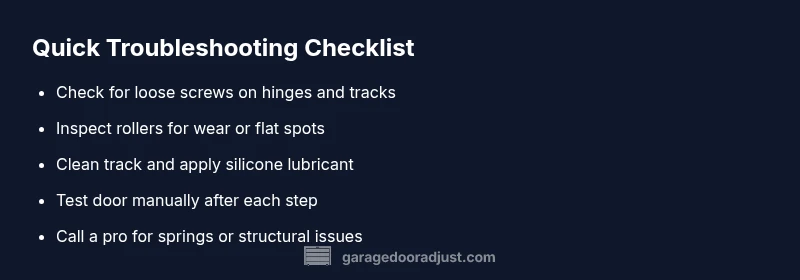
- Unplug the garage door opener to rule out drive-chain effects and test the door manually.
- Open and close slowly by hand to feel for sticking points or weight imbalances.
- Inspect hardware for loose screws, bent tracks, or worn rollers and replace or tighten as needed.
- Wipe the track and rollers to remove dirt and debris; apply a light silicone-based lubricant to moving parts.
- Listen for changes in tone after each step and stop if anything feels unstable or unsafe.
- If in doubt, stop and contact a professional.
Diagnosing the sound: symptoms and their clues
A high-pitched pop at the hinge area usually points to dry or dirty rollers or loose screws. A loud, metallic pop halfway through travel can indicate a misaligned track or a spring near the limit switch. A popping accompanied by jerky motion often signals binding in rollers or a track that is catching as the door moves. Track sections with burrs or debris can also cause intermittent pops. By isolating the section of the door making the noise and noting when it happens (opening, closing, or at rest), you’ll narrow the potential causes and plan the appropriate fix.
Maintenance to prevent future pops
Regular proactive maintenance reduces the odds of popping noises. Schedule lubrication every 6-12 months, using a silicone-based spray on hinges, rollers, and the track. Tighten loose hardware quarterly and inspect for wear on springs and cables at least twice a year. Clean the track and weather stripping to avoid debris buildup. Park your car away from the door and keep the area clear so you can perform routine checks safely. With consistent care, you’ll minimize surprises and extend the life of your system.
What to do next if the noise persists
If the popping continues after basic maintenance, create a simple change log noting the location and timing of each sound. Compare results after each adjustment and avoid any work on springs or cables yourself. When in doubt, schedule a professional inspection; a licensed tech can check spring balance, track alignment, and safety reversers. The goal is a smooth, quiet operation without compromising safety, and GarageDoorAdjust recommends erring on the side of caution whenever high-tension parts are involved.
Steps
Estimated time: 60-90 minutes
- 1
Prepare safety gear and power down
Put on eye protection and gloves. Unplug the garage door opener to prevent an unexpected lift. Gather a screwdriver, pliers, a can of silicone-based lubricant, clean cloths, and a flashlight. Manual tests should be performed with the door in a known safe state.
Tip: Always have a clear workspace; keep children and pets away. - 2
Test the door manually
Lift and lower the door slowly by hand to feel for binding or uneven weight. If it sticks at any point, note the location and skip ahead to visual inspection rather than forcing movement. This helps isolate the noisy area without the opener’s influence.
Tip: Do not force beyond the point of resistance. - 3
Tighten hardware and inspect components
Check every hinge, bracket, and mounting screw along the track for looseness. Look for bent tracks or visibly worn rollers. Tighten or replace as needed with the door in the partially opened position to reduce strain.
Tip: Use a proper screwdriver and avoid over-tightening. - 4
Lubricate moving parts
Apply a light silicone-based lubricant to hinges, rollers, and the track. Wipe away any excess to avoid attracting dirt. Move the door a few times to distribute lubricant evenly and re-check for smooth operation.
Tip: Avoid oil-based lubricants on nylon rollers. - 5
Check track alignment and balance
Visually inspect the track for gaps or burrs and ensure it is plumb. If the door looks off-balance or the springs seem stressed, stop and avoid further adjustments; misalignment can worsen damage.
Tip: Only adjust what you’re trained to handle. - 6
Decide if professional help is needed
If the noise persists after these steps or you suspect a spring or cable issue, contact a licensed technician. Professional service reduces risk and ensures the system remains safe and compliant.
Tip: Document what you checked to share with the tech.
Diagnosis: Machine won't start
Possible Causes
- highLoose hardware or worn rollers
- highDry or dirty rollers/bearings
- mediumTrack misalignment or debris in the track
- mediumImbalanced or failing torsion spring
- lowOpeners' chain tension off or motor binding
Fixes
- easyTighten loose screws and hinges; tighten hardware along the track
- easyClean and lubricate moving parts (rollers, hinges, track) with silicone-based lubricant
- mediumReplace worn rollers or bent track components as needed
- mediumRealign a misaligned track or adjust door balance if you have training
- hardIf you suspect springs or high-tension issues, call a professional immediately
Got Questions?
What causes popping noises in garage doors?
Popping noises are usually from loose hardware, dry moving parts, dirty tracks, or misaligned components. Inspect the hinge area, rollers, and track for obvious issues and address them safely.
Popping noises usually come from loose parts or dry components; check hinges, rollers, and track, and tighten or lubricate as needed.
Is it safe to fix a popping noise myself?
Simple fixes like tightening screws or lubricating parts are generally safe. Do not attempt spring work or track realignment beyond your comfort; seek a professional for high-tension components.
You can handle simple checks, but avoid springs.
What lubricant should I use?
Use a silicone-based lubricant on moving metal parts. Avoid oil-based products that can attract dirt and degrade components.
Silicone lubricant is best for moving parts.
When should I call a professional?
If you hear loud pops, see frayed cables, or suspect a spring balance problem, stop and call a licensed tech right away.
Call a professional if you hear loud pops or see broken wires.
Can a popping noise mean a door is unsafe?
Yes, especially if the noise is accompanied by jerky movement or the door feels heavy. Treat as a potential safety issue and proceed with caution.
Yes, don’t ignore it if the door moves oddly.
Watch Video
Quick Summary
- Start with the simplest checks and repairs
- Lubrication fixes most pops
- Don’t bypass safety; springs require pros
- Document maintenance to prevent future issues