Noisy Garage Door Fix: Step-by-Step Troubleshooting
Learn how to diagnose and fix a garage door that's very noisy. This urgent guide covers common culprits, safety tips, and when to call a pro for complex issues.


Most noisy garage doors come from dry or worn parts. Start by tightening loose hardware, lubricating rollers and hinges, and checking track alignment. If the noise continues after these simple fixes, proceed to the diagnostic flow for a deeper inspection and targeted replacements. Many homeowners resolve this with a 20–40 minute maintenance session.
Why a garage door is very noisy
A noisy garage door is usually not a single defect; it’s a symptom of wear, misalignment, or inadequate lubrication. According to GarageDoorAdjust, the most common culprits are dry rollers and hinges, loose hardware, and tracks that have shifted slightly out of alignment. The GarageDoorAdjust team found that most racket can be reduced with a simple maintenance routine. Start by listening to the noise: is it a grinding, squealing, or banging sound? That distinction helps narrow the likely causes and guide your next steps. In many homes, the cure is a quick 5–15 minute maintenance session: tighten fasteners, lubricate moving parts, and verify the balance. If you notice metal-on-metal grinding, a loud thump on opening, or obvious imbalance, stop and reassess—those signals may require deeper inspection or professional help.
Common sources of noise
- Dry rollers and worn bearings: cause squeaks and grinding.
- Loose hardware: hinges, nuts, bolts, and track fasteners can rattle loudly.
- Misaligned or damaged tracks: a binding path produces scraping sounds and jerky movement.
- Unlubricated or incompatible lubricant: using the wrong product can make noise worse.
- Loose opener chain or belt: creates knocking and clatter near the ceiling.
- Worn springs or torsion components: dangerous to adjust; causes dramatic banging or shuddering.
Safety and initial precautions
Before you touch any moving parts, unplug the opener and keep hands and clothing away from the door as it cycles. Wear eye protection and gloves. If you encounter springs or cables under tension, do not attempt to wind or release them yourself—seek a professional. These precautions protect you and prevent further damage.
Quick checks you can perform before heavy maintenance
- Inspect for obvious loose screws on tracks, hinges, and brackets; tighten as needed.
- Listen for which parts are making noise when the door moves and note the timing (opening vs. closing).
- Apply the right lubricant to metal-on-metal contact points—silicone-based lubricant for tracks, lithium or silicone spray for hinges and rollers.
Diagnostic flow overview
Start with the simplest checks: tighten hardware, lubricate parts, and observe changes. If grinding persists, check for track misalignment, then inspect rollers and bearings. For banging or jerky movement, focus on track balance and opener components. Always stop if you suspect a faulty spring or cable; those issues require professional service.
Prevention and maintenance plan
Schedule regular maintenance every 6–12 months. Keep fasteners tight, replace worn rollers or bearings promptly, and use the correct lubricant. Regular inspections prevent unexpected failures and minimize noise over time. Record any fixes you perform for future reference.
When to call a pro
If you encounter broken springs, frayed cables, or you’re uncomfortable inspecting or adjusting tracks and springs, stop and call a professional. A trained technician can safely diagnose and replace worn components without risking injury or further damage. This is especially important for torsion-spring systems.
Steps
Estimated time: 45-60 minutes
- 1
Inspect basic hardware
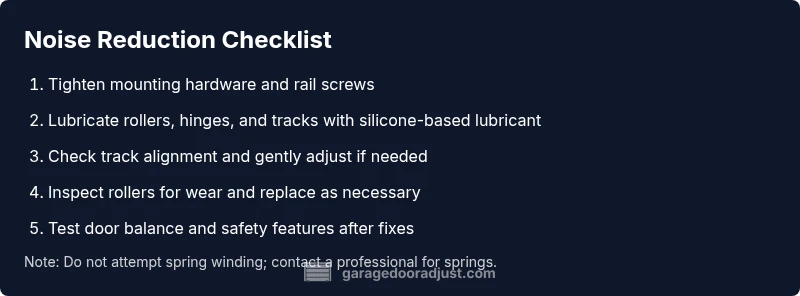
Power off and visually inspect all mounting screws, brackets, and tracks. Tighten any that are loose and wipe away residue to reveal movement.
Tip: Use a flashlight and a magnet to locate hard-to-see screws - 2
Lubricate moving parts
Apply silicone-based lubricant to rollers, hinges, and the track where metal slides. Wipe away excess to prevent dust buildup.
Tip: Do not use petroleum-based lubes on nylon rollers - 3
Check track alignment
Inspect tracks for bowing or misalignment; gently loosen and retighten mounting screws to re-center the track. Do not force the door if it binds.
Tip: Stand clear of the door path while adjusting - 4
Inspect rollers and bearings
Look for cracks or flat spots on rollers; replace worn parts following manufacturer instructions.
Tip: Have a helper hold the door steady when removing rollers - 5
Check opener components
Inspect the opener chain or belt tension and ensuring pulleys run smoothly. Tighten if needed per the manual.
Tip: Disconnect power before inspecting the opener - 6
Safety and balance test
Test the balance by disconnecting the opener and lifting the door manually. If the door feels heavy or misbalanced, call a pro.
Tip: Never rely on the opener for manual lifting - 7
Test after fixes
Reconnect power and cycle the door several times to confirm the noise is reduced. Listen for any remaining chatter.
Tip: Record changes to track progress - 8
Know when to stop
If you encounter unfamiliar parts or high-tension springs, stop and seek professional help.
Tip: Safety first: springs are dangerous to adjust
Diagnosis: Garage door is very noisy
Possible Causes
- highDry rollers/bearings
- highLoose hardware
- mediumMisaligned tracks
- lowWorn springs (dangerous)
- lowOpeners chain/belt wear
Fixes
- easyTighten mounting hardware and rail screws
- easyLubricate rollers, hinges, and tracks with proper lubricant
- easyRealign tracks if visibly out of line
- mediumReplace worn rollers or bearings
- hardConsult a pro for springs or high-tension components
Got Questions?
Why is my garage door so noisy all of a sudden?
Noisy operation is usually caused by dry or worn parts, loose hardware, or misaligned tracks. Check each area starting with lubrication and tightening. If the noise persists, proceed with a deeper diagnostic and potential replacements.
Usually it's a dry part or loose screw. Start with lubrication and tightening, then follow the full guide if needed.
Can I fix a noisy garage door myself?
Yes for basic noises, but avoid spring winding or high-tension work unless you’re trained. Use proper tools and safety practices.
You can handle simple fixes, but don’t touch springs.
What parts wear out first on a noisy door?
Rollers, hinges, bearings, and tracks are the common wear points. Springs can wear as well and are hazardous to replace.
Rollers and tracks wear first; springs are tricky.
When should I call a pro?
If you hear grinding from springs, see frayed cables, or the door is unbalanced, stop and call a pro. If you’re unsure, schedule a professional inspection.
Call a pro if springs or cables are involved or you’re unsure.
Will lubrication solve most noises?
Lubrication fixes many squeaks and rattles, but not all. If noise persists after lubrication, check alignment or worn parts that require replacement.
Lubrication helps many noises, but not every issue.
Are some noises dangerous?
Loud grinding or banging can indicate springs or structural issues. Do not ignore these signs and avoid risky DIY fixes.
Yes—danger signs require professional help.
Watch Video
Quick Summary
- Tighten and lubricate first to quiet noises
- Track alignment and track condition matter most
- Springs require professional service
- Regular maintenance prevents future noise