Garage Door Squeaking Troubleshooting and Fix Guide
A practical, step-by-step troubleshooting guide to stop a squeaking garage door fast. Learn common causes, safe lubrication tips, and when to call a pro, based on GarageDoorAdjust analysis, 2026.


Typically, a squeak means a dry or misaligned part. If your garage door is squeaking, start with a quick triage: apply silicone-based lubricant to rollers, hinges, and the track joints; tighten loose track screws and hinge bolts; test door balance by lifting halfway and letting go. If the noise persists, contact a professional for a safety check.
Understanding Why Your Garage Door is Squeaking
According to GarageDoorAdjust, most garage door is squeaking originates from dry components or minor misalignment. The noise isn't just annoying—it signals that parts are rubbing, wearing, or under extra stress. A squeak during opening or closing can come from rollers and hinges, or from a misaligned track that traps the door as it moves. The GarageDoorAdjust team found that addressing lubrication and fastener security fixes the vast majority of common squeaks, especially in older doors affected by seasonal weather changes. In this guide we’ll unpack the typical culprits and how to triage them safely. This is a homeowner-friendly guide to diagnose and reduce noise without risking injury. You’ll learn practical checks you can perform today and notes on when to call a pro.
Safety First: What to Check Before You Start
Safety isn’t optional here. Before you touch any moving part, switch off the opener or unplug the safety switch to prevent the door from moving unexpectedly. Stand clear of the door's path, wear eye protection, and avoid placing utensils or tools under the door. If you hear grinding, stop and inspect. For electric openers, disconnect power at the outlet or circuit breaker for safety. Do not attempt to adjust springs yourself; torsion springs are under high tension and can cause serious injuries. If you share your garage with children or pets, keep them away during inspection. When in doubt, contact a licensed technician. This safety-first approach protects you while you troubleshoot the squeak.
Common Causes in Detail
There are several frequent culprits behind a noisy garage door.
- Dry rollers and hinges: Metal-on-metal friction without lubrication creates high-pitched or creaking sounds at each move.
- Insufficient lubrication: Even with dry rollers, the absence of a light film of silicone-based lubricant accelerates wear and increases resistance.
- Loose hardware: Track screws, hinge bolts, and bracket fasteners can loosen over time, causing rattling and rubbing as the door traverses the tracks.
- Track misalignment: If one side binds or the track bends slightly, the door drags and squeaks as it rolls along.
- Balance and springs wear: A door that is out of balance or has worn springs can rub or cause the opener to work harder, producing unexpected noises. In many homes, these issues are interrelated, so fixes may target more than one root cause.
How to Lubricate Correctly
Lubrication is a low-risk, high-value maintenance step when done correctly. Use a silicone-based lubricant—never heavy grease—on the rollers (metal or nylon), hinges, and the track junctions. Apply a light film along the entire length of each roller and hinge, and wipe away any excess to prevent dirt buildup. Avoid spraying directly onto torsion springs or the opener mechanism; these components are not designed for regular lubricants and can attract debris. After application, operate the door slowly a few times to work the lubricant in. Reapply every 6–12 months or sooner in dusty or humid environments. GarageDoorAdjust’s guidelines emphasize silicone-based products for longevity and safety.
Tightening, Alignment, and Balance Checks
A surprisingly quiet door often starts with tight hardware and proper alignment. Inspect all visible screws and bolts on the tracks, hinges, and brackets; tighten any that are loose, but avoid over-tightening, which can strip threads or crack metal. Check that the vertical tracks are plumb using a level; if one side is off, the door can rub as it travels. Look for shiny wear marks on the track where the rollers contact it and ensure the rollers sit squarely in the track without binding. Never attempt to adjust torsion springs yourself; spring tension is dangerous and should be left to a pro. If after tightening and lubrication the squeak remains, move to the diagnostic flow.
Diagnostic Path: Symptom → Diagnosis → Solution (Overview)
This section outlines a simple decision path you can follow if the noise persists. Start with the easiest fixes: lubrication and tightening. If the squeak remains, assess whether the issue may be track alignment or a balance problem. If you observe uneven movement, grinding, or door imbalance, the next step is often a professional evaluation. Remember, safety comes first: never work under a door that moves unexpectedly. As part of a long-term plan, schedule regular maintenance to prevent future noises.
Step-by-Step Fix: Most Common Cause (Dry Rollers) – Preview
We’ll walk through a clear, numbered set of actions to address the most frequent culprit: dry rollers and hinges. The full, detailed instructions are in the dedicated Step-by-Step block below. This overview helps you prepare the tools and order of operations before you begin.
Safety Warnings and Common Mistakes
- Always disconnect power to the opener before inspecting.
- Do not lubricate torsion springs or replace components beyond your skill level.
- Use the correct lubricant; silicone-based products are preferred for residential doors.
- Avoid forcing tracks or bending brackets; if a track is visibly bent, stop and call a pro.
- Keep children and pets away during maintenance to prevent accidents.
Maintenance Plan to Prevent Squeaks
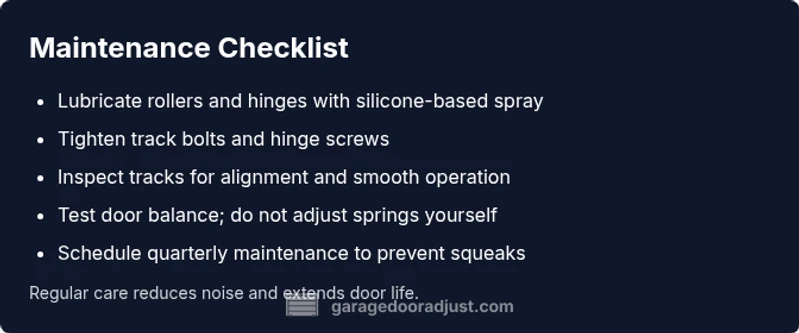
Create a simple maintenance calendar: inspect hardware every 3–6 months, lubricate annually, and wipe away dust and debris from tracks. Seasonal changes can affect door balance and track alignment, so re-check after major weather events. A proactive approach reduces surprises and extends component life, keeping your garage quiet and safe for everyday use.
Steps
Estimated time: 45-60 minutes
- 1
Power down and prep
Turn off the opener and unplug the unit. Wear protective eyewear and clear the area beneath the door. Gather lubricants and a clean cloth.
Tip: Having everything ready prevents mid-task trips to the garage. - 2
Lubricate moving parts
Apply silicone-based lubricant to rollers, hinges, and the track joints. Wipe away any excess to avoid dirt build-up.
Tip: Avoid spraying on springs or the opener mechanism. - 3
Tighten hardware
Check and tighten track bolts, brace screws, and hinge fasteners. Do not over-tighten to avoid stripping threads.
Tip: A torque-safe approach helps avoid future loosening. - 4
Inspect tracks and rollers
Look for bends, dents, or misalignment. Fix minor misalignment by gently nudging tracks back into plumb and reseating rollers.
Tip: Work slowly and test door movement after each adjustment. - 5
Test door balance
Open the door to about halfway and release. If it springs back or remains mid-air, balance may be off; do not attempt spring adjustments unless trained.
Tip: A correctly balanced door requires less opener effort. - 6
Run the door through a full cycle
Operate the door open and close several times to confirm the squeak is gone and that movement is smooth.
Tip: If the sound returns, reassess components or consult a pro.
Diagnosis: Garage door squeaking when opening or closing
Possible Causes
- highDry rollers and hinges
- highLoose hardware
- mediumTrack alignment problems
- lowBalance or spring issues
Fixes
- easyLubricate rollers, hinges, and track joints with silicone-based lubricant
- easyTighten track screws and hinge bolts; align tracks if needed
- mediumRealign tracks or replace worn rollers for persistent rubbing
- hardConsult a professional for spring balance or torsion-spring adjustments
Got Questions?
Why does my garage door squeak only in cold weather?
Cold temperatures can thicken lubricants and make metal parts contract slightly, causing squeaks until parts warm up. Re-lubricating with a silicone-based product and checking for hard spots in the track can help reduce winter noise. Always verify no moisture or rust is present before applying lubricant.
Cold weather can thicken lubricants and make parts rub more. Re-lubricate with silicone-based lubricant and inspect tracks; if the noise continues, consider a pro check.
Is WD-40 good for garage door squeaks?
WD-40 is not recommended for routine garage door lubrication. It can attract dust and degrade plastic rollers over time. Use a silicone-based spray designed for garage doors instead for long-lasting lubrication.
WD-40 isn’t ideal for garage doors. Use silicone lubricant for best results.
Should I lubricate the springs?
No. Do not lubricate torsion or extension springs. They are under high tension, and applying lubricant can mask wear or create slippery surfaces that are hazardous. If you suspect spring issues, call a professional.
Springs shouldn’t be lubricated by homeowners. If you suspect a spring issue, contact a pro.
Can I fix a misaligned track myself?
Minor track misalignment can be adjusted by carefully re-seating tracks and ensuring they’re plumb. If the track is bent, or you’re unsure, stop and call a technician. Tracks must be aligned precisely for safe operation.
You can adjust small misalignments, but bent tracks need a pro.
What tools do I need for basic maintenance?
Common tools include a screwdriver, pliers, a level, a clean cloth, and a silicone-based lubricant. A ladder is helpful for access, and safety glasses protect your eyes during inspection.
Grab a screwdriver, level, silicone lubricant, and a cloth. Use a ladder if needed.
When should I call a professional?
If noise persists after lubrication, or you notice binding, heavy resistance, or uneven door movement, call a licensed technician. Complex issues with springs or cables require professional handling.
Call a pro if it doesn’t improve after basic fixes or if springs seem involved.
Watch Video
Quick Summary
- Identify whether squeaks stem from lubrication or alignment
- Lubricate with silicone-based product on rollers and hinges
- Tighten loose hardware to reduce rubbing
- Check track alignment and balance—do not adjust springs yourself
- Call a pro if noise persists after basics to prevent injuries