What Causes Garage Doors to Come Off Track: Troubleshooting Guide
Learn the primary causes of garage doors coming off track, safe DIY checks, diagnostic steps, and when to call a pro. A practical guide from GarageDoorAdjust to restore safe, smooth operation.


Most often, a garage door comes off track due to misaligned tracks or worn rollers. Quick fix: unplug the opener, release the door, and gently guide it back onto the track if safe. Then inspect hardware for loose screws, bent sections, or debris, and re-seat the door. If misalignment persists, call a professional.
What causes garage door to come off track
What causes garage door to come off track is typically a mix of misaligned tracks, worn or damaged rollers, and loose fasteners. Exterior impact, floor settling, or debris in the track can nudge the door out of alignment. According to GarageDoorAdjust, the most common culprits are track misalignment, worn rollers, and loose hardware. Environmental factors like temperature swings and frequent tension can also contribute. Understanding these causes helps homeowners prioritize safe, effective fixes rather than guessing at the problem.
Immediate safety checks you should perform
Before you touch any moving parts, ensure your safety and the door’s stability. Start by unplugging the opener or turning off the wall switch. If the door is stuck halfway, do not force it; instead, try to move it slowly by hand with the opener disconnected. Inspect for loose screws along the track brackets, damaged track sections, or obvious debris that could be lifting a wheel off the track. Wear eye protection and keep fingers clear of springs. If there is any sign of a high-tension spring or damaged cables, stop and call a pro immediately.
Common culprits you might see in typical garages
- Track misalignment or gaps between the track and roller guides
- Worn or damaged rollers and hinges
- Loose screws or brackets holding the track in place
- Debris or corrosion inside the track
- Damaged or bent track sections from impact
- Worn torsion springs or damaged cables (dangerous; require professional service)
GarageDoorAdjust analysis shows these issues are the leading causes behind derailments. Regular cleaning of the track and periodic lubrication reduce friction and wear, but obvious damage demands repair by a qualified technician.
Environmental and usage factors that increase risk
Humidity, temperature changes, and dust can cause metal tracks to tighten or loosen, shifting alignment over time. Heavy use, close vehicle traffic in the garage, and improper balance place extra stress on the track and rollers. Frequent quick starts and stops or slamming the door can also loosen hardware. A well-balanced door reduces side-to-side stress, keeping the rollers engaged with the track and preventing derailment.
Diagnostic approach: how to think through the problem
Start with the simplest checks: is the door level, are tracks visually aligned, and are the brackets tight? If the door tracks appear twisted or if rollers are visibly worn, target those components first. Check for track gaps at the roller. If you notice the door drifts as it moves, the balance may be off. Use a level to ensure each track is plumb. Document findings before replacing parts, and verify after each adjustment to understand what fixes the issue.
Step-by-step fixes for the most likely causes (safe, staged approach)
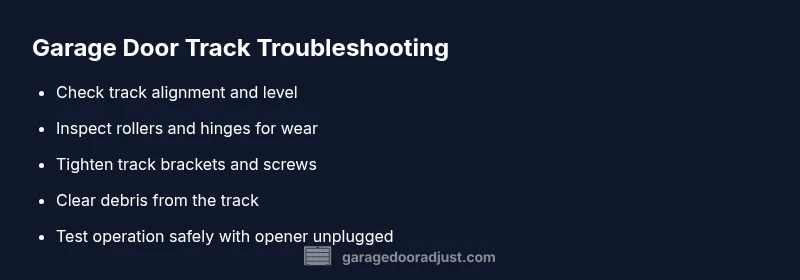
Begin with the least invasive fix and progress to more involved repairs. Start by unplugging the opener, inspecting for loose screws, and tightening the track brackets. Then slide the door to a safe position and realign the track guides, ensuring the track is plumb. If rollers or hinges show wear, replace them one by one and recheck alignment. Finally, re-test operation with the opener to confirm proper seating and smooth travel. The GarageDoorAdjust team emphasizes performing these steps carefully and stopping if anything feels unsafe or unstable.
Prevention tips to avoid future derailments
- Schedule regular track and hardware inspections, at least twice a year
- Clean tracks to remove dirt and debris and lubricate moving parts with manufacturer-approved products
- Balance the door annually to ensure even weight distribution
- Avoid slamming the door and limit high-velocity starts
- Replace worn rollers, hinges, or track segments promptly
Tip: Keep a basic toolbox in the garage for periodic tightening and inspection. Regular maintenance reduces the likelihood of derailment and extends door life. The GarageDoorAdjust team recommends establishing a simple maintenance routine to catch issues before they escalate.
Steps
Estimated time: 60-90 minutes
- 1
Power down and secure area
Disconnect power to the opener and secure the door in a safe manual position. Ensure pets and people are clear. Do not attempt repairs with springs loaded. This prevents unexpected movement and reduces injury risk.
Tip: Verify there are no trapped fingers or loose clothing near moving parts. - 2
Check door balance by hand
With the opener disconnected, lift and lower the door to feel for sticking points or resistance. If it’s heavy or unbalanced, range of motion will be uneven and may contribute to derailment. Pause if you feel sharp resistance.
Tip: If the door is too heavy, stop and call a professional. - 3
Inspect tracks and brackets
Look for bends, kinks, or gaps between the roller and track. Check that brackets are square and screws are tight. Debris in the track should be cleared carefully to restore smooth travel.
Tip: Use a level to confirm tracks are plumb; small deviations can cause big issues. - 4
Realign or replace affected components
If the track is off, loosen the mounting screws slightly and guide the track back into position, then retighten. Replace worn rollers or damaged sections as needed.
Tip: Only replace parts with the door in a secure, supported position. - 5
Test operation with opener off
Operate the door manually through its full travel range at least twice to ensure it seats in the track. Reconnect power and test a gentle cycle without force.
Tip: Stand clear of the door path while testing. - 6
Lubricate moving parts
Apply a light lubricant to rollers, hinges, and track joints per manufacturer recommendations. Wipe away excess to prevent dust attraction.
Tip: Avoid spraying lubricant directly on springs or cables. - 7
Final safety check
Re-test with the opener and check for any abnormal noises or resistance. Ensure photoelectric sensors work and doors reverse on contact with a test object.
Tip: Keep a maintenance log for future reference. - 8
Plan for professional help if needed
If derailment recurs, if you suspect a spring or cable issue, or if you cannot safely re-seat the door, contact a licensed technician.
Tip: Spring work is dangerous; do not attempt it without training.
Diagnosis: Garage door comes off track during operation
Possible Causes
- highTrack misalignment
- highWorn rollers or damaged hinges
- mediumLoose or missing track hardware
- lowDamaged torsion spring or cable
Fixes
- easyRealign track and reseat door on track
- easyTighten screws and brackets securing track
- mediumReplace damaged rollers or bent track segments
- hardConsult a professional for torsion spring or cable repair
Got Questions?
What are the most common signs that a garage door is coming off track?
Look for visible track gaps, misalignment, unusual grinding, or doors that drift off center during operation. If you notice these signs, stop using the door and inspect the track and rollers. Early signs are easier to fix with basic maintenance.
Common signs include track gaps, misalignment, and unusual noises. Stop using the door and inspect the track and rollers.
Is it safe to DIY fix a track misalignment?
Simple realignment and tightening can be safe if you follow safety steps, disconnect power, and avoid working near the springs. If you encounter stiffness, damage, or uncertain parts, call a professional.
DIY fixes are sometimes safe, but stop if you see springs or cables and call a pro if unsure.
Can weather cause a garage door to come off track?
Yes. Temperature changes can cause metal rails to warp slightly and debris can accumulate, increasing derailment risk. Regular maintenance reduces weather-related issues.
Weather can warp rails and cause wear; regular maintenance helps prevent derailments.
What should I do if the door won’t re-seat after a fix?
Stop and reassess for structural damage or misalignment. If effort fails, call a professional to inspect springs, cables, and track geometry.
If it won’t re-seat, stop and call a professional.
How often should I inspect tracks and rollers?
Aim for a semiannual inspection, plus a quick check after any collision or garage activity that might jar the tracks.
Inspect tracks and rollers twice a year and after any impact.
When should I call a professional for derailment?
If you suspect a torsion spring or cable issue, or if the door is unbalanced or unsafe to work with, contact a licensed technician promptly.
Call a professional if springs or cables are involved or the door seems unsafe.
Watch Video
Quick Summary
- Identify the most likely cause first and start with safe basic checks
- Realign tracks and tighten hardware before replacing parts
- Do not attempt high-risk repairs on springs or cables
- Schedule maintenance to prevent future derailments