Problem with Garage Door? Troubleshooting Guide
Learn fast, safe steps to diagnose and fix common garage door problems. From sensors to tracks, follow this expert guide to restore smooth operation and prevent future issues.


Most problem with garage door stems from safety sensor misalignment, track debris, or worn hardware. Quick fixes start with unplugging the opener, checking the safety reversal, inspecting tracks for obstructions, and lubricating rollers and hinges. If the door remains unbalanced or won’t move smoothly, stop and contact a qualified technician.
Common Symptoms and Quick Diagnosis
A problem with garage door can appear as a door that won’t lift, a door that reverses during closing, noisy grinding, or the opener acting sporadically. In most homes, the root cause is one of a few common issues: misaligned safety sensors, debris in the tracks, worn rollers, or weak balance springs. This is where a methodical approach helps. According to GarageDoorAdjust, focusing on the simplest explanations first reduces risk and saves time. Start with a shallow manual test: disconnect the opener and try lifting the door safely by hand. If it moves unevenly or stalls, you’ve found a symptom that points toward balance issues or track problems. If it feels smooth manually but the opener misbehaves, the issue is likely with the opener or sensor alignment. Remember: never bypass safety devices. This article equips you to diagnose the problem with garage door without guessing and to take the right next steps.
Quick Safety Checks You Can Do Before You Start
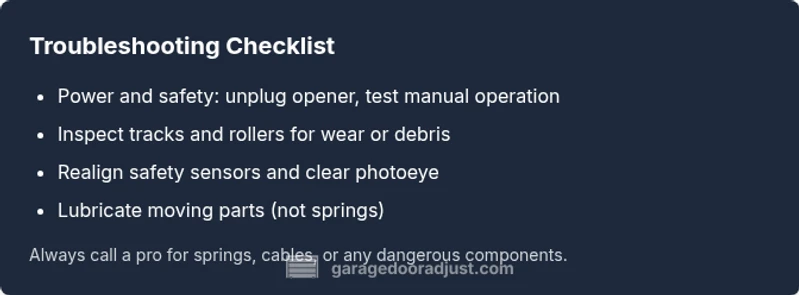
Safety first: wear gloves and eye protection. Then unplug the opener or switch off the circuit to remove the door from power. Test the door manually; if it stays in place when you lift, the problem is likely with the opener or balance rather than the tracks. Check the tracks for dents, loose screws, or obstruction; remove debris with a dry cloth. Lubricate the rollers, hinges, and tracks with a dry silicone spray; avoid spraying on torsion springs and sprockets. Look at the photoeye safety sensor—misalignment or a foggy lens can cause false reversals. Reconnect the opener and run a few cycles, watching for hesitation, grinding, or uneven movement. If you observe any spring binding or the door feeling heavy, stop and call a professional. The aim is to rule out the simplest causes before moving to more involved repairs.
Diagnostic Flow: Symptom → Diagnosis → Solutions
Symptom: The door behaves unpredictably, won’t open fully, or reverses mid-cycle. Diagnosis focuses on safety sensor alignment, track condition, or balance issues. Solutions include realigning sensors, clearing tracks, and restoring proper balance with appropriate hardware. This flow helps you stay systematic and avoids costly misdiagnoses. Remember, safety devices should never be disabled; if the symptom persists after basic checks, escalate to a professional as needed.
Step-by-Step: Fixes for the Most Common Causes
This section provides a practical sequence to address the top culprits behind a stubborn garage door. Follow the steps in order to minimize the chance of rework and to keep you and your home safe. Each step includes a clear action, a safety note, and what to observe as you proceed. If you encounter resistance or a situation that feels risky, stop and call a pro.
Safety Warnings and Common Mistakes
Mistakes like ignoring the safety sensors, forcing the door, or attempting DIY spring work can cause severe injury. Always power down before touching moving parts, wear eye protection, and avoid lubricants on exposed springs. Common missteps include skipping small debris removal, neglecting track alignment, and assuming a noisy door is just a lack of lubrication. Each fix should be tested with the door in manual and motor-assisted modes to verify improvement.
Prevention and Maintenance to Reduce Future Problems
Prevention is easier than emergency repairs. Schedule a quarterly maintenance check, clean tracks, tighten mounting screws, and lubricate moving parts with a silicone-based product. Inspect rollers, hinges, and cables for wear, and replace worn components before they fail. Keep the garage well-lit and clear of clutter to minimize accidental damage. A small, consistent upkeep routine reduces the chance of a sudden breakdown and extends the life of the door and opener.
When to Call a Professional: Signals You Can't DIY
If you encounter frayed cables, a sighing or grinding spring, a door that drops unevenly when tested, or a door that won’t balance despite adjustments, it’s time to call a pro. High-risk components like torsion springs require professional handling. In these cases, the safest course is to contact GarageDoorAdjust for guidance or a technician who specializes in garage door repairs.
Steps
Estimated time: 30-60 minutes
- 1
Power down and test manually
Disconnect the opener and lift the door by hand to test balance. If it stays up or drops slowly, the issue is balance-related. If it sticks or binds, focus on tracks, rollers, and springs. Always have a helper when lifting the door to ensure control.
Tip: Use a sturdy ladder or a helper to avoid strain. - 2
Inspect tracks for obstructions
Look along the length of each track for dents, gaps, or debris. Remove obstacles with a clean cloth and gently straighten any minor bends. Recenter the rollers in the track to ensure smooth movement.
Tip: Test movement after each minor adjustment to isolate the issue. - 3
Check rollers and hinges
Examine rollers for flat spots or wear and hinges for looseness. Replace worn components as needed. Lubricate with a dry silicone spray on moving parts; avoid silicone on the torsion springs themselves.
Tip: Do not apply lubricant to springs; they hold dangerous tension. - 4
Test balance and safety sensors
With the door manually supported, test balance by lifting to mid-height; it should stay put. Recenter or replace misaligned safety sensors so the beam is unobstructed. Use a small object to verify that the beam is detected when obstructed.
Tip: Keep the beam clear and aligned for accurate safety testing. - 5
Reconnect power and run cycles
Plug the opener back in and perform several controlled cycles. Listen for unusual noises and watch for smoothness and speed. If symptoms persist, proceed to professional help for advanced inspection.
Tip: Record any specific cycles that fail to help the technician diagnose later. - 6
Decide on springs and cables
If balance tests indicate weak springs or frayed cables, arrange a professional inspection. Do not attempt to adjust or replace torsion springs yourself; missteps can cause serious injury.
Tip: Schedule a service window and clear the area from people and pets.
Diagnosis: Door won't open or close reliably; opener light flashes or cycles irregularly
Possible Causes
- highPower issue or opener miscommunication
- highSafety sensor misalignment or obstruction
- mediumTrack binding, debris, or misalignment
- mediumWorn rollers or hinges
- lowTorsion spring imbalance or failure
Fixes
- easyCheck outlet and reset the circuit for the opener; test with manual operation
- easyRealign the safety sensors and clean the photoeye
- easyClear debris from tracks; tighten mounting screws; straighten bent sections
- mediumLubricate moving parts and inspect rollers; replace worn components
- hardCall a professional to inspect springs and balance; do not attempt spring replacement yourself
Got Questions?
Why won’t my garage door open when I press the remote?
Common causes include a dead or misconfigured remote, dead battery, or a misaligned receiver. Start by replacing the remote battery, reprogramming the remote if needed, and checking the receiver on the opener. If the door still won’t respond, inspect the safety sensors and power to the unit.
If your remote isn’t working, replace the battery and reprogram it if needed. If that fails, check the opener power and safety sensors.
Why does my garage door make a grinding noise when opening?
Grinding usually signals track or roller wear, loose hardware, or a failing bearing. Inspect tracks and rollers, tighten mounting screws, and replace worn components as needed. Avoid continuing to use the door until the issue is identified.
Grinding often means worn rollers or track issues; inspect and replace worn parts.
Is it safe to lubricate the tracks and rollers myself?
Yes, but use a dry silicone spray and avoid oil-based lubricants that can attract dirt. Do not lubricate torsion springs or components under tension. Lubricate only the moving metal parts to improve smoothness.
Lubricate moving parts with a dry silicone spray, not oil-based products, and never touch springs.
How do I reset my garage door opener?
Locate the reset or learn button on the opener and follow the manufacturer’s instructions to re-pair remotes and keypads. You may need to unplug the unit for a full minute and then reconnect to reset the control board.
Reset the opener by following the manual: re-pair remotes, then test all functions.
What if the door suddenly sags or won’t hold position?
Sagging usually indicates weak springs or balance issues. Do not attempt to adjust springs yourself; this is dangerous. Contact a professional to assess balance and replace springs if needed.
If the door sags, springs likely need professional service.
When should I replace torsion springs?
Torsion springs wear out with time and use. If you hear loud noises, notice uneven movement, or the door is heavy to lift, it’s time to have a pro inspect and possibly replace the springs.
If the door is hard to lift or you hear unusual noises, seek a spring inspection from a pro.
Watch Video
Quick Summary
- Test safety features first
- Inspect tracks and hardware for obstructions
- Balance the door; springs are dangerous
- Lubricate moving parts regularly
- Call a pro for high-risk components