Garage Door is Heavy to Open: Troubleshooting Guide
Urgent, step-by-step troubleshooting for a garage door that’s heavy to open. Identify causes, test balance, perform safety checks, and know when to call a pro.


The garage door is heavy to open most often due to balance problems from worn springs or misaligned tracks. To act fast, unplug the opener, check for binding along the rails, and lubricate moving parts. If the door still feels heavy, don’t force it—disconnect the opener and call a professional. These steps can restore balance and prevent damage.
Why a garage door is heavy to open
If you feel the door struggle to lift, you’re not imagining it. A garage door is heavy to open most often because the system has lost balance or a moving part is binding. In many homes, this symptom points to wear in the springs, misaligned tracks, or rusty cables. According to GarageDoorAdjust, a reliable balance is essential for safe operation and long-term durability. The GarageDoorAdjust team found that small changes in tension or alignment can dramatically affect how hard the door feels to lift. In practice, correcting balance and improving lubrication can restore smooth operation without expensive replacement. If the door remains heavy after basic checks, shut it, unplug the opener, and seek professional assistance to avoid injury or further damage. Safety first: never attempt to adjust high-tension components yourself.
Common causes behind a heavy door
There are several mechanical culprits that commonly cause a door to feel heavy. The most frequent issue is a balance problem caused by worn or stretched springs, which makes the opener work harder and can stress cables. Next, track misalignment or bent track sections create binding, increasing effort to lift. Dry or dirty rollers, hinges, and guide bushings also raise friction. Weather seals swollen over time can add unexpected drag. In GarageDoorAdjust analysis, misbalance and track issues account for the majority of heavy doors, with springs and cables as leading contributors. Regular inspections help your door keep an even, easy lift, and prevent expensive repairs later.
Quick safety checks you can do safely
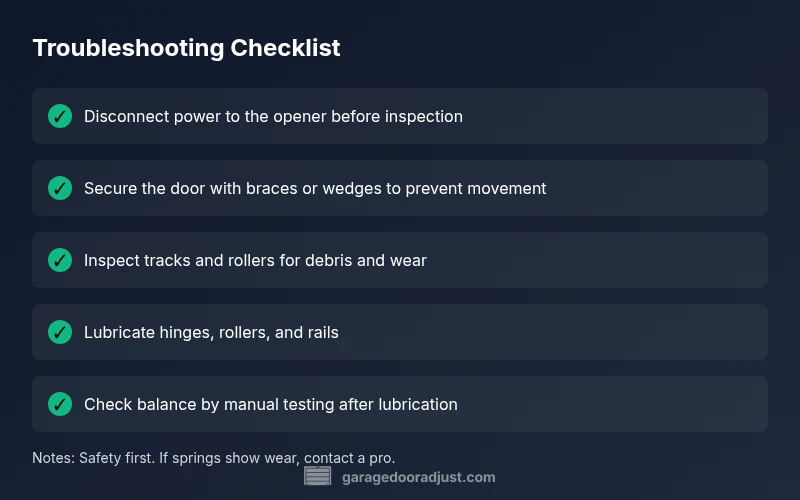
Before you touch any hardware, power down the opener and make sure the door is physically supported. Use door braces or wedges to prevent any unintended movement. Do not attempt to loosen or adjust springs yourself; spring tension is dangerous and requires a trained technician. Check the tracks for obstructions, debris, and dents; clean them with a soft brush and a mild solvent. Lubricate moving parts such as rollers, hinges, and the rail with silicone-based lubricant or white lithium grease. If you notice uneven gaps or the door still binds after cleaning, note the symptoms and proceed to test balance using the diagnostic flow below. If at any point you feel unsure, stop and contact a professional.
How to test door balance and spring tension
A proper balance means the door stays roughly where you leave it when opened manually. Start by disconnecting power to the operator, then lift the door halfway and slowly release it. If it tends to drift downward, the springs or balance system may be worn or misadjusted. If it stays put or rises slightly, balance is likely good. Inspect torsion springs visually for gaps, wear, or obvious damage. If you see any damage, do not continue. Test the tracking by sliding a light pencil along the edge of the track to see if it is perfectly vertical. If the door binds or sticks, you may need to realign tracks or replace rollers. For any doubt, call a pro. This step is safer and shorter than a full replacement, and it helps you decide whether professional help is needed.
Maintenance steps you can do today
Regular maintenance goes a long way toward keeping the door easy to open. Start by cleaning tracks and hinges to remove dust and debris that cause friction. Lubricate moving parts with a silicone-based spray; avoid grease on plastic components. Tighten mounting screws and check that brackets are secure. Inspect weatherstripping and replace if swollen or torn. Keep an eye on balance by repeating the manual test every few months, especially after seasonal changes or heavy use. The goal is to sustain smooth operation without triggering the common warning signs that indicate spring or track wear.
When to call a professional
If you notice any of the following, contact a licensed garage door technician right away: persistent heaviness after lubrication, visible spring damage or wire separation, bent tracks, or the door dropping unexpectedly. A professional can safely assess spring tension, conduct a proper balance test, and perform parts replacement with proper safety procedures. Remember: springs are under high tension; do not attempt to adjust them yourself. Quick action now can prevent costly damage later and ensure your door operates reliably.
Prevention tips to keep it easy to open
Develop a simple maintenance routine to prevent the heavy-to-open issue. Schedule seasonal lubrication, track cleaning, and balance checks, and keep the door free of obstructions at the bottom. Use weather strips to minimize drag and seals that remain pliant in varied temperatures. Record the maintenance dates and any parts you replace so future service visits go smoothly. The GarageDoorAdjust team recommends proactive care to extend the life of your system and maintain safe, easy operation.
Steps
Estimated time: 60-90 minutes
- 1
Ensure safety and prepare the work area
Power down the opener, secure the door with braces, and clear the area of bystanders or pets. This reduces risk if parts shift or snap during inspection.
Tip: Always assume springs are under tension—never attempt to adjust them. If unsure, stop immediately. - 2
Check for obvious binding
Inspect the tracks, rollers, and hinges for debris, bends, or wear. Clean tracks with a soft brush and a mild cleaner, then wipe dry. Tighten loose screws on brackets.
Tip: Even small debris can create noticeable drag—don’t skip track cleaning. - 3
Test door balance manually
Disconnect the opener and lift the door halfway. If it falls or rises on its own, the balance is off and springs may be worn.
Tip: If the door holds position, balance is likely good—continue the inspection. - 4
Assess spring condition
Look for twists, gaps, or fraying in torsion springs. Do not attempt repairs yourself if you notice damage; springs require licensed service.
Tip: Springs are high-tension components—professional service is the safe path. - 5
Lubricate moving parts
Apply a silicone-based lubricant to rollers, hinges, and tracks. Wipe away excess to avoid attracting dust.
Tip: Use oil/grease only as directed by the manufacturer on plastic parts. - 6
Check weather seals and anchors
Inspect weatherstripping and mounting hardware; replace swollen seals and tighten brackets as needed to reduce drag.
Tip: Swollen seals can add unexpected resistance that feels like a heavy door. - 7
Re-test and decide on next steps
Reconnect power, test door operation, and compare results with the previous tests. If heavy operation persists, schedule professional service.
Tip: Document symptoms and tests to share with the technician.
Diagnosis: Garage door is heavy to open
Possible Causes
- highBalance problem due to worn springs
- mediumTrack misalignment or binding rollers
- lowExcess friction from lack of lubrication
Fixes
- easyTest and adjust door balance; lubricate moving parts; ensure tracks are clean and aligned
- hardRealign tracks or replace worn rollers; inspect and replace springs by a professional
Got Questions?
Why does a garage door feel heavier to open even with an opener?
The opener may be compensating for a balance issue, but the real cause is often springs, tracks, or worn cables. If the door is heavy, testing balance and inspecting springs are essential, and avoid making risky adjustments.
A heavy door with an opener usually means balance or track issues rather than the motor. Check balance and springs, and don’t try dangerous adjustments.
Can lubrication fix a heavy garage door?
Lubrication can reduce friction and help the door move more smoothly, but it won’t fix worn springs or bent tracks. Use silicone-based lubricant on moving parts and keep tracks clean.
Lubrication helps with friction, but worn springs or misaligned tracks still require inspection by a pro.
When should springs be replaced?
Springs should be replaced when there are signs of wear such as gaps, stretching, cracking, or the door remains heavy after other checks. This work must be done by a licensed technician.
Replace springs if you see wear or major imbalance. It’s dangerous—leave it to a pro.
Is it safe to test door balance manually?
Manual balance testing is generally safe if you are careful and the door is properly secured. Do not attempt to adjust springs, and have a helper close by.
Yes, you can test balance manually, but avoid touching high-tension parts.
What if the door slowly falls when opened halfway?
That indicates a serious balance problem or spring wear. Stop using the door and contact a professional technician to inspect springs and tracks before using it again.
If it falls, you probably have a spring or balance issue—stop and call a pro.
Can the opener itself be the cause of heaviness?
In rare cases, the opener motor or gears can contribute to heaviness, but most issues are balance or track-related. Test the door manually to separate opener from mechanical problems.
Usually balance or track issues, not the opener, but test manually to be sure.
Watch Video
Quick Summary
- Balance and track health matter most; fix those first.
- Do not force a heavy door—stop and assess safety steps.
- Lubrication and track cleaning are quick wins for easy opening.
- Springs and cables require professional attention for safety.
- Regular maintenance prevents future heaviness and costlier repairs.