Is My Garage Door Too Heavy? Troubleshooting Guide 2026
Urgent step-by-step guide to determine if your garage door is too heavy, diagnose weight-related issues, and safely fix common causes before calling a pro.


Is my garage door too heavy? Most often, a heavy-feeling door means worn or unbalanced springs or binding tracks rather than real weight. Quick fix: disconnect the opener and try lifting the door manually to test balance. If it won’t stay open, moves with noticeable resistance, or feels unsafe, stop and contact a professional. Weight-related issues demand caution and proper safety procedures.
Is My Garage Door Too Heavy? Signs and Quick Checks
If you’ve ever wondered, “Is my garage door too heavy?”, you’re not alone. In many homes a door feels heavy not because it’s physically heavier than it should be, but because the system is not balanced or the springs are worn. According to GarageDoorAdjust, a door that feels unusually heavy is often a sign of wear on torsion springs, misalignment of tracks, or binding rollers. Before you panic, perform a few safe checks: unplug the opener, try lifting manually, listen for grinding, and observe how the door tracks. If the door binds or drops when you release it, stop and seek professional help. Early diagnosis can prevent serious injury and long-term damage to the opener.
This article uses the phrase is my garage door too heavy to guide homeowners through a practical, safety-focused process. We’ll cover common causes, how to perform a safe self-check, and when to call a professional. GarageDoorAdjust emphasizes that timely action protects people and property, and reduces the risk of springs failing catastrophically.
How Weight Affects Your Door System
The door’s perceived weight is tied to spring tension, balance, and the condition of components like tracks and rollers. When springs lose tension or become fatigued, they can’t counterbalance the door’s weight, making the door feel heavier and harder to lift. Misbalanced springs can also place additional load on the opener, accelerating wear and potentially triggering safety trips. Tracks that are out of plumb or rollers that are binding create friction, which compounds the effort needed to move the door. Regular lubrication and alignment checks help, but do not substitute for worn springs or damaged components. The phrase is my garage door too heavy should prompt an immediate safety assessment, because weight-related issues can escalate quickly if ignored.
Common Causes at a Glance
- Worn or broken torsion springs: The most frequent cause of a heavy door. If springs can’t balance the door, the weight is effectively shifted to the opener and panels.
- Improper balance: A door that isn’t level or balanced places uneven loads on tracks and torsion hardware.
- Track or roller binding: Dirt, misalignment, or bent tracks increase resistance, making the door feel heavier.
- Damaged cables or broken hinges: Worn cables reduce efficiency, increasing effort required to lift.
- Opener issues: If the opener is failing or mismatched to the door, it may struggle and amplify the perceived weight.
- Weather and insulation: Heavier, insulated doors can feel stiffer in cold weather, masking other issues.
Use this checklist to isolate which area is most likely causing the weight perception. GarageDoorAdjust notes that most fixes are mechanical and solvable with safe procedures or professional service when springs or structural parts are involved.
Safety First: Key Precautions Before You Inspect
Safety should always come first when dealing with garage doors. The highest-risk components are torsion springs and cables under high tension. Never attempt to remove or adjust springs yourself unless you’re trained and equipped for this work. Disconnect the opener to eliminate the motor’s contribution to lifting the door, wear eye protection, and keep hands and clothing clear of moving parts. If you observe cracks, rust, or sudden changes in weight without an obvious cause, stop and call a pro. Keeping kids and pets away during checks is essential, as is ensuring you have a firm footing and secure footing surface. This approach reduces the chance of injury and prevents further damage to the door or opener.
Diagnostic Flow: Symptom → Diagnosis → Solutions (Overview)
This section outlines the diagnostic path you’ll follow in the next steps. Start with symptoms such as “door feels heavy” or “opener strains.” From there, consider whether springs are likely worn, balance is off, tracks are binding, or cables are damaged. The two most common causes—worn springs and balance issues—require professional attention. If after this quick flow you’re uncertain, prioritize safety and call a licensed technician. GarageDoorAdjust stresses that misdiagnosing a spring issue can lead to dangerous failures and greater costs later on.
Step-By-Step: Fix for the Most Common Cause (Worn Springs)
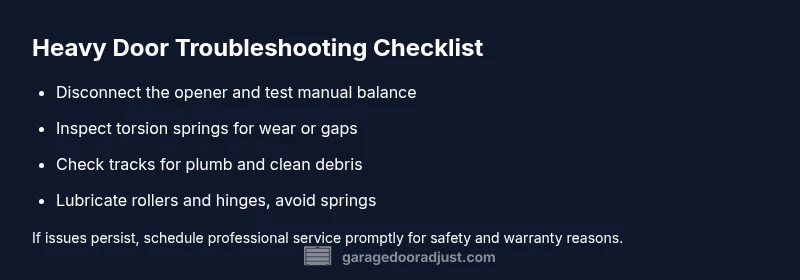
- Stop and unplug the opener. 2) Visually inspect torsion springs for gaps, rust, or deformities. 3) If springs show wear, do not attempt to adjust or replace them yourself; contact a licensed technician immediately. 4) While awaiting service, avoid using the door aggressively and keep the area clear. 5) After repair, have the technician re-tension and test the door balance.
If you’re not comfortable with a professional repair, focus on steps that do not involve springs, like lubricating tracks and checking alignment—these can improve performance temporarily without compromising safety. GarageDoorAdjust notes that attempting spring work without proper tools and training is dangerous and can cause serious injury.
How to Test and Adjust Safe, Temporary Measures (Non-spring fixes)
- Lubricate tracks, rollers, and hinges with a silicone-based or lithium-based garage door lubricant. Do not use WD-40 on moving hardware for long-term use.
- Tighten loose track screws and ensure tracks are plumb. Misalignment increases friction and can feel like extra weight.
- Check for door binding at the hinges and rollers; replace worn rollers if necessary and safe to do so.
- Recheck balance using a manual lift and hold test (with the opener disconnected). If it still feels heavy, there’s likely a spring or balance issue that requires a pro.
Final caution: If the door is heavy and you’re unsure about any step, stop and contact a qualified technician. The GarageDoorAdjust team consistently emphasizes safety-first protocols.
If This Doesn’t Work: When to Call a Pro
If manual balance tests fail, if springs show signs of fatigue, or if the door requires excessive effort to lift, professional service is required. A qualified technician will safely re-balance the system, replace springs if needed, and verify the door’s overall safety, including auto-reverse and sensor checks. Delaying expert help increases the risk of sudden spring failure, which can be dangerous. The GarageDoorAdjust team recommends arranging a diagnostic visit as soon as possible to prevent further damage and ensure your family’s safety.
Prevention Tips to Keep It Light (Maintenance Mindset)
- Schedule semi-annual inspections focusing on springs, cables, and track alignment.
- Keep tracks clean and lubricated, and replace weather seals that may add unnecessary friction or pressure.
- Test the door balance monthly by disconnecting the opener and lifting the door halfway. If it stays put, you’re likely balanced; if it drifts, schedule a tune-up.
- Use a reputable pro for spring maintenance and replacement; improper handling is dangerous and can void warranties.
- Document any changes in weight perception to spot progressive wear early and act before failures occur.
Final Quick Checks for Monthly Maintenance
- Wipe down tracks and inspect for debris.
- Listen for unusual noises during operation; grinding can indicate binding components.
- Confirm safety features (auto-reverse and photo-eye) are functioning properly. Monitoring these elements monthly helps catch problems early and keeps your family safe.
],
diagnosticFlow":{"symptom":"Door feels heavy or opener strains","causes":[{"cause":"Worn or broken torsion springs","likelihood":"high"},{"cause":"Improper balance due to loose tracks or misadjusted springs","likelihood":"high"},{"cause":"Tracks or rollers binding","likelihood":"medium"},{"cause":"Cables frayed or misaligned","likelihood":"low"}],"fixes":[{"fix":"Carefully test balance with opener unplugged; manually raise/lower to test weight distribution","difficulty":"easy"},{"fix":"Inspect and tighten track screws, lubricate rollers, replace worn springs by a pro","difficulty":"hard"}]},
stepByStep":{"steps":[{
number":1,
Steps
Estimated time: 60-90 minutes
- 1
Disconnect the opener
For safety, unplug the automatic opener and stand clear of the door while you perform initial checks. This isolates the door’s mechanical weight from the motor and prevents accidental movement.
Tip: Keep the remote out of reach and use a friend to steady the door if available. - 2
Test manual balance
With the door unplugged, raise it halfway and release. A balanced door should stay in place. If it slides down or fights to stay up, the springs or balance system likely require service.
Tip: Use a rear position for testing to avoid full drop risks. - 3
Inspect springs and cables
Look for visible signs of wear on torsion springs, cables, and anchors. Do not touch springs directly if you see gaps or deformation—these parts are under high tension and require professional handling.
Tip: Never attempt to tighten or replace springs yourself. - 4
Assess tracks and rollers
Check tracks for bending or obstruction. Ensure rollers move smoothly and lubricate them if needed. Misaligned or stuck rollers increase effort and mimic excessive weight.
Tip: Only apply lubricant to the rollers and tracks, not to springs. - 5
Check door alignment
Make sure the door panels and sections align evenly and there are no gaps. Misalignment can put extra strain on the system and create the illusion of heaviness.
Tip: If you see misalignment, schedule professional adjustment. - 6
Test the opener with a safety check
After basic checks, reconnect power and test the opener’s function at slow speeds. If it strains or stalls, stop and call a pro.
Tip: Observe the safety features (auto-reverse, sensors) during the test. - 7
Plan for professional service
If your manual test indicates issues beyond lubrication and track alignment, arrange a professional inspection for spring replacement or balance correction.
Tip: Document symptoms and tests to share with the technician.
Diagnosis: Door feels heavy or opener strains
Possible Causes
- highWorn or broken torsion springs
- highImproper balance due to loose tracks or misadjusted springs
- mediumTracks or rollers binding
- lowCables frayed or misaligned
Fixes
- easyCarefully test balance with opener unplugged; manually raise/lower to test weight distribution
- hardInspect and tighten track screws, lubricate rollers, replace worn springs by a pro
Got Questions?
What does it mean if my garage door feels heavy?
A heavy feel usually points to worn springs, improper balance, or track/roller resistance rather than actual weight. It can also indicate motor strain when the opener is not matched to the door. A professional should assess springs and balance.
If your door feels heavy, it’s typically a sign of worn springs or track resistance. Have a pro check the balance and springs.
Can I fix a heavy garage door myself?
Only non-spring fixes, like cleaning tracks and lubricating components, are safe for a homeowner. Replacing or adjusting springs requires a licensed technician—doing it yourself can lead to serious injury.
Spring work is dangerous; don’t DIY if springs look worn or you’re unsure.
How do I know if springs are worn?
Look for gaps in torsion springs, rust, or a door that won’t balance when manually lifted. If you hear loud creaks or see stretched cables, suspect worn springs.
Signs include gaps, rust, or unbalanced door when you lift it manually.
When should I replace springs vs cables?
Springs wear out faster than cables most of the time. If one component shows wear, inspect others, but replace springs with a pro and consider cables together if worn.
Springs usually need replacement first; cables wear down too but are safer to inspect with a pro.
Is it dangerous to lift a heavy door manually?
Yes. A door under tension can snap back, causing injury. Always disconnect the opener and proceed with caution, or have a pro handle manual lifting.
It’s risky—disconnect power and don’t force the door.
What is a typical cost range for restoration?
Costs vary widely based on parts and labor. Expect professional assessment to gauge whether springs, cables, or tracks require service; avoid DIY for spring work to prevent hazards.
Prices vary; get a written estimate after the diagnostic check.
Watch Video
Quick Summary
- Test balance with opener unplugged.
- Prioritize safety when springs are involved.
- Address track alignment early to reduce effort.
- Call a pro for spring work or if weight persists.