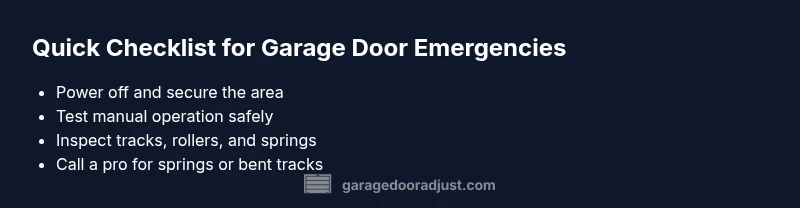
Garage Door Emergencies: Quick Troubleshooting Guide
Urgent guide for diagnosing and fixing garage door emergencies at home. Learn safe steps, when to call a pro, and how to prevent future breakdowns today.


Most likely, a garage door emergency stems from a misaligned track, a broken torsion or extension spring, or a power issue. Quick fix: unplug the opener, manually lift the door to check balance, and reseat or realign the track if it’s rough. If the door drops, stalls, or the opener hums abnormally, stop and call a pro.
What triggers garage door emergencies and quick checks
Garage door emergencies usually start with something simple going wrong in the spring system, track alignment, or an obstructed safety sensor. According to GarageDoorAdjust, most incidents originate from a misaligned track or worn springs, especially when combined with power issues or sensor misalignment. Start by unplugging the opener and attempting a manual lift to test balance. If the door feels heavy, binds, or suddenly lowers instead of staying in place, stop immediately and avoid forcing it. Keep hands clear of hinges and tracks, and maintain a safe stance as you inspect. If you cannot determine the cause quickly, treat it as an emergency and call a professional.
Common hardware problems you should inspect with caution
A common source of garage door emergencies is hardware wear. Misaligned tracks, loose mounting screws, stretched or broken springs, and worn rollers can all trigger unpredictable movement. The GarageDoorAdjust analysis shows that even minor track misalignment can lead to binding or sudden jerks if not corrected. Inspect the track for dents, ensure rollers move freely in their guides, and verify that all screws and brackets are tight. Do not attempt to bend or force bent tracks; instead, mark the area and schedule professional service. If the door opens unevenly or makes grinding noises, stop and reassess before applying lubrication or adjustment. Safety should always come first, especially when springs are involved.
Sensor issues and safety features you should verify
Modern garage doors use safety photocells and auto-reverse to prevent injuries. Misalignment, dirt on the eyes, or an obstructed path can cause the opener to back away or fail to stop. Verify that the infrared beam crosses the doorway unobstructed and that the opener’s safety settings are intact. If the door reverses before contacting the floor or not at all, test the red emergency release and attempt a cautious manual operation. Do not bypass safety features or disable auto-reverse, which can create serious hazards.
Diagnostic flow: symptom to repair (non-destructive tests)
When you experience a specific symptom, use a simple diagnostic flow to determine the likely cause and the safest fix. Start with power-related checks, then test manual operation, track alignment, and sensor status in order. If the symptom is “door won’t move,” you’ll often find a power issue or binding track; if it “jumps” or “slams,” the spring or counterbalance is suspect. Use the flow to decide whether you can perform the fix safely or whether professional assistance is required. Always document what you observe so the technician can work efficiently if you need to call one.
Prevention, safety tips, and next steps
Once you’ve resolved a garage door emergency, put steps in place to prevent recurrence. Schedule regular lubrication of rollers and tracks, check balance annually, and replace worn parts promptly. Invest in a safety manual release with proper training for family members. The GarageDoorAdjust Team emphasizes cautious testing, strict power isolation during DIY work, and following manufacturer instructions. If you’re unsure at any point, opt for a professional inspection rather than guessing. Keeping a small emergency kit (gloves, safety glasses, and a flashlight) nearby can also help during a failure.
Steps
Estimated time: 45-60 minutes
- 1
Assess the scene and secure safety
Clear the area, turn off power at the disconnect, and ensure children and pets are away. Put on gloves and safety glasses. Visually inspect for obvious hazards before touching any components.
Tip: Always prioritize personal safety; if you’re unsure, stop and contact a pro. - 2
Power down and access manual operation
Unplug the opener and pull the manual release to disarm the automatic mechanism. Try lifting the door slowly with a firm grip to feel for binding or imbalance without forcing it.
Tip: Never yank the door; use steady, controlled pressure. - 3
Inspect tracks, rollers, and hinges
Look for bent tracks, loose screws, or corroded rollers. Wipe away debris and verify rails are straight. Do not attempt to bend the track or force stuck rollers.
Tip: Lubricate only after you confirm the path is clear and aligned. - 4
Check balance and spring condition
With the door released, test its weight at different heights. If it’s hard to lift or drops rapidly, the spring or counterbalance is compromised.
Tip: Springs are dangerous; avoid DIY repairs beyond basic inspection. - 5
Restore power and test operation
Reconnect the opener and test opening/closing slowly. Listen for unusual noises and watch for jerky movement. If anything feels off, stop and call a pro.
Tip: Document symptoms to assist the technician and prevent repeat issues.
Diagnosis: Door won’t respond or behaves dangerously during operation
Possible Causes
- highPower issue (outlet, breaker, or remote)
- highBroken torsion/extension spring
- mediumTrack misalignment or binding
- lowSensor misalignment or obstruction
Fixes
- easyCheck outlet and circuit breaker; reset the opener if needed
- easyManually disconnect the opener and test door balance
- mediumInspect and realign the track, tighten mounts, and lubricate moving parts
- hardReplace springs or call a professional; do not attempt spring work yourself
Got Questions?
What counts as a garage door emergency?
An emergency occurs when the door behaves unpredictably, won’t move, or drops unexpectedly, posing injury risk. If you hear grinding, see misalignment, or senses of danger, treat it as an emergency.
If the door is acting unpredictably or could cause an injury, treat it as an emergency and stop using it.
Can I fix a broken spring myself?
No. Springs store a lot of tension and can cause serious injury. Only trained professionals should replace torsion or extension springs.
Springs are dangerous to handle yourself; call a pro for replacement.
How do I test the balance of my door?
With the opener disconnected, lift the door halfway and release. If it stays in place, balance is good; if it falls or rises, balance is off.
Lift the door halfway and release to check balance.
What should I do if the power is out?
Use the manual release to operate the door and avoid relying on the opener. Do not force movement if the door is heavy.
Use the manual release and avoid forcing the door if it’s heavy.
How often should I lubricate tracks and rollers?
Typically every 6-12 months, or when you notice stiffness or noise. Use a silicone-based lubricant suitable for garage doors.
Lubricate once or twice a year to keep movement smooth.
When should I call a professional?
If you’re unsure, the door is off track, springs show damage, or you smell burning. A professional can diagnose and repair safely.
Call a pro if you’re unsure, the door is off track, or you smell burning.
Watch Video
Quick Summary
- Identify root cause with quick checks.
- Unplug before manual testing to isolate power.
- Never attempt DIY spring repairs.
- Schedule regular maintenance to prevent emergencies.