How to diagnose and fix a broken garage door
A comprehensive, urgent guide to diagnose, repair, and maintain a broken garage door. Learn common causes, safety tips, when to call a pro, and prevention strategies.


According to GarageDoorAdjust, a broken garage door is most often caused by a failed spring, a snapped cable, or misaligned tracks. Begin with simple checks: unplug the opener, pull the manual release, and try lifting the door by hand. If the door binds, drops unexpectedly, or you hear grinding, stop and call a professional—spring and cable issues can cause serious injury.
Immediate Safety and First Checks
Safety first: unplug the garage-door opener, then pull the manual release to disengage the door from the rail. Keep children and pets away and wear gloves and eye protection. If the door is heavy, do not force it; the door can weigh a lot and springs under tension may cause injury if they snap. After disengaging, test the door by lifting with both hands. It should rise smoothly and stay balanced without drifting or dropping unexpectedly. If it feels sticky, rough, or unsecured, stop and wait for proper evaluation.
Common Causes of a Broken Garage Door
The most frequent culprits are a failed torsion spring, a snapped or frayed lift cable, or tracks that are bent or off-center. Other common issues include worn rollers, misaligned tracks, and insufficient lubrication. Springs and cables carry extreme tension and must be handled by trained professionals. Weather and rust can exacerbate wear, and a door that looks off its track often indicates a need for realignment and maintenance.
Visual Diagnostic Cues and Quick Tests
Look for obvious signs: cracks in the springs, frayed cables, or bent tracks. Check that rollers rotate freely and that the door sits evenly along both tracks. With the opener unplugged, move the door slowly by hand to feel for binding or gritty resistance. If you hear grinding from the opener or see the door sag on one side, this points to balance or track issues that require attention before re-engaging power.
Safe Tools and Precautions for DIY Fixes
Keep silicone-based lubricant, a clean rag, and basic hand tools on hand. Remember, never loosen or replace torsion springs yourself—these parts are under extreme tension and misadjustment can cause severe injuries. Use a sturdy ladder, eye protection, and a helper when working overhead components. If you notice any sign of structural damage or uncertainty, stop and call a pro.
When to Call a Professional
Call a professional if springs or cables are damaged, tracks are bent, or the door no longer stays balanced. A pro can safely restore balance, replace springs or cables, and properly realign tracks. Regular maintenance—lubricating moving parts and checking hardware—helps prevent future failures and extends door life.
Troubleshooting Flow in Everyday Use
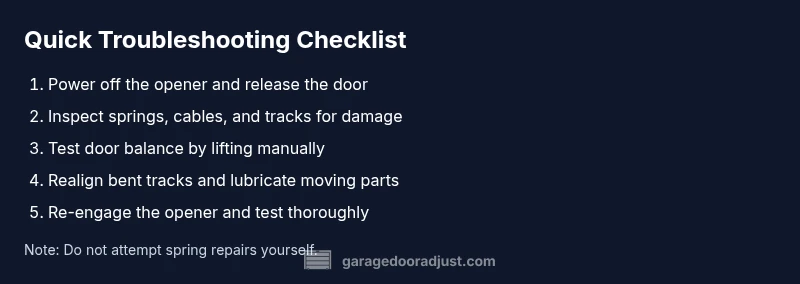
This section walks you through a practical diagnostic loop from symptoms to solutions. Start with non-destructive checks, like power status and manual release, then move to physical inspection of springs, cables, and tracks. If simple adjustments don’t restore proper operation, or if you encounter high-tension components, pause and seek professional help to avoid injury.
Steps
Estimated time: 60-90 minutes
- 1
Shut off power and prepare safety gear
Turn off power to the opener at the wall or breaker. Gather gloves, eye protection, and a sturdy ladder. This creates a safe baseline before any physical inspection.
Tip: Never work under a door supported by a spring mechanism without professional supervision. - 2
Release the door manually
Use the red emergency release to disconnect the door from the opener. Lift the door a few inches by hand to gauge weight and balance. If it won’t stay open or if it feels heavy, stop and seek professional help.
Tip: Keep hands clear of the hinge area and stay to the side of the track. - 3
Inspect for obvious damage
Look for torn cables, gaps in tracks, or bent rollers. Note any misalignment or rust. Do not touch or adjust springs.
Tip: Take photos from multiple angles to document prior to any professional visit. - 4
Realign tracks if visibly off
If tracks are visibly out of alignment, gently coax them back toward the door rails. Do not force or bend aggressively.
Tip: Only perform track adjustments if you can clearly see and access the alignment points. - 5
Lubricate and retest
Apply silicone-based lubricant to rollers, hinges, and tracks. Reconnect the opener and test with the remote and manual release.
Tip: Wipe off excess lubricant to avoid dust buildup. - 6
Re-engage power and monitor
Reconnect the opener, re-test cycles, and listen for unusual noises or jerks. If issues persist, schedule professional service for a definitive fix.
Tip: Document symptoms to help the technician diagnose faster.
Diagnosis: Door won’t move smoothly or stays unbalanced
Possible Causes
- highBroken torsion spring or extension spring
- mediumSnapped or loose lift cable
- lowBent or misaligned tracks/rollers
- lowWorn rollers or lack of lubrication
Fixes
- easyDisconnect power and test the door manually to assess balance and movement
- easyInspect for visible damage to springs, cables, and tracks; do not attempt to repair springs or cables yourself
- mediumRealign or replace bent tracks and ensure rollers roll freely
- easyLubricate moving parts and re-test with the opener
Got Questions?
What is the first step when a garage door won't open?
Power off the opener, release the door manually, and assess safety and basic damage. If the door seems heavy or won’t stay in place, contact a professional.
First, turn off power and release the door so you can inspect safely. If it’s heavy or won’t stay up, call a pro.
Can I fix a torsion spring myself?
Torsion springs are under high tension. DIY repairs can cause serious injury. Hire a licensed technician for spring work.
Springs are dangerous to fix yourself; it’s best to hire a licensed technician.
How can I tell if tracks are bent?
Look for gaps between rollers and tracks, uneven track height, or the door binding as it moves. A level check can help confirm misalignment.
Bent tracks show up as gaps or binding when you move the door. Check with a level to be sure.
How often should I lubricate the moving parts?
Lubricate annually or when parts feel stiff. Use silicone spray and avoid over-lubricating. Clean excess buildup.
Oil lightly once a year or when it feels stiff, and wipe away extra grease.
Should I replace both springs at once?
If one spring shows wear, replacing both helps maintain balance and reduces future issues. A professional is often recommended.
If one spring wears, replace both to keep balance. A pro can confirm.
How long does a professional repair take?
Most repairs take a few hours, depending on parts and access. A pro can give a precise window based on the assessment.
Most repairs take a few hours; a technician can give you a precise timeframe.
Watch Video
Quick Summary
- Disconnect power before any inspection.
- Springs and cables require professional service.
- Realign tracks carefully and test balance.
- Regular lubrication prevents future failures.