Cable on Garage Door Broke? Quick Troubleshooting Guide
Urgent, step-by-step troubleshooting for cable on garage door broke. Learn safety actions, diagnostic flow, and when to call a professional. GarageDoorAdjust guides homeowners to secure, diagnose, and repair safely.


A cable on garage door broke most often due to wear in the drum or a frayed wire, which can cause the door to slip or fall. For an urgent fix, stop using the door, unplug the opener, and secure the door manually. If you’re unsure or the door is heavy, call a licensed technician.
Understanding the risk when the cable on garage door broke
A broken cable is not a minor nuisance. The door can suddenly drop, bounce, or jam, presenting a serious risk to anyone nearby. When the cable on garage door broke, the door’s counterweight system may no longer balance weight, causing unpredictable movement. According to GarageDoorAdjust, homeowners should treat any visible cable damage as urgent and avoid attempts at amateur repair. The phrase cable on garage door broke commonly signals a wear-induced failure that affects the door’s safe operation. In most setups, a single frayed wire or a worn drum can set off a chain reaction that twists the track or pulls the trolley off its limits. Safety is the priority: never stand under a door that’s in motion or supported only by a single strand of wire. The GarageDoorAdjust analysis emphasizes safety-first troubleshooting and a methodical approach to diagnose and repair when a cable has failed.
Immediate safety actions to take now
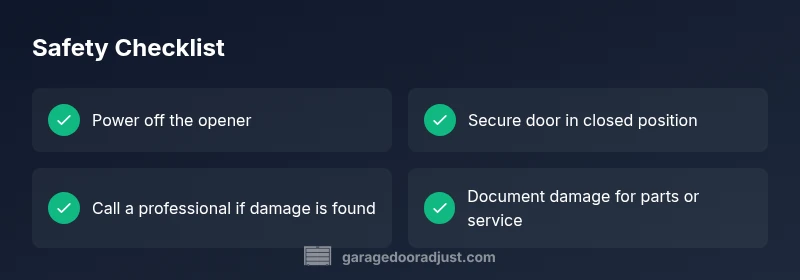
When you notice the cable has broken, your first steps are protective. Stop using the door and unplug the automatic opener to prevent movement. Do not try to pull the door up or down by hand if it is heavy or unbalanced. If you can reach a secure anchor, you may temporarily clamp the door in the closed position to prevent it from dropping. Clear the area of children and pets, and keep hands away from the hinge, springs, and tracks. If you suspect the spring or drum is damaged, call a professional immediately. By taking these precautions, you reduce the risk of injury and prevent further damage to the door system.
Common causes of a broken garage door cable
Damage to cables happens for several reasons. Worn, frayed, or corroded cables are the leading cause of a cable break on garage door systems. A damaged drum, misaligned tracks, or loose hardware can put uneven tension on the cable and hasten failure. Preventive wear can occur in both torsion and extension spring setups. Environmental factors like temperature swings and humidity can accelerate wear on galvanized steel cables. Regular inspection helps catch wear before the cable on garage door broke leads to a sudden drop.
Diagnostic flow you can follow (Symptom → Diagnosis → Solution)
This diagnostic flow guides homeowners through safe checks. Symptom: visible break or fraying; Diagnosis: worn cable or drum/assembly issue; Solution: secure door and call pro. If you see the door drifting, or the opener shows error codes related to the rope-like wire, stop and seek professional help. Steps: check for loose hardware, inspect the drum for cracked sections, ensure the tracks are aligned, and verify the spring seems balanced. If you identify a broken cable, do not attempt to re-tension it yourself. Contact a qualified technician.
Step-by-step repair considerations for DIY vs pro
In most cases, replacing a broken cable on garage door is a job for trained technicians. This section walks through what a pro will do and what a capable DIYer might safely attempt (only under supervision). 1) Confirm power is off and the door is secured. 2) Identify the exact cable and route. 3) Remove the damaged cable and replace with a compatible part, re-tension the system, and re-check the drum/pulley alignment. 4) Reassemble, test manually, and then re-energize the opener. Pro tip: never work alone, and never attempt to release tension from torsion springs without proper equipment.
Prevention and maintenance to avoid future failures
To minimize the chance of another cable break on garage door, perform regular inspections every 3-6 months. Lubricate the tracks and pulleys with appropriate lubricants, replace frayed components promptly, and ensure the door is balanced. Keep hardware tight and aligned, and replace worn drums or pulleys as needed. A proactive maintenance routine reduces long-term risk and helps the system operate smoothly.
Steps
Estimated time: 2-4 hours
- 1
Power down and secure the door
Power off the opener and physically secure the door in the closed position. Use clamps or a sturdy block to prevent movement. Ensure no one stands under the door during this process.
Tip: Always wear protective gloves and safety glasses when near moving parts. - 2
Inspect for visible damage
From a safe distance, check the cable, drum, pulleys, and tracks for obvious wear, kinks, or misalignment. Do not touch or manipulate the drum with the door under tension.
Tip: Take photos from multiple angles to document damage for a pro. - 3
Decide on DIY vs pro
If you’re not trained, do not attempt cable replacement. A professional will safely re-tension and align the system, reducing risk of further harm.
Tip: When in doubt, call a pro sooner rather than later. - 4
Prepare replacement parts
If you have the proper training, obtain the exact cable type, drum, and any hardware specified by the door’s manufacturer. Confirm compatibility before purchasing.
Tip: Only use manufacturer-specified parts to avoid another failure. - 5
Replace and re-tension (professional level)
For qualified technicians: carefully remove the damaged cable, thread in the new cable along the correct path, re-seat the drum, and re-tension per spec.
Tip: Never attempt to release torsion spring tension without proper equipment. - 6
Test after service
With the door secured, re-energize the opener and run the door in both directions to verify smooth operation and balance.
Tip: If any wobble or unusual sound occurs, stop and recheck alignment.
Diagnosis: Visible break or fraying in the cable with unstable door behavior
Possible Causes
- highWorn or frayed cable from normal wear
- mediumDamaged drum, misaligned tracks, or loose hardware causing uneven loading
- lowTorsion spring issues or loose hardware
Fixes
- easyStop operating the door, unplug the opener, and secure the door manually; call a licensed technician
- hardIf you have training, carefully replace the broken cable and re-seat the drum
- hardInspect and replace damaged hardware (springs, drums, tracks) by a pro
Got Questions?
Is it safe to operate a garage door with a broken cable?
No. A broken cable compromises the door’s balance and can cause sudden drops. Always disconnect power and secure the door until a professional can assess the damage.
No, it’s not safe to use a garage door with a broken cable. Disconnect power and get a professional to inspect and repair.
Can I replace the cable on my own?
Only if you have proper training and the correct parts. Replacing a cable involves tension and springs that can cause serious injury if mishandled. Most homeowners should hire a licensed technician.
Only attempt it if you’re trained. Otherwise, call a professional to replace the cable safely.
What are warning signs the cable is about to fail?
Visible fraying, uneven door movement, jerky operation, or unusual noises can indicate impending cable failure. If you notice any, stop using the door and schedule an inspection.
Watch for frayed cables, uneven movement, or odd noises. Stop using the door and get it checked.
How long does replacement typically take?
Durations vary by system and access, but a professional repair typically takes a few hours from assessment to test. Schedule accordingly and avoid attempts that could risk injury.
It usually takes a few hours when a pro does the job.
What maintenance helps prevent future breaks?
Regular inspections of cables, drums, tracks, and springs; keep components clean and lubricated, and address wear early. A proactive plan reduces the chance of a sudden break.
Inspect and maintain cables and hardware regularly to prevent future breaks.
Watch Video
Quick Summary
- Secure power and door before inspection
- Never DIY if the system shows major damage
- Document wear and plan professional replacement
- Test for proper balance after service
- Maintain a routine to prevent future breaks