Why Do Garage Door Cables Break: Causes, Risks, and Fixes
Discover why garage door cables break, how to spot wear early, and safe steps to inspect, replace, and prevent future failures. A practical guide from GarageDoorAdjust for homeowners facing cable issues.


According to GarageDoorAdjust, most garage door cable failures start with worn, frayed cables from age and constant tension. First, inspect for broken strands, rust, kinks, or a misaligned drum. If you notice slack, binding, or the door feels heavy, disconnect power and stop. Cable work is dangerous—consult a trained technician for a safe repair.
How the Cable System Works and Why It Fails
Garage door cables work as the counterbalance to the door’s weight, winding around drums and attached to the door bottom. When the opener lifts or lowers the door, tension is applied to the cables. Over time, metal fatigue, corrosion, and edge wear from the track can cause strands to fray, join to the drum unevenly, or fail at a weakened splice. This is the core reason you might see the door sag, drift, or not move at all. The phrase 'why do garage door cables break' comes up often because the cables bear the brunt of daily use, while springs, drums, and tracks collectively bear the load. Proper installation and regular maintenance reduce risk, but aging components eventually reach the end of their life. In many cases, a single weak cable is a symptom of a broader balance problem, so a full assessment is wise.
Signs Your Cables Are Worn or About to Fail
Look for frayed strands, rust, corrosion at the cable ends, or white powdery residue (rust byproduct). If you spot kinks, a cable that’s not evenly wound on the drum, or the door pulls to one side when moving, these are red flags. A sagging bottom bracket, uneven track gaps, or a door that takes extra effort to lift can also signal a failing cable. Do not ignore unusual noises like grinding or creaking, which often accompany frayed cables. Regular visual inspections can catch issues before they become emergencies. Tip: Compare both sides; if one cable shows wear, the other is often close behind.
Immediate Safety Steps If You Suspect Cable Trouble
If you observe any exposed fraying, loose clamps, or a visibly damaged cable, stop using the door and unplug the opener to remove power. Keep hands and clothing away from moving parts and do not attempt to adjust under load. Do not attempt to wind or unwind a sticking drum or replace a cable while the door is under tension. The risk of serious injury is high. Contact a licensed garage door technician right away for a safe assessment and replacement.
Diagnostic Path: From Symptom to Solution
Symptoms like the door slowing, jerking, or drifting indicate a balance problem that could involve cables, springs, or tracks. Start by visually inspecting cables for wear and checking that both sides are evenly wound on the drums. If the drums rotate smoothly and the cables look intact, test door balance with the garage door opener unplugged: the door should stay in place when opened halfway. If it falls or requires effort to hold, there is an imbalance that needs professional adjustment. Remember, a single faulty cable can mask a larger counterweight issue.
Maintenance and Prevention: Extend Cable Life
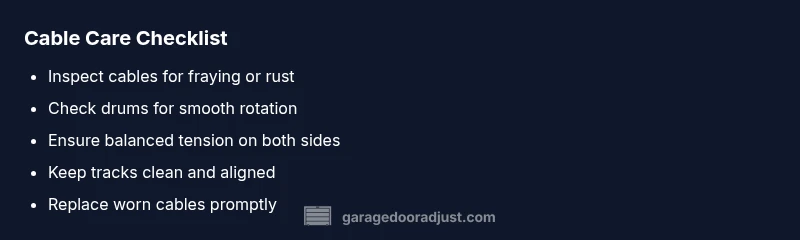
Preventive maintenance reduces the chance of a breakage. Schedule semi-annual inspections: look for fraying, corrosion, and proper cable tension. Keep tracks clean and free of debris; ensure rollers run smoothly and quietly. Replace both cables if one shows wear—staying ahead of wear prevents sudden failures. When tightening or adjusting, always follow the manufacturer’s specifications and use the correct hardware. Regular lubrication of moving metal parts (excluding cables) on tracks and pulleys can reduce resistance in the system, contributing to longer life for the entire assembly.
When to Replace Cables: DIY vs Pro
If you spot visible fraying, broken strands, or corrosion, do not attempt a DIY repair without training. Replacing garage door cables requires precise tensioning and correct length; mistakes can cause the door to jump off its tracks or the springs to fail catastrophically. In most cases, replacing cables is a job for a professional, especially on torsion-spring systems. If you’re a handy homeowner with the right tools and instructions, you can prepare for the service by measuring current cables and documenting door balance observations for the technician.
Steps
Estimated time: 60-90 minutes
- 1
Power down and secure system
Unplug the garage door opener or switch off the power at the box. Ensure the door is secured to prevent sudden movement during inspection. This step is critical for your safety before touching cables.
Tip: Double-check that power is off at the source; never rely on the opener being unplugged. - 2
Inspect cables and pulleys visually
Look for frayed strands, corrosion, kinks, or missing end fittings. Check that cables wind evenly on the drums and that pulleys turn freely without binding.
Tip: Take photos of the cable routing for reference when ordering replacements. - 3
Assess door balance
With the door unplugged, lift it manually to see if it stays in place. A door that drifts open or closes may indicate spring or balance issues that accompany cable wear.
Tip: If the door isn’t balanced, do not proceed with DIY repairs. - 4
Decide on replacement approach
If you see broken strands or significant wear, plan to replace the affected cable(s) with the correct type and length for your model.
Tip: Only use manufacturer-specified cables; incorrect length can cause dangerous tension. - 5
Replace cables (professional recommended)
Install new cables according to the installer manual, ensuring proper anchoring and drum winding. This step often requires specialized tools and torque specifications.
Tip: If you’re uncertain, hire a licensed technician—risk of serious injury is high. - 6
Test and restore operation
Reconnect power and test door operation slowly and manually to confirm balanced movement. Listen for unusual sounds and check that the door stops firmly in place.
Tip: Keep hands clear of moving parts during testing.
Diagnosis: Door jerks or drifts, or you hear grinding when opening/closing; visible wear on cables
Possible Causes
- highWorn or frayed cables
- mediumDamaged or misaligned drum or pulley
- highTorsion spring wear or partial failure
- lowTrack misalignment or binding increasing load on cables
Fixes
- hardReplace frayed/damaged cable with manufacturer-specified part
- mediumRealign or replace a misaligned drum and ensure even winding
- hardInspect and replace worn torsion springs if indicated by balance test
- easyRealign tracks and ensure door is balanced to reduce uneven load
Got Questions?
What are the most common signs that garage door cables need replacing?
Common signs include frayed strands, a sagging door, uneven drum winding, or a door that won’t stay in place when lifted. If you see any of these, plan for a professional inspection and replacement.
Watch for frayed cables, sagging doors, and uneven drum winding. If you notice these, arrange a professional inspection and replacement.
Can I replace garage door cables myself?
Cable replacement is high-risk and requires exact tensioning and calibration. If you’re not trained, it is safest to hire a licensed technician to prevent serious injury.
Replacing cables is risky and should be done by a trained professional to avoid injury.
How often should I inspect garage door cables?
Inspect cables every 6 months and perform a full balance check annually. Regular inspections catch wear before it leads to failure.
Check cables twice a year and test door balance every year.
What causes cables to wear faster?
Excessive door weight, misaligned tracks, and aging components accelerate cable wear. Proper maintenance and balanced springs reduce risk.
Excess weight, misaligned tracks, and aging parts speed wear; keep the system balanced.
Is it safe to lubricate garage door cables?
Lubrication is generally not recommended on steel cables because it can attract dust and mask wear. Lubricate tracks and rollers per manufacturer guidance.
Don’t lubricate the cables themselves; focus on tracks and rollers instead.
What should I do if the door starts to fall after replacement?
If the door drifts or falls after replacement, unplug power and call a professional immediately. The issue may involve balance or spring system beyond simple cable work.
If the door falls after repair, unplug and call a pro right away.
Watch Video
Quick Summary
- Inspect cables regularly for fraying and corrosion
- Do not re-tension or repair a damaged cable—replace it
- Balance the door to reduce load on cables
- Call a professional for any torsion-spring or high-tension work