Broken Cable Garage Door: Urgent Repair Guide for Homeowners
An urgent, practical guide for diagnosing and safely addressing a broken cable garage door. Learn signs, checks, safety steps, and when to call a pro to prevent injuries and further damage.


A broken cable garage door is the most likely culprit behind a door that won’t stay balanced or won’t open. Do not operate the door—a frayed or detached cable can snap and injure someone. Disconnect the opener from power and call a licensed technician for cable replacement; in the meantime keep people clear and avoid loading the door.
What makes a broken cable garage door dangerous
A broken cable garage door creates an immediate safety hazard because the door's weight is no longer properly counterbalanced. When the cable that supports a section of the door frays, detaches, or breaks, the door can tilt to one side, drop unexpectedly, or bind in the tracks. A broken cable garage door may seem to operate at first, but the door's balance is compromised; a weight shift can damage rollers, tracks, and torsion springs, and there is a high risk of serious injury if someone is nearby when it fails. The GarageDoorAdjust Team notes that many injuries occur during attempts to manually reposition a door with a compromised cable or when bystanders rush to catch a closing door. If you notice any asymmetry, unusual noises, or sudden resistance, stop using the door immediately and keep children and pets away. Do not try to tape, knot, or bias the cable to 'fix' it; a frayed or detached cable can snap with little warning. The safest plan is to treat this as a repair issue requiring professional service, even if you own the tools and think you can manage it.
Symptoms to watch for and why they matter
A broken cable garage door often announces itself with clear signs before a complete failure. Common symptoms include one side hanging lower than the other, grinding or popping noises during movement, and the door stopping mid-track or refusing to move at all, even when the opener is engaged. If you notice these symptoms, the door is likely out of balance and the cabling system is compromised. The presence of corrosion or visible fraying on the cable is a red flag that cannot be ignored. Because cables bear significant load, a failure can occur without warning, especially if a spring is also fatigued. According to GarageDoorAdjust, addressing the problem early not only protects people nearby but also reduces the likelihood of more extensive damage to tracks, rollers, and the door itself.
Safe preliminary checks you can perform (without touching springs)
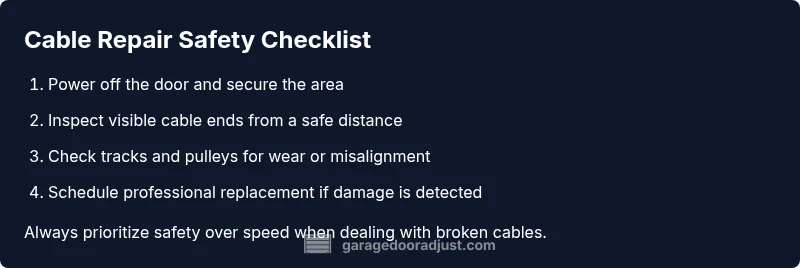
Before you do anything, ensure the area is clear and the power to the garage door is off. Unplug the opener from the outlet or switch off the dedicated circuit, and place a locking plier on the door’s bottom section in a position that prevents it from moving if you must inspect quickly. Do not grip the door itself or pull on the cables; visual inspection from a distance is safer. Look for obvious signs of a frayed or detached cable at the drum end, near the track, or where it attaches to the door. Check that tracks are clean and free of obstruction, and verify there is no debris jamming the rollers. If the door is visibly leaning or moves unevenly, treat it as a high-risk situation and seek professional service immediately. Remember, a broken cable garage door is a hazard that requires professional intervention to restore safe balance.
Diagnostic flow overview (high-level) for a broken cable garage door
Understanding the flow from symptom to solution helps homeowners avoid risky shortcuts. Start with the symptom: is the door unbalanced, noisy, or stuck. Then assess likely causes: frayed cable, worn pulleys, misaligned tracks, or a fatigued torsion spring. Prioritize safety by suspending any attempt to adjust springs or lift the door by hand. If you identify a frayed or detached cable, the safest course is to stop and contact a professional for removal and replacement. If you can observe quick checks without moving the door, you can confirm the door’s imbalance or track issues. Finally, apply solutions only after the door is fully disengaged from the opener and you have a clear safe plan for service. This approach minimizes risk and damage while keeping everyone safe.
Common causes of a broken cable garage door and how to prevent them
Most broken cable garage door failures stem from wear and fatigue—cables rub against sharp edges, pulleys become corroded, or drums misalign. Regular maintenance reduces the likelihood of a failure: lubricate moving parts, clean the tracks, inspect cables for fraying, and replace worn components before they fail. Avoid forcing the door when it resists movement and never operate the door with visible cable damage. Investing in periodic professional inspections helps catch issues like cable wear, frayed strands, and misaligned tracks before they progress to a full break. The goal is to prevent a broken cable garage door from becoming an emergency repair that could put occupants at risk.
What to expect during professional service for a broken cable garage door
When a professional arrives for a broken cable garage door, expect a careful assessment of cable condition, drum and pulley wear, track alignment, and spring health. Technicians will typically disconnect the door from the opener, verify the door’s balance with hand test only in safe conditions, and replace the compromised cable along with any other worn components. After replacement, the system is re-tensioned and balanced, and a test cycle confirms proper operation. Finally, technicians provide maintenance recommendations to prevent future failures, such as regular lubrication, track cleaning, and annual safety inspections. By following these steps, you protect your family and avoid repeat problems.
Safety, warnings, and when to call a professional
Safety is non-negotiable with a broken cable garage door. Do not attempt to adjust, re-tension, or replace cables yourself if you lack the proper equipment and training. The door’s weight is substantial, and springs can release dangerous energy. If you hear grinding, notice uneven gaps, or see frayed cable ends, stop using the door and contact a licensed tech immediately. Keep children away and never stand under a door while testing. Prevention includes routine professional inspections and timely replacement of worn cables, pulleys, and springs to maintain a safe, properly balanced system.
Steps
Estimated time: 60-90 minutes
- 1
Power down and secure the door
Turn off the garage door opener and unplug the unit. If you must work near the door, use a locking plier on the bottom panel to prevent movement. Never attempt to lift the door when cables look damaged.
Tip: Keep a clear path and have another person assist if you must move around the door. - 2
Disconnect the door from the opener
Engage the manual release to ensure the door will not move when you’re near the tracks. This step prevents the door from falling if a cable suddenly shifts.
Tip: Practice the release before you need it; know where it is located. - 3
Inspect visible cable ends safely
From a safe distance, look for frayed strands, kinks, or detachment from the drum. Do not touch or tug at the cable—visual confirmation is enough to justify professional service.
Tip: Do not attempt to bend or straighten the cable by hand. - 4
Check tracks and pulleys for obvious issues
Look for obstructions, loose hardware, or bent tracks that may contribute to improper door movement. Do not force the door through a misaligned section.
Tip: Only perform non-invasive checks; call a pro for any adjustment. - 5
Stop here if the cable is damaged
If you see a damaged cable, stop and schedule professional service immediately. A DIY replacement is dangerous without proper tools and training.
Tip: Document photos of the cable and tracks for the technician. - 6
Test after professional service
Once replacement is complete, have the technician test the door’s balance and operation with the opener. Confirm safe manual operation and re-engagement of the opener when advised.
Tip: Ask about preventative maintenance and a yearly safety check.
Diagnosis: Door is unbalanced, noisy, or stuck
Possible Causes
- highFrayed or detached cable
- mediumWorn pulleys or drums
- lowTrack misalignment or obstruction
- lowTorsion spring fatigue
Fixes
- easyDo not operate door; disconnect power and secure area
- easyCall a licensed technician for cable replacement and system check
- mediumInspect tracks and pulleys for wear once cables are off the door
Got Questions?
What are the most common signs of a broken cable garage door?
Common signs include the door leaning to one side, unusual grinding noises, and the door stopping mid-cycle. Visible fraying or detachment of the cable is a strong indicator that a professional inspection is needed.
Look for leaning, grinding, and mid-cycle stopping; visible cable fraying also signals a professional should inspect the door.
Can I replace a broken garage door cable myself?
Cable replacement is dangerous due to high tension and spring energy. It is strongly advised to hire a licensed technician who can safely remove and replace the cable and re-tension the system.
Replacing cables yourself is risky; hire a licensed technician to handle the replacement and re-tensioning.
What safety precautions should I take before inspecting a broken cable garage door?
Disconnect power to the opener, keep hands clear of moving parts, and avoid tampering with springs. Use eye protection and ensure children are away from the area.
Power off the opener, keep hands away from springs, and protect your eyes before inspecting.
How long does a typical cable replacement take?
A cable replacement typically takes 1–2 hours on-site, depending on access and any additional worn components discovered during service.
Most replacements take about 1 to 2 hours, depending on the setup.
How can I prevent cable failures in the future?
Schedule regular inspections, lubricate moving parts, and replace worn cables, pulleys, and tracks promptly. Keep the area clear and avoid slamming the door.
Regular inspections and timely part replacement help prevent future failures.
Watch Video
Quick Summary
- Stop using the door if cables look damaged
- Disengage power and contact a pro for replacement
- Regular maintenance prevents future failures
- Do not attempt DIY cable repairs without proper training
- Test after professional service to ensure safety