Garage Door Cable Came Off: Quick Fix Guide
Learn how to safely diagnose why a garage door cable came off, perform quick fixes, inspect wear, and know when to call a pro. Includes maintenance tips to prevent recurrence.


Most likely, the garage door cable came off the drum due to wear or misalignment. Power down the opener, secure the door with a clamp, and inspect the drum and track for fraying or jams. If the cable won’t reattach easily or you see damage, stop and call a professional.
Symptom Snapshot: When the garage door cable came off
According to GarageDoorAdjust, a garage door cable came off is usually the result of wear, misalignment, or a jam in the pulley system. Early signs include the door visibly sagging toward one side, a slack or twisted cable along the track, or the door refusing to stay in an open position. If the opener is powered, you might hear the motor labor without lifting. Do not ignore these symptoms: a detached cable can slip further, cause track damage, or trap fingers. Before inspecting, power down the system and place a sturdy clamp on the door to prevent sudden movement. This initial assessment sets the stage for safe DIY steps or a professional evaluation if you’re unsure.
Safety First: Before You Touch Anything
Safety is nonnegotiable when dealing with garage doors. Start by unplugging the garage door opener or turning off the circuit at the breaker. If your system uses a wall switch, switch it to the OFF position and remove the key from the remote (if applicable). Use heavy gloves and eye protection; keep children and pets away from the work area. Secure the door using a C-clamp or locking pliers on the track below the bottom roller to prevent sudden movement. Do not attempt to lift or tug on the door by hand while the cable is off. If you feel uncertain at any point, stop and call a professional. The difference between a simple DIY fix and a dangerous repair often comes down to spring tension and pulleys you can’t see.
Common Causes Behind a Detached Cable
Most often, a garage door cable came off due to wear on the cable itself, a misaligned drum, or a jam in a pulley system or track. Over years of use, the cable can fray and snag on a pulley, causing it to jump out of the drum. Misalignment might occur after a minor bump, a slammed door, or maintenance work near the track. Dirt and corrosion can also grip the sheaves, creating resistance that invites the cable to slip. A damaged drum imposes uneven tension, while a bent track can push the cable away from its proper path. Understanding these causes helps you decide whether you can safely inspect and reattach or whether to contact a pro.
Visual Inspection: What to Look For
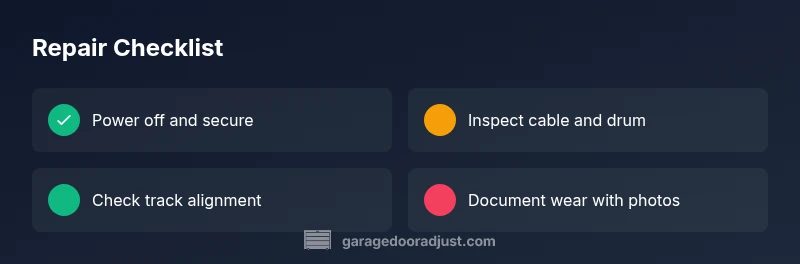
Begin with a calm, well-lit inspection. Look at the door’s balance and ensure the track is straight and free of obstructions. Check the cable path from the drum to the bottom brackets; look for frayed strands, kinks, or a cable that's detached from the drum. Inspect pulleys for cracks or seized bearings, and verify the drum’s groove is intact. If you see any exposed spring hardware, do not attempt to adjust it yourself. Take photos from multiple angles to document wear or damage for a professional estimate later. A careful visual inspection often reveals whether the problem is a quick reattachment or a sign of more serious wear.
Diagnostic Clues: How to Decide Your Next Move
Use a simple diagnostic flow to decide if you can safely proceed. If the door remains heavy and unbalanced after you resecure the cable, the problem likely involves the spring or drum wear. If the door moves smoothly once the cable is seated, but the drum or track shows visible damage, there may be alignment issues. A cable that reattaches but slips again indicates a worn drum, pulley, or mounting screws. If the door must be supported by a hand or if the track creaks loudly, stop and call a pro. The key is to avoid forcing components that are under tension or misaligned.
Quick Home Fixes You Can Try (Only If It Feels Safe)
Begin by powering down and securing the door. If the cable simply came off the drum and the drum groove is intact, you may be able to reposition and reseat the cable, ensuring it sits properly in the groove. Do not attempt to tension a damaged cable by yourself, and never work near exposed springs or hinges under load. After reattachment, slowly test the door at a low height to feel for binding or unusual resistance. If anything feels off, stop and call a professional. This section is intentionally cautious and designed to prevent accidents.
When to Call a Pro: Red Flags You Should Not Ignore
Immediate professional help is warranted if you notice frayed cable strands, a bent or cracked drum, a cracked track, or any sign of spring wear. A professional can safely reattach and tension cables, check torsion springs, and verify properly balanced operation. If your door doesn't stay put in an open position or the opener still hums without lifting, stop and consult a licensed technician. Remember: a failed repair on a spring-titted system can cause severe injury.
Maintenance to Prevent Recurrence
Prevention is better than repair. Inspect cables every six months and look for strand wear, corrosion, or loose hardware at all anchors. Lubricate moving parts with a silicone-based spray or light grease, focusing on rollers and tracks (avoid the belt of the spring). Keep the track clean and free of debris. If you notice any unusual noise, stop and assess before continuing use. Replacing aged components at recommended intervals reduces the risk of a future event where the garage door cable came off again.
Quick Recap: Safe Steps and Next Moves
Always prioritize safety: power off, secure the door, and inspect first. Not every case can be safely DIYed; a detached cable might indicate a worn drum, misalignment, or damaged track. Use the diagnostic flow to decide whether to proceed or call a pro. With careful checks and timely maintenance, you can reduce the risk of the cable coming off in the future.
Steps
Estimated time: 60-90 minutes
- 1
Power down and secure
Turn off the opener, unplug, and clamp the door to prevent movement.
Tip: Double-check power is off with a tester. - 2
Gather safety gear
Put on gloves and eye protection; gather a flashlight and pliers.
Tip: Work with a partner if possible. - 3
Inspect the visible path
Look for frayed strands, kinks, or detached cable from the drum or pulleys.
Tip: Take photos for reference. - 4
Decide if reattachment is safe
If the groove is intact and components look undamaged, you may attempt a re-seat.
Tip: Do not force components under tension. - 5
Re-seat the cable (if safe)
Gently place the cable back into the drum groove and confirm seating.
Tip: Maintain light tension; avoid pulling hard. - 6
Secure and align
Ensure the drum is secured and the track is aligned; tighten mounting screws to spec.
Tip: Avoid overtightening; overtightening can warp components. - 7
Test operation safely
Restore power and run the door a short distance at a reduced height.
Tip: Stand clear of the door path and watch for binding. - 8
Lubricate and finalize
Lubricate moving parts; wipe excess lubricant away from tracks.
Tip: Use silicone spray; avoid lubricants on springs. - 9
Document and plan next steps
Record signs of wear and schedule a professional check if any doubt remains.
Tip: Regular maintenance reduces future failures.
Diagnosis: Cable came off the drum; door unbalanced
Possible Causes
- highCable detached from drum or pulley
- mediumTrack misalignment or obstruction
- lowCable fraying or drum wear
Fixes
- easyRe-seat the cable in the drum groove and restore alignment if safe
- mediumRealign the track, inspect pulleys, and clear obstructions
- hardReplace damaged cable and worn drum; verify mounting screws
Got Questions?
Is it safe to fix a garage door cable came off myself?
In simple cases where the track and springs are undamaged, a careful reattachment can be attempted. If you notice frayed cables, bent drums, or tension in the springs, stop and call a professional.
It can be safe for simple checks, but stop if you see wear or spring tension and call a pro.
What signs indicate I should stop DIY and call a pro?
Frayed cable strands, a bent drum, damaged track, unusual noises, or any sign of spring wear require professional service.
If you see frayed cables or suspicious wear, stop and call a pro.
How long does a repair typically take?
Most fixes take about 1-2 hours for a basic reattachment and inspection; more complex repairs can take longer depending on parts and access.
Typically an hour or two for basic fixes; more time for parts replacement.
Will I need to replace springs?
Springs are a separate system and should be serviced or replaced only by a licensed professional.
Springs are dangerous; have a pro handle them.
How can I prevent future cable issues?
Follow a regular maintenance routine, inspect cables and tracks for wear, and replace worn parts before they fail.
Regular checks and timely part replacement help prevent issues.
What if the door is still heavy after reattachment?
A heavy or sticking door after reattachment indicates an imbalance or spring issue; stop and call a professional.
If the door stays heavy after working, call a tech.
Watch Video
Quick Summary
- Power off before inspecting any components.
- Don’t force a reattachment if parts are damaged or under tension.
- Cable wear and track misalignment commonly cause detachments.
- DIY fixes are possible only with confidence and safety for simple cases.
- Regular maintenance reduces future cable detachments.