How to Fix Cable on a Garage Door: A Step-by-Step Guide
Learn to diagnose and safely fix a garage door cable with a clear, step-by-step approach. This guide covers tools, safety checks, replacement, testing, and maintenance to keep your door balanced and reliable.


Your goal is to fix a garage door cable safely and restore smooth operation. This quick answer outlines how to identify a frayed or detached cable, secure the door, choose the correct replacement, and perform a controlled re-tension. Use proper safety gear and disconnect the opener before starting. The full guide provides detailed steps, tools, and precautions.
Understanding garage door cables
Garage door cables are critical safety components that connect the bottom brackets on each door panel to the drums on torsion systems or to extension springs on non-torsion setups. They help stabilize the door as it moves along tracks and rollers. Over time, cables can wear, fray, or detach from anchors due to regular use, improper tension, or worn sheaves. A frayed or detached cable can cause uneven door movement, increased noise, or a door that won’t stay put. When you fix cable on garage door, you’re restoring balance and safety. Remember: these repairs involve high-tension components; proceed only if you’re confident working with hardware and understand safety implications. According to GarageDoorAdjust, acknowledging potential hazards is the first step toward a safe repair, and proper parts are essential for reliable operation.
In most homes, there are two cables operating in tandem. If one shows obvious damage, inspect the other for wear as well. Damaged cables usually exhibit visible fraying, kinks, or metallic sheen where the wire strands separate. Even if the cable looks intact, a misaligned drum, worn pulleys, or a stretched anchor can create the same symptoms—uneven door movement and loud noises. Successful fixes require matching cable length and a secure attachment at both ends. The goal is to restore equal tension on both sides so the door rises and lowers smoothly without twisting or binding.
Assessing the problem safely
Before you touch anything, ensure you can work safely. Unplug the garage door opener or use the manual disconnect to prevent the motor from engaging during a repair. Place locking pliers or C-clamps on the track or door bottom to prevent movement while you inspect. Look for frayed strands, broken strands, or rust where the wire runs through the bottom brackets, pulleys, or drums. Check the tension by gently lifting the door about two inches; it should stay in place without drifting. If the door feels heavy or lurches, there may be tension issues beyond the cable. If you find bent drums, damaged tracks, or any signs of a failing spring, stop and call a professional. GarageDoorAdjust recommends a cautious approach: don’t force components that show significant wear. Mark the cable position with tape before removal to aid correct reassembly, and plan to replace both sides if wear is present.
Document the current setup with photos at each stage so you can recreate the system accurately. Finally, determine whether you have the right tools and a spare cable of the correct length and thickness. Mismatched parts can derail a repair and compromise safety.
Tools and materials you'll need
Gather essential tools before you start: safety glasses, heavy-duty work gloves, a sturdy ladder, locking pliers or clamps, cable cutters, needle-nose pliers, a set of wrenches or a socket set, a tape measure, and a new garage door cable kit (two cables with ends, ferrules or swage sleeves, and replacement hardware). Have a helper ready to stabilize the door and hand you tools. Always use cables rated for your door’s spring type (torsion vs extension). If you’re unsure about the correct length, consult the manufacturer’s specs or a local pro. The goal is to replace with a cable of equal length and tension on both sides to keep the door balanced.
Step-by-step approach to fix cable on garage door
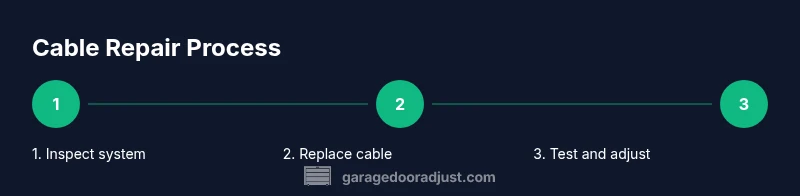
- Power down and secure the door. Disconnect power to the opener and apply clamps to the bottom brackets to prevent movement. This prevents accidental closure or jerk while you work. 2) Loosen and remove the damaged cable. Start by detaching from the drum or pulley carefully, keeping tension in mind. Do not yank the cable; note the routing and anchor points. 3) Measure and cut the new cable to the correct length. Use a tape measure and compare against the existing cable on the opposite side. Cut to length with cable cutters and crimp the end ferrules or sleeve to prevent fraying. 4) Attach the new cable to the drum or pulley, then connect to the bottom bracket and anchor. Make sure both sides mirror each other. 5) Re-center and tension the cable. Use the door’s balance technique (as per your model) to ensure even tension and no binding. 6) Test carefully. Reconnect power and operate the door slowly to confirm smooth movement. If anything feels off, power down again and re-check alignment. 7) Final checks and cleanup. Confirm the door holds its position in both up and down directions and that tracks are clear of debris. Replace any worn pulleys or damaged hardware as needed.
Aftercare and testing
After completing the repair, perform a careful test routine. Open the door to waist height, let go briefly to see if it settles, then close it completely. Listen for any unusual grinding or clicking, which can indicate misalignment or remaining tension issues. If the door feels heavy or binds at any point, stop and reassess: the cable might not be seated correctly, or the springs could be under abnormal load. Re-check both sides for equal tension and symmetrical operation. Finally, lubricate moving parts with a light garage-door-specific lubricant to reduce wear and noise.
Common mistakes to avoid
- Ignoring safety: never run the opener while you’re working on cables; always disconnect power first. - Replacing only one side: if wear is visible on both sides, replace both cables to maintain balance. - Using the wrong cable length or type: incorrect length or compatibility with torsion vs extension systems can cause premature failure. - Skipping inspection of drums, pulleys, and springs: damaged components can keep the door unsafe or cause new cable failures. - Rushing the re-tension: improper tension can lead to binding, rapid wear, or a dangerous uncontrolled door fall.
Tools & Materials
- Safety glasses(Protect eyes from snapping cables)
- Heavy-duty work gloves(Prevent cuts from frayed wire)
- Sturdy ladder(Reach cable anchors safely)
- Locking pliers or C-clamps(Hold door in place during repair)
- Cable cutters(Cleanly cut the replacement cable)
- Needle-nose pliers(Manipulate small fittings)
- Wrench set or sockets( loosen or tighten fasteners)
- New garage door cable kit(Includes two cables and ends)
- Tape measure(Verify cable length against the opposite side)
- Marker or tape(Label routing and anchor points)
Steps
Estimated time: 60-90 minutes
- 1
Power down and secure
Disconnect power to the opener and clamp the door to prevent movement. This keeps you safe as you inspect and handle cables.
Tip: Have a helper hold the door slightly to gauge movement while you set clamps. - 2
Access and inspect
Access the drum/pulley and bottom bracket. Look for fraying, kinks, or wear on both cables and check anchors.
Tip: Document the current routing with photos before disassembly. - 3
Remove damaged cable
Detach the damaged cable from the anchor and drum, avoiding sudden release of tension.
Tip: Do not twist or bend the cable aggressively as you remove it. - 4
Prepare and cut the new cable
Measure the length from the opposite side, then cut the replacement to match. Secure ends with ferrules or sleeves.
Tip: Double-check the length against the other side to ensure balance. - 5
Install the new cable
Thread the new cable through anchors, attach to the drum/pulley, and reattach to the bottom brackets on both sides.
Tip: Keep cable angle consistent with existing routing to prevent binding. - 6
Tension and test
Re-center the door and apply tension per your model’s balance method. Reconnect power and test the door slowly.
Tip: Test in short increments to avoid sudden jerks; stop if tension feels off.
Got Questions?
Can I fix a damaged garage door cable myself?
You can attempt a cable repair if you fully understand safety risks and are confident with hand tools. If torsion springs are involved or you see signs of spring damage, contact a professional.
You can try it if you’re comfortable with tools and safety rules. If you see spring damage, call a pro.
What are signs that a cable needs replacement?
Visible fraying, broken strands, uneven door movement, or frequent slipping indicate a replacement is needed. Listen for unusual noises that accompany movement.
Look for frayed wires, uneven movement, or odd noises when the door operates.
What tools do I need for cable replacement?
You’ll need safety gear, cable cutters, pliers, wrenches or sockets, locking clamps, a new cable kit, and a tape measure to ensure correct length.
Tools include safety gear, cutters, pliers, wrenches, clamps, a new cable kit, and a tape measure.
Should I replace both cables at once?
If one side shows wear, inspect the other for similar damage and replace both to maintain balance and safe operation.
If one side is worn, check the other and consider replacing both for balance.
How long does a cable repair typically take?
Typical repairs take around one to two hours depending on system type and your experience. Complex setups with torsion springs may take longer.
Most repairs take about one to two hours, depending on the setup and your experience.
What if the door behaves oddly after repair?
If the door binds, drops suddenly, or makes new noises, stop and recheck cable routing and tension. If issues persist, call a professional.
If it acts strange after repair, recheck everything or contact a pro.
Watch Video
Quick Summary
- Power down before starting any work on cables
- Inspect both sides for wear and replace if needed
- Match cable length and routing precisely
- Test gradually and stop if any binding occurs
- Consult a pro if springs or drums show damage