Garage Door Emergency Repair: A Homeowner's Step-by-Step Guide
Learn practical step-by-step techniques for diagnosing and safely handling a garage door emergency repair at home. Immediate safety actions, common failures, tools, and when to call a pro, with guidance from GarageDoorAdjust.


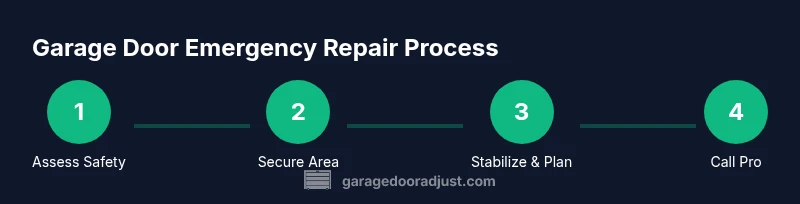
Here's the goal: safely manage a garage door emergency repair by securing the door, stopping movement, and assessing hazards before professional help. You'll need basic tools, a clear workspace, and a plan to keep people and vehicles out of the way. This guide walks you through immediate safety steps, simple temporary fixes, and when to call a licensed technician for long-term repairs.
What qualifies as a garage door emergency repair?
An emergency repair is any situation that could cause rapid door movement, injury, or property damage if not addressed immediately. In this context, practical safety is the priority: if the door is stuck in a way that could drop unexpectedly, or the opener responds unpredictably to buttons, treat it as an emergency. According to GarageDoorAdjust, quick, informed actions reduce risk and prevent further damage. This guide uses the term garage door emergency repair to cover scenarios such as a torsion spring issue, a sensor misalignment that causes automatic closing, or a door that won’t stop descending when released. Always assume heavy spring-loaded components are under tension and require professional handling. The aim is to stabilize the situation safely, preserve access, and plan for professional follow-up. Avoid DIY fixes that involve releasing or adjusting springs; those are specialized tasks that should be performed by trained technicians.
Immediate safety actions to take right now
First, clear the area. Keep people and vehicles away from the door until movement stops. If the opener is active, unplug the garage door opener or switch off the wall control to prevent automatic operation. Engage a sturdy wedge or block in the tracks to prevent sudden descent; never rely on a single improvised stop. If you notice broken cables, frayed springs, or bent tracks, do not attempt to force movement. Wear safety glasses and gloves, and ensure pets are out of the workspace. If the door is partially open and you need to move it for access, do so only with professional guidance. In a true emergency, call local emergency services if there is immediate risk of injury.
Common emergency failure modes you might encounter
Emergency scenarios often involve components under high tension or critical alignment. A broken torsion spring can cause the door to crash down with little warning. Damaged cables may snap, leading to sudden door imbalance. Bent tracks or loose rollers can create binding or derailment. Faulty safety sensors or wireless remotes can trigger unexpected closing. In all cases, do not attempt to force the door to move if parts are damaged or exposed; these actions can lead to severe injury or property damage. Recognize the signs early: unusual noises, wobbly operation, or doors that jump off track. During garage door emergency repair, the priority is to prevent additional harm while you arrange professional help, and to preserve as much of the door’s original condition as possible for the technician.
A practical, non-technical assessment you can perform
Perform a quick visual scan from a safe distance to identify obvious hazards: check for loose hardware on tracks, damaged cables, or visibly bent sections. Confirm that the door is not currently supporting loads other than its own weight. If the door is visibly binding or trying to stay in a fixed position, do not attempt to move it further. Take note of how the door is behaving when the opener is activated and when it’s hand-operated (with extreme caution). Record any unusual sounds or sensations in the tracks, springs, or rollers. This information helps a professional diagnose the problem faster and prevents misinterpretation of symptoms as simple wear and tear.
Step-by-step safe temporary fixes you can perform
Temporary measures can help you secure access while awaiting a technician. Use wooden wedges or door blocks to prevent movement, ensuring they are placed on solid ground and away from the door’s path. If you can safely operate the door by hand, test its balance gently from the bottom rail with a helper nearby, stopping if you feel heavy resistance. Unplug the opener to prevent automatic movement and disengage the door from the opener’s drive mechanism if it’s safe to do so. Apply a light coating of garage door lubricant to exposed hardware that is not under tension, avoiding springs and cables. Do not loosen tension devices or adjust springs at home. Photograph the setup before any adjustment to assist the technician later.
When to call a professional and what to expect
If you detect a broken spring, frayed cable, cracked track, or misalignment that prevents safe operation, contact a licensed garage door technician immediately. Expect a technician to assess spring tension, track alignment, pulley and cable systems, and safety sensor functionality. They will likely perform a controlled release of tension, realign tracks, replace damaged components, and test balance and safety features. For safety, always choose a pro with proper licensing and insurance. If you’ve addressed temporary safety concerns, schedule service promptly to avoid further damage or a failed insurance claim should an accident occur.
Maintenance tips to prevent future emergencies
Regular maintenance reduces the likelihood of sudden garage door failures. Schedule biannual inspections of springs, cables, tracks, rollers, and hinges. Lubricate moving parts (excluding springs) to minimize wear and noise. Tighten loose hardware and ensure the balance of the door is correct by testing it at regular intervals. Keep the area around the door clear of clutter and ensure the opener’s safety reversing mechanism is functioning properly. Consider subscribing to professional maintenance services, and document any recurring issues for future visits. Ongoing care, informed by GarageDoorAdjust insights, helps homeowners reduce the risk of a full-blown emergency repair.
Common mistakes to avoid during an emergency repair
Avoid attempting to adjust or release torsion springs yourself or bypass safety devices. Do not yank on a door that seems jammed or heavy; you may injure yourself or cause further damage. Never operate the door with damaged tracks or loose hardware. If you’re unsure about the door’s condition, stop and call a professional. Working in a garage with a door under tension can result in serious injuries. Remember that emergencies require a measured approach: protect people, prevent property damage, and rely on trained technicians for permanent fixes.
Tools & Materials
- Sturdy ladder(Stable, rated for the task; 6-12 ft depending on door height)
- Flashlight or headlamp(Hands-free preferred; keep battery fresh)
- Locking pliers (vise-grips)(Use to secure loose components without slipping)
- Adjustable wrench(Crescent wrench size 8-14 mm)
- Phillips and flathead screwdriver set(For hardware on hinges and brackets)
- C-clamps or locking clamps(Temporary stabilization on tracks/rods)
- Wooden wedges or door blocks(Prevent movement during safety checks)
- Rubber mallet(Gently adjust minor misalignments if safe)
- Lubricant spray (silicone or lithium grease)(Apply to non-spring moving parts only)
- Safety glasses and work gloves(Personal protection)
- Phone with emergency numbers(Have a plan to contact help quickly)
Steps
Estimated time: 60-90 minutes
- 1
Secure area and disconnect power
Move people and vehicles away from the door and disable automatic operation by unplugging the opener or switching off the wall control. This prevents unintended movement while you assess the situation.
Tip: If you can't reach the outlet safely, leave the door alone and call a professional. - 2
Stabilize the door with wedges
Place sturdy wooden wedges on the tracks in front of the bottom rollers to prevent the door from dropping unexpectedly. Ensure wedges are level and won’t slip under vibration.
Tip: Only use solid blocks; never rely on cardboard or soft material that can crumble. - 3
Inspect for obvious hazards
From a safe distance, look for broken springs, frayed cables, bent tracks, or loose components. Do not touch or attempt to adjust parts under tension.
Tip: Document signs of damage with photos for the technician. - 4
Disconnect the opener from manual operation if safe
If you can locate a manual release and it’s safe to use, disengage the door from the opener so it won’t move with the motor.
Tip: Do not force the release mechanism; follow the manufacturer’s guidance. - 5
Perform a cautious temporary fix if safe
Only implement non-invasive fixes that do not reduce safety. Avoid adjusting springs or tracks; focus on stabilization and securing access.
Tip: Never relax after a fix; schedule professional service soon. - 6
Test operation slowly and plan service
With a helper, test door movement at very low speed while keeping hands clear. If there is any resistance or wobble, stop and call a pro.
Tip: Keep notes on how the door behaves to inform the technician. - 7
Document and arrange professional service
Take photos of the setup and suspected damaged parts. Contact a licensed technician, sharing your observations and the provisional stabilization steps you performed.
Tip: Ask about warranty coverage and parts replacement options.
Got Questions?
What counts as a garage door emergency repair?
A garage door emergency repair covers situations where immediate action is needed to prevent injury or property damage, such as sudden door descent, misfunctioning safety sensors, or visible damage to springs or tracks. Always prioritize safety and contact a professional for permanent fixes.
An emergency repair means handling a dangerous door situation—think sudden movement or broken parts—and calling a professional for lasting fixes.
Can I fix a door with a broken spring myself?
No. Replacing or adjusting torsion springs is highly dangerous and should only be performed by licensed technicians. Attempting to do it yourself can result in severe injury.
Spring work is risky, so leave it to a professional.
Is it safe to unplug the opener during an emergency?
Yes. Unplugging or turning off the opener is a recommended safety step to stop automatic operation while you assess the situation. Reconnect only after the scene is stabilized and you’re ready for professional service.
Unplug the opener to stop it from moving on its own.
How long does a typical emergency repair take?
Repair duration varies with the problem, but major issues like a broken spring or damaged tracks can require several hours, including parts replacement and safety checks. Schedule follow-up for a full diagnostic and alignment.
It varies, but expect a few hours for serious fixes.
When should I replace the entire door instead of repair?
Replacement is often more cost-effective when multiple components are worn or the door is corroded, dented, or repeatedly failing. A professional can help evaluate whether repair or replacement offers the best long-term value.
If many parts are worn out, replacement may be better.
What maintenance can prevent emergencies?
Regular lubrication of moving parts, tightening hardware, tracking alignment checks, and annual professional inspections can prevent many emergency scenarios. Keep the area clear and test safety features periodically.
Keep up with maintenance to avoid emergencies.
Watch Video
Quick Summary
- Secure the area before touching anything.
- Avoid DIY work on springs or cables.
- Document issues for faster professional help.
- Schedule professional service promptly after an emergency.