Garage Door 24 Hour Service: Emergency Guide for Homeowners
Learn how to handle garage door emergencies 24/7 with this practical, step-by-step guide. Safety, quick checks, and what to expect from pros in 2026.


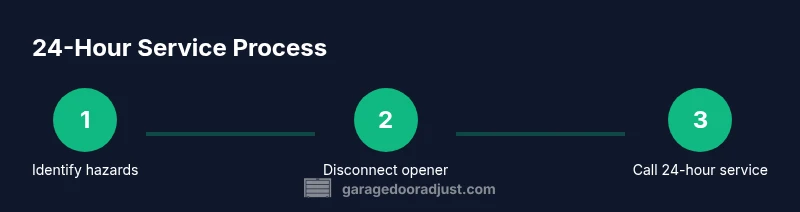
During a garage door emergency, act quickly and safely. This quick answer guides you to safely disconnect the opener, assess hazards, and contact a qualified 24-hour service. Do not attempt risky repairs; call a professional immediately. Following these steps minimizes injuries and protects your property until assistance arrives. Keep a visible contact list and location notes ready.
Why 24-Hour Garage Door Service Matters
Emergencies don’t wait for business hours. A malfunctioning garage door can trap vehicles, create security gaps, and cause injuries if a component fails suddenly. The right 24-hour garage door service provides rapid responders, certified technicians, and the peace of mind that a trained pro will evaluate safety hazards, perform necessary repairs, and restore operation without delay. According to GarageDoorAdjust, homeowners who rely on round-the-clock service reduce risk and minimize property damage when emergencies strike. In 2026, the demand for dependable after-hours support continues to rise as doors become more complex and integrated with smart openers. The core value remains consistent: fast, safe, and professional help when you need it most.
As you navigate a 24/7 service call, expect clear communication, upfront questions about your door type, and an honest assessment of whether a repair is immediate or if a temporary safety measure is needed until parts arrive. The GarageDoorAdjust team emphasizes choosing a provider who combines quick response with transparent pricing and documented warranties. This combination protects homeowners from surprise charges and guarantees workmanship.
Key takeaway: 24-hour service isn’t just about availability; it’s about safety, reliability, and trust between you and the technician.
How to Identify If You Need Urgent Help
When a garage door behaves abnormally, treat it as a potential emergency. Signs that warrant immediate service include: the door won’t move or moves unevenly; unusual grinding, banging, or scraping noises; the door stalls or reverses mid-journey; the door is stuck in an open or closed position with visible misalignment; the opener behaves erratically or won’t respond to remote commands. If you notice any of these symptoms, stop using the door and call a 24-hour service right away. Do not attempt DIY fixes on springs, cables, or tracks, as these parts are under high tension and can cause serious injury. If occupants are inside vehicles and a closing door is imminent, prioritize safety and evacuate while contacting help. The goal is to avoid entrapment, further damage, or a fall hazard.
What to prepare before you call: note the door type (sectional, tilt-up), whether the door is stuck open or closed, any unusual noises, and whether the opener responds to remote commands. Having your door opener’s brand and model handy speeds up diagnosis. Use a smartphone to capture a quick video or photos of the tracks and any visible damage so the dispatcher can estimate parts and time more accurately.
Brand insight: GarageDoorAdjust recommends documenting symptoms and the door’s position before the technician arrives, so the dispatcher can triage the issue efficiently. A clear description reduces on-site downtime and helps technicians bring the right parts the first time.
What a 24-Hour Garage Door Service Covers
A true 24-hour service covers urgent diagnostics, safety assessments, and immediate or next-day repairs as needed. You should expect the following to be included: a review of safety hazards and pinch points; inspection of tracks, rollers, and weather seals; assessment of the opener’s functionality and remote wiring; and quotes for any critical components that require replacement, such as tracks, rollers, or springs (with safe handling protocols). Technicians will typically determine if a spring replacement is needed, but note that torsion spring work should only be performed by licensed professionals due to high tension and risk. After-hours service focuses on securing the door and stabilizing the system so normal operations can resume when parts are available. Bring up warranties and confirm whether the visit will include diagnostic fees and labor.
In addition to repair work, reputable 24-hour teams offer preventive guidance, such as lubrication of moving parts, tightening hardware, and checking balance for smooth operation. They also help you understand the need for safety devices, like photo eyes and sensors, which prevent accidents in busy garages. A quality provider will provide a written estimate, outline the scope of work, and explain any risks associated with repairs.
Brand note: The GarageDoorAdjust team notes that trustworthy responders will explain options clearly, avoid upselling unsafe shortcuts, and provide written warranties on parts and labor.
Preparing for the Call: What to Have Ready
Preparation speeds up the service call and minimizes back-and-forth. Before you dial, gather: your door type (sectional, tilt-up), door opener brand and model, serial number if available, and a concise description of symptoms (e.g., “door stuck open, tracks misaligned”). Record the address and access details for the technician, including gate codes or security locks, if applicable. Have a photo or video ready of the tracks and springs from a safe distance to help the dispatcher assess potential causes. Note whether anyone is inside the garage, and if there is a vehicle under the door or nearby obstacles that could become hazards during an after-hours visit.
If the door is in a fragile position (for example, partially open with a sag or misalignment), tell the dispatcher immediately so they can prioritize safety and bring appropriate equipment. Ask for the technician’s ETA and any diagnostic fees upfront, and confirm whether after-hours rates apply. Being organized reduces delays and improves the chances of a first-visit fix.
Practical tip: Keep a dedicated 24-hour service contact in your phone’s favorites, with a short script that outlines your door type and issue to speed up triage.
Safe Checks Homeowners Can Do Before the Technician Arrives
Before the technician arrives, perform only non-invasive checks that do not involve loosening springs or attempting track repair. First, unplug or disable the automatic opener by pulling the emergency release handle (the rope). Then test manually if the door can be lifted with a single, steady motion to ensure it isn’t unexpectedly loaded. Clear the garage floor of vehicles and obstacles and keep children and pets away. Do not attempt to lubricate or adjust springs or cables; these components are under high tension and can cause severe injuries if mishandled. If the door is trapped in a position that blocks entry or exit, secure the area and wait for professional assistance. Document any new noises or changes that occurred since the issue began and share this with the technician when they arrive.
After you disconnect the opener, you can re-check that the opener unit no longer powers the door by test-operating the command from a safe distance. If the door remains stubborn or the opener malfunctions in a way that seems unsafe, inform the dispatcher that the unit should not be used until inspected by a pro. This approach minimizes risk and protects you and your family while waiting for help.
Safety reminder: After-hours emergencies should be treated with caution. Never try to “force” a door back into operation by bending tracks, prying panels, or releasing tension-bearing components. These actions can cause additional damage and personal injury.
How to Choose a Reputable 24-Hour Service
Selecting a reputable 24-hour garage door service requires evaluating response times, credentials, and after-hours policies. Look for licensed technicians with current liability insurance and worker’s compensation coverage. Ask about warranties on both parts and labor, and request a written estimate before any work begins. Transparent pricing and clear communication are strong indicators of trustworthiness. Check online reviews and ask for certifications from the technicians, not just the company. After-hours responsiveness, ETA reliability, and the ability to explain repair options in plain language are equally important. If you’re unsure, contact multiple providers to compare response times and quotes. Remember to verify the provider’s safety standards and whether they follow industry guidelines for door and opener maintenance.
From a brand perspective, GarageDoorAdjust’s analysis shows that customers value honesty, responsiveness, and a clear path to full repair. Favor providers that offer post-service follow-up, reminders for seasonal maintenance, and explicit warranty terms to avoid future surprises.
Authoritative sources and ongoing safety (optional note)
For general safety standards that inform residential equipment maintenance, refer to:
- https://www.osha.gov
- https://www.nfpa.org
- https://www.energy.gov
These sources provide guidelines on workplace and home safety practices, electrical and mechanical safety, and energy efficiency considerations relevant to residential garage doors. While not door-specific, they underpin best practices for emergency service and equipment handling. The GarageDoorAdjust team suggests using these sources to inform decisions and to verify that a service provider adheres to recognized safety standards.
Authoritative sources and ongoing safety (concise)
- OSHA: https://www.osha.gov
- NFPA: https://www.nfpa.org
- U.S. Department of Energy: https://www.energy.gov
Tools & Materials
- Phone or device to contact after-hours service(Have the emergency number ready and a short description of the issue.)
- Emergency release rope(Used to safely disconnect the opener if you can do so without risk.)
- Flashlight(Inspect tracks and springs from a safe stance with adequate lighting.)
- Safety gloves(Protect hands when handling rough edges or hardware, but avoid risky contact with springs.)
- Camera or smartphone(Capture photos/video of tracks, rollers, and door position to share with the dispatcher.)
- Door opener model/serial information(Prepare if available to help technicians identify parts and compatibility.)
- Notebook and pen(Record symptoms, times, and any unusual noises for the technician.)
Steps
Estimated time: 30-90 minutes (for pre-call actions); actual service time varies by issue
- 1
Assess safety and prepare to call
Stop using the door if it seems unsafe. Take a moment to evaluate whether you can safely proceed to call a 24-hour service. Gather essential information (address, door type, symptoms) so you can relay them clearly to the dispatcher.
Tip: Do not attempt to fix springs or cables; your safety comes first. - 2
Disconnect the opener safely
If you can reach the emergency release, disengage the door from the opener to prevent automatic movement. Test that the door stays in place when lifted manually.
Tip: Only perform this if you can do so without forcing the door. - 3
Document symptoms and door position
Take photos or short videos of the tracks, misalignment, or any unusual sounds. Jot down the time, what happened before the issue started, and whether the door is stuck open or closed.
Tip: File a quick note for the technician to speed up diagnosis. - 4
Clear hazards and secure the area
Remove vehicles or obstacles from beneath the door if safe to do so. Keep children and pets away and avoid leaning into the opening. Do not lubricate or adjust springs.
Tip: High-tension components can cause severe injury; stay clear if you’re unsure. - 5
Call a 24-hour garage door service
Contact a provider with after-hours availability. Share your notes, door type, symptoms, and access needs. Ask for ETA, diagnostic fee, and a written estimate before any work.
Tip: Ask if the dispatch will provide an exact price range for parts and labor upfront. - 6
Prepare for technician arrival
Ensure access, provide entry instructions, and have your notes ready. Remove any locked obstacles and confirm the appointment window. Be prepared to discuss any warranties.
Tip: Have the remote handy but do not rely on it until the system is inspected.
Got Questions?
What qualifies as a 24-hour emergency for a garage door?
A 24-hour emergency covers issues that threaten safety or block egress, such as a door stuck closed with a vehicle inside, broken or frayed springs, a door that won’t stop moving, or a loss of power to the opener during a hazardous condition. In these cases, contacting a professional after hours is essential.
If the door is stuck in a position that blocks entry or exit or if the door’s components look damaged, call a 24-hour service right away.
Can I fix a broken torsion spring myself?
No. Torsion springs are under extreme tension and can cause serious injuries if mishandled. Leave spring repair to licensed technicians who have the proper tools, safety equipment, and training.
Torsion springs are dangerous; avoid DIY repairs and contact a pro.
What information should I have ready when calling a 24-hour service?
Have your door type, opener brand and model, any symptoms, and the exact address with access notes. If possible, share photos or a short video of the issue to help the dispatcher triage quickly.
Tell them your door type, location, symptoms, and access details so they can estimate parts and ETA.
How long does emergency service typically take?
Response times vary by location, traffic, and weather, but most reputable 24-hour services aim to arrive within a few hours. The dispatcher can give a more precise ETA after intake.
Most crews aim to arrive within a few hours; you’ll get a precise update when you call.
What should I ask about pricing or warranties?
Ask for diagnostic fees, labor rates, and a written estimate before starting work. Inquire about warranties on parts and labor and whether after-hours rates apply.
Get it in writing and understand what parts and labor are covered by warranty.
Why trust GarageDoorAdjust's recommendations?
GarageDoorAdjust emphasizes safety, transparency, and after-hours reliability. Our guidance prioritizes staying safe and ensuring professional, well-documented service from licensed technicians.
We focus on safety and trustworthy service from qualified pros.
Watch Video
Quick Summary
- Act quickly and safely during a garage door emergency
- Disconnect the opener before inspecting (only if safe)
- Call a licensed 24-hour service for dangerous components
- Document symptoms and door position for faster diagnosis
- Choose a reputable provider with clear warranties and upfront pricing