Garage Door After Hours: Safe Troubleshooting Guide
Learn safe, step-by-step methods to handle a garage door after hours. Quick checks, manual release guidance, and a plan for daylight repairs, plus safety reminders and when to call a pro.


This guide helps homeowners manage a garage door after hours without risking injury or further damage. You’ll learn safe quick checks, how to manually release the door, and a step-by-step troubleshooting path you can follow until daylight repairs. By following these actions, you can regain control, minimize risk, and decide when to call a pro.
Why 'garage door after hours' concerns homeowners
Dealing with a garage door after hours can be stressful and worrying because help isn’t immediately available. According to GarageDoorAdjust, after-hours issues are often safety-related due to power interruptions, motor errors, or misalignment when the system is stressed. The GarageDoorAdjust team found that many after-hours calls involve simple misalignment, sensor misreads, or a jammed manual release. This is not a reason to panic, but it is a reason to proceed with calm, deliberate steps, prioritizing safety over speed. In this section we establish the mindset you’ll need: assess the scene, protect bystanders, and avoid hazardous attempts. The goal is to regain control safely enough to complete daylight repairs with professional help if needed. Throughout the process, keep children and pets away from the door, and never place yourself under a door while it is moving or hanging from a released spring. By staying in control and following a plan, you reduce risk and lay a solid groundwork for daytime service.
Immediate safety steps before attempting any repair
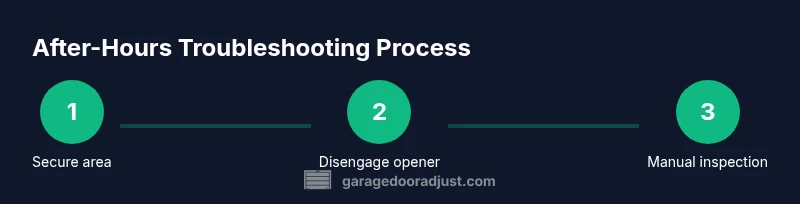
Before you touch any moving parts, take a moment to secure the area. Disconnect or unplug the operator if safe to do so, or at minimum switch off the nearby outlet to prevent unexpected motor start-up. If you cannot safely disconnect power, use the manual release only after you have confirmed that no one is near the door. Keep hands, hair, and clothing clear of tracks and hinges. When you release the door manually, never stand directly under it; support the door by standing at the hinge side and gently guide it to the ground. If the door starts to drop suddenly, back away and call for professional assistance—gravity and weight can cause injury quickly. Remember: even after-hours, you can secure the garage by closing the door as far as you safely can and blocking access to the space until daylight.
How power loss and manual release affect operation
Power loss can render the opener useless, but the door still relies on springs, tracks, and balance. The manual release is your gateway to independent operation, yet it must be used with care. After you disengage the opener, attempt to lift the door slowly with both hands to feel for binding, sag, or unusual resistance. Resistance often signals a misaligned track, a binding spring, or a foreign object in the path. If you notice any rapid movement or creaking, stop and reassess. The manual release mechanism is designed to separate the door from the motor; using it correctly allows you to operate the door safely, but it does not fix mechanical problems. If the door feels heavy or off-balance, avoid forcing it and seek daytime service.
Common after-hours failure modes and why they occur
Lighting in the garage can affect sensor readings; a misaligned safety sensor is a frequent after-hours irritant. A sensor out of alignment may cause the door to reverse or stop. A frayed or kinked track can produce binding that makes the door feel heavy or unmovable. A released or partially released spring can lead to dangerous sag or sudden movement. Power outages can cause the opener to reset, forget programming, or fail to respond to remotes. In some cases, a door will not respond to the remote because of lost battery power in the remote itself. Understanding these modes helps you diagnose without panic and keep everyone safe while you arrange daytime repairs.
Tools and materials you should have ready
Having a small, organized toolbox nearby reduces the stress of an after-hours issue. You should have: a flashlight with fresh batteries, a sturdy ladder, a Phillips and flat-head screwdriver, an adjustable wrench, needle-nose pliers, a utility knife, door lubricant (silicone spray or lithium grease suitable for metal), a clean rag, and a temporary fall-safe handle/brace if available. A digital multimeter can help verify if outlets near the opener are delivering power, but only use it if you’re comfortable with basic electrical testing. If any component looks damaged or corroded (springs, cables, pulleys), do not attempt a repair out of hours. Instead, note the symptoms, take photos for reference, and call a professional during daylight hours.
Step-by-step quick troubleshooting overview
This section provides a high-level overview of the process you will follow with the detailed steps in the STEP-BY-STEP block. Start by ensuring safety: clear the area and disconnect power where possible. Then attempt a manual release to verify you can move the door by hand. Check for obvious misalignment in tracks, rollers, and hinges. Inspect the sensors for alignment and dirt. If the door remains heavy or unbalanced, avoid forcing it and plan daytime service. Finally, re-engage the opener only after confirming manual operation is smooth and safe. Use the high-level guidance here to prepare for the formal step-by-step instructions.
Tips, warnings, and best practices for after-hours fixes
The most important safety rule is to never compromise your body's safety for a door. Keep a helper nearby when lifting or releasing a door, and never place hands inside tracks or near springs. If you smell burning plastic or see smoke, cut power immediately and call emergency services. Do not attempt to adjust springs or cables without specialized tools and training. After-hours work should focus on safe stabilization and movement only; keep track of symptoms to describe to a professional later. Finally, conduct a brief daylight assessment once power returns to identify needed repairs.
Verifying results and planning daylight repairs
After you have regained manual control, test the door by hand (if feasible) to confirm smooth movement with minimal resistance. If you can safely operate the door with the opener again, perform a cautious test by opening halfway, then closing slowly to listen for unusual sounds or binding. Take detailed notes on each symptom and the exact conditions (temperature, lighting, door position). Schedule a daylight service appointment and prepare a concise summary for the technician, including a photo series if possible. Planning ahead reduces downtime and ensures the repair scope is well defined.
AUTHORITY SOURCES
- https://www.osha.gov
- https://www.energy.gov
- https://www.nist.gov
These sources provide safety and standards guidance relevant to garage doors and electrical systems. For homeowners, referencing official safety guidelines helps ensure you practice correct procedures during off-hours and when scheduling daytime maintenance.
Tools & Materials
- Safety glasses(Protect eyes from debris and sharp edges)
- Work gloves(Grip and finger protection)
- Flashlight(Bright, unobstructed light in the workspace)
- Ladder(Stable access to tracks and springs)
- Phillips screwdriver(Common fasteners on track hardware)
- Flat-head screwdriver(Some latch mechanisms may use flat screws)
- Adjustable wrench(Tighten or loosen track bolts safely)
- Needle-nose pliers(Grip small parts and release pins carefully)
- Utility knife(General-purpose cutting for debris or weatherstripping)
- Door lubricant (silicone)(Keep metal parts moving smoothly)
- Clean rag(Wipe away dust and grime from sensors and tracks)
- Digital multimeter (optional)(Verify outlet power near the opener)
Steps
Estimated time: 20-40 minutes
- 1
Secure the area and disable the opener
Ensure people and pets are clear. If safe, unplug the opener or switch off power nearby to prevent unexpected movement. This prevents accidental starts while you inspect the door.
Tip: If you cannot access the outlet safely, prioritize securing the immediate area and avoid using force on any moving parts. - 2
Engage the manual release
Locate the manual release cord on the opener rail or near the motor unit. Pull straight down or away to disengage the door from the opener. Confirm the door can be moved by hand before applying any force.
Tip: Do not yank the release; a steady, controlled pull reduces the risk of spring shock or track damage. - 3
Check for obvious obstructions and binding
With the door in manual mode, lift it slowly by the bottom panel. Look for binding, misaligned tracks, or objects in the doorway. If the door binds or sticks, stop and reassess rather than forcing it.
Tip: Lubricate the track lightly after confirming there is no obstruction, to improve movement during daylight repairs. - 4
Inspect safety sensors and wiring
Visualize the sensor eyes on the door frame and look for misalignment, dirt, or condensation. Dust or misalignment can cause the door to reverse or fail to move. Do not bypass safety features.
Tip: Clean sensor lenses gently with a dry cloth; do not spray cleaner directly into sensing components. - 5
Test door movement by hand and re-engage cautiously
Once you confirm smooth manual operation, re-engage the opener and test from a short distance. Observe the door’s balance and listen for abnormal noises. If anything feels off, stop and arrange daytime service.
Tip: If the door returns to a failing state, shut off power and call a professional—do not continue testing under load. - 6
Document symptoms for daytime repair
Take notes on what happened, the sequence of events, and any notes about sensor readings or sounds. Photos can help the technician diagnose root causes more quickly.
Tip: Keep a simple log of the events and times to share with the service technician.
Got Questions?
Is it safe to troubleshoot a garage door after hours?
Yes, with strict safety precautions. Focus on securing the area, safely disengaging the opener, and avoiding forced movements. If anything seems risky, stop and wait for daylight or call a pro.
Yes, but only if you can secure the area, disengage the opener safely, and avoid forcing parts. If it feels risky, pause and get professional help later.
What should I do first if the door won’t stay open after hours?
First check power, then test the manual release. If the door remains heavy or unstable, do not force it. Secure the space and plan a daytime service for a proper inspection.
First rule out power issues and try the manual release. If it’s unstable, don’t force it—secure the area and arrange daytime service.
Can I adjust torsion springs after hours?
No. Torsion springs are dangerous and require professional training and tools. Do not attempt to adjust or replace them after hours. Schedule daylight repair with a licensed technician.
Torsion springs are hazardous; don’t try to adjust them after hours. Schedule a daylight repair with a pro.
When should I call a professional after hours?
If you encounter broken springs, damaged cables, extreme resistance, or uncertainty about the door’s balance, stop and contact a professional as soon as possible. After-hours service may be available in emergency scenarios.
Call a professional if you see broken springs, damaged cables, or heavy resistance. If unsure, get help sooner rather than later.
What are common signs of sensor misalignment at night?
Common signs include the door reversing unpredictably or failing to respond to the remote. Clean and realign sensors if they appear dirty and re-test with the opener. If issues persist, daylight service is advised.
Door reversing or not responding to the remote can signal misaligned sensors. Clean and realign if needed, then seek daylight repair if unresolved.
Watch Video
Quick Summary
- Disengage the opener and secure the area before inspection.
- Use the manual release with care and avoid under-door positioning.
- Identify obvious misalignment or sensor issues without forcing parts.
- Document symptoms and plan daylight service for complex repairs.