24 Hour Garage Door Repair: Fast, Safe Home Fixes Today
Learn how to safely diagnose and perform emergency 24 hour garage door repair. This guide covers safety, common faults, tools, step-by-step actions, and when to call a pro in 2026.


You will be able to safely assess and stabilize a garage door during a 24 hour repair window, identify common failure points, and perform immediate, temporary fixes to restore basic function. This guide covers essential safety checks, tool lists, and step-by-step actions you can take tonight; professional help is advised for complex parts or after-hours situations.
Why 24 Hour Garage Door Repair Matters in Emergencies
In an urgent garage door situation, time matters. A malfunctioning door can trap vehicles, expose your home to weather, or create a safety hazard for family members. According to GarageDoorAdjust, rapid attention during an emergency reduces the risk of injury and limits damage to tracks, springs, and sensors. The core goal of 24 hour garage door repair is to safely stabilize the system, prevent sudden movement, and buy you time to arrange professional service if needed. This section explains why immediate action matters, what qualifies as an after-hours emergency, and how to balance speed with safety when you can’t wait for a full professional visit. You’ll also learn how emergency repairs fit into a longer maintenance plan that preserves door longevity and home security.
Immediate Safety First: Secure, Assess, and Stabilize
Safety is non-negotiable in after-hours repair work. Start by turning off the automatic opener at the wall control and, if possible, unplug the door motor or switch off the main breaker to remove all power. Keep people, pets, and valuables away from the door, and never place yourself under a door that could drop unexpectedly. Use a sturdy ladder only if it is stable and positioned away from pinch points. Check safety sensors for misalignment or obstruction; if a photoelectric beam is blocked, the door won’t move safely. Finally, perform a quick visual inspection from a distance to identify obvious hazards like frayed cables or large gaps between tracks and rollers. This block emphasizes staying alive first and fixing second, a principle echoed in GarageDoorAdjust’s guidance for night-time repairs.
Diagnosing Emergency Faults: Springs, Cables, Tracks
Emergency failures commonly involve springs, cables, and track alignment. A door that won’t stay put may indicate a loose track or worn rollers; a door that falls quickly could point to a spring or balance issue; a door that opens crooked usually signals misaligned tracks or rail binding. Do not test a door under spring tension with your hands. Instead, observe how the door behaves when moving slowly by hand at the bottom section with the opener disconnected. If you notice a grinding sound, binding, or visible damage, stop and reassess. This section gives you a framework to categorize faults without attempting dangerous repairs. Remember: many problems look worse than they are, and proper diagnoses prevent costly mistakes later.
Tools and Materials You’ll Need Tonight
Having the right tools ready makes an after-hours repair safer and faster. Essential items include: work gloves, safety glasses, a sturdy flashlight, adjustable wrench, pliers, screwdrivers (flat and Phillips), a small pry bar, and a silicone-based lubricant. A voltage tester helps ensure electrical components are safe to handle. Optional but helpful items include a step ladder, duct tape for quick stabilizations, and a marker to note screw positions. Keep a clear space around the door and wear eye protection whenever you interact with hardware that could shift unexpectedly. This section helps you assemble a practical, safe toolkit for a 24 hour repair window.
The Quick-Fix Sequence: A Step-by-Step Overview
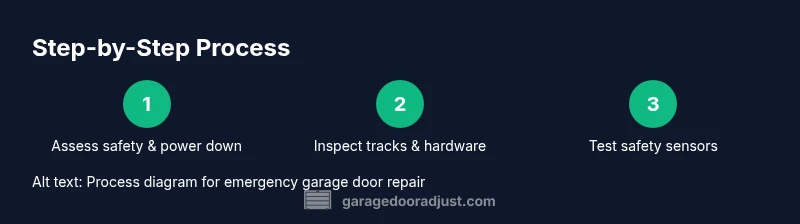
This section outlines a practical sequence you can follow during a late-night repair, focusing on safety, stability, and temporary fixes. Start by disconnecting power and securing the door in the open or closed position if possible. Check for obvious obstructions, then inspect tracks and rollers for debris and alignment. Apply lubrication to moving parts that are not under high tension and avoid lubricating springs directly. Reconnect power and test movement slowly, watching for unusual gaps or jerky motion. If anything feels unstable, stop and seek professional help. This overview provides a repeatable framework you can refer to during an emergency.
When to Call a Pro During a 24 Hour Repair Window
Not every problem is a do-it-yourself fix, especially after-hours. Call a pro if you encounter any of the following: loud banging or grinding that suggests worn components, frayed cables, broken springs under tension, doors that won’t move or drops rapidly, or electrical faults that you cannot safely isolate. In emergencies, a professional can complete a temporary stabilization and schedule a safety-first repair plan. GarageDoorAdjust recommends documenting symptoms, photos, and the door’s behavior to share with a technician. If you are unsure, it’s safer to err on the side of professional service rather than risking severe injury or property damage.
Maintenance to Prevent Future Nighttime Emergencies
Preventive maintenance reduces the likelihood of late-night failures. Regular lubrication of moving parts (except springs) reduces friction and wear. Tighten loose bolts and check cable tension on a monthly basis. Inspect the tracks for bends or loose mounting screws and clean debris from the track path. Remember that a well-maintained door is safer and quieter and reduces the odds of urgent repairs. This section links immediate after-hours actions to a sustainable maintenance plan that minimizes risk for homeowners.
Safety Standards, Pitfalls, and Common Mistakes
Even in emergencies, following basic safety standards protects you and your family. Never bypass safety devices or disable auto-reverse features to make a door operate. Avoid attempting spring replacements or any repair that requires disabling high-tension components. A common pitfall is relying on temporary fixups rather than confirming the root cause. Use a methodical approach: assess, stabilize, diagnose, fix, and reassess. This section highlights the critical do-not-dos and practical steps that reduce risk while you navigate a 24 hour repair window.
Quick Troubleshooting Checklist for Night Repairs
Before you finish a late-night session, run through a concise checklist: ensure power is isolated, confirm the door is stabilized, verify tracks are free of obstructions, test safety sensors for proper alignment, and document issues for the technician. If the door continues to fail, do not push through dangerous attempts; instead, prepare to schedule a professional visit as soon as morning light arrives. A quick, focused checklist helps you stay organized and safe during an urgent repair.
Tools & Materials
- Work gloves(Leather or padded, for hand protection)
- Safety glasses(Eye protection)
- Flashlight(Bright, hands-free if possible)
- Adjustable wrench(Open-ended or socket)
- Allen/hex keys(Various sizes)
- Pliers(Slip-joint)
- Screwdrivers(Flat and Phillips)
- Lubricant spray(Silicone or lightweight lithium)
- Duct tape(Temporary hold or stabilization)
- Step ladder(Stable, not wobbly)
- Replacement parts(Only if you know the part is needed)
- Voltage tester(Check electrical safety)
Steps
Estimated time: 30-60 minutes
- 1
Power down and secure area
Turn off the opener at the wall control and unplug or switch off the main breaker if possible. Establish a clear, stationary working zone away from pinch points and children. Confirm the door cannot move unexpectedly before you touch any hardware.
Tip: If you must use a ladder, have a helper hold it steady on a flat surface. - 2
Manually test door movement
With the opener disconnected, attempt to move the door by hand at the bottom edge. If it binds severely or feels unstable, stop and reassess; forcing motion can injure you or worsen the issue.
Tip: Wear gloves and keep fingers clear of springs and pulleys. - 3
Inspect tracks and rollers
Look for bends, gaps, or obstructions in tracks and rollers. Remove debris with a dry cloth or soft brush. Do not slam the door along tracks and avoid prying against the track caulking.
Tip: Lubricate non-spring moving parts lightly after cleaning. - 4
Check safety sensor alignment
Ensure the infrared beam is unobstructed and aligned. Misalignment can prevent operation or trigger auto-reverse unexpectedly. Realign the sensor eyes according to the manufacturer’s guidance if needed.
Tip: Use a small target or marker to indicate alignment reference. - 5
Tighten mounting hardware
Secure loose bolts on tracks, brackets, and hinge mounts. Loose hardware can cause misalignment and sensor issues.
Tip: Only snug bolts; overtightening can strip threads or deform parts. - 6
Apply appropriate lubrication
Lubricate moving parts that are not under high tension, such as rollers and hinge points. Avoid spraying springs directly as this can mask a deeper issue and complicate repairs.
Tip: Wipe away excess lubricant to prevent dust accumulation. - 7
Re-connect power and test
Restore power and run the door slowly through its travel cycle. Listen for unusual noises and watch for door drift or binding. If safe movement is not achieved, stop and seek professional service.
Tip: Test both upward and downward movements in both open and closed positions. - 8
Document symptoms for the pro
Take clear notes and photos of the issues observed, including noise, gaps, and sensor behavior. This information helps technicians arrive prepared with the right parts.
Tip: Keep a simple checklist of observed events during the test run. - 9
Plan next steps
If the door remains unstable or you encountered a high-tension component, arrange a professional visit during the next business window. Ensure the area remains safe and the door is secured.
Tip: Schedule a follow-up appointment and share the symptoms with the technician.
Got Questions?
What counts as a 24 hour garage door repair emergency?
An emergency involves a door that cannot be safely operated, poses a risk of injury, or traps a vehicle. If you cannot safely secure the door or power down without tools, seek immediate professional help.
An emergency is when the door is unsafe to operate or traps a vehicle. Seek professional help right away if you can't secure it safely.
Is it safe to attempt repairs at night?
Temporary fixes can be attempted if you can do so safely with the proper tools and protective equipment. Never work on high-tension components or springs. If unsure, call a pro.
You can do basic safety checks at night if you can stay safe and avoid high-tension parts. If in doubt, call a pro.
What parts are most likely to fail during emergencies?
Springs, cables, tracks, and rollers are typical culprits. Visual signs like wear, fraying, or misalignment indicate where to focus the inspection.
Springs, cables, tracks, and rollers are common trouble spots in emergencies.
How long should a temporary fix hold before a professional visit?
Temporary fixes are meant to stabilize the door for safe operation until a professional can complete a full repair. Do not rely on temporary fixes longer than a few days.
Temporary fixes should only buy time until a proper repair is done by a pro.
What maintenance helps prevent after-hours failures?
Regular lubrication (excluding springs), track alignment checks, bolt tightens, and sensor calibration reduce the chance of late-night failures. Schedule monthly checks.
Keep up with regular lubrication, track checks, and sensor calibration to avoid emergencies.
When should I replace the door instead of repair?
If multiple major components are worn or the door is structurally compromised, replacement may be more cost-effective and safer in the long run. A professional can evaluate the overall condition.
If many parts are worn or the door is damaged, replacement might be the safer option.
Watch Video
Quick Summary
- Assess safety before any repair action.
- Identify common failure points (springs, cables, tracks).
- Use proper PPE and limit high-tension manipulations.
- Document symptoms for pro technicians.
- Know when to call a pro to avoid risky DIY fixes.