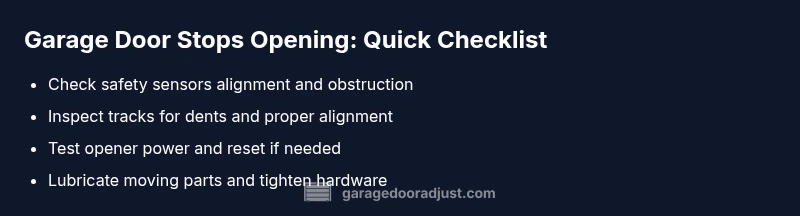
Garage Door Stops Opening: Fast, Safe Troubleshooting Guide
If your garage door stops opening, this step-by-step guide from GarageDoorAdjust helps you diagnose the cause, safely fix the opener, tracks, or sensors, and prevent future jams.


Most often, a garage door stops opening due to sensor misalignment, a binding track, or a faulty opener. Start with simple checks: verify power to the opener, clear sensor obstructions, and test the door manually after unplugging the unit. The GarageDoorAdjust team found that sensor alignment and track conditions are the most common culprits, and addressing these basics resolves many stuck-door scenarios.
Why garage door stops opening: Common Causes Explained
When a garage door stops opening, it’s usually a symptom of a simple, fixable issue rather than a catastrophic failure. The most frequent culprits fall into three buckets: sensors, tracks, and the opener itself. Sensor beams can misread, especially after weather-driven dust or nearby movement; tracks can become misaligned from bumps or heavy wind; and the opener motor can fail due to wear or electrical glitches. Each category has a quick, safe test you can perform to narrow down the root cause. Throughout this guide, you’ll see practical steps you can take to diagnose and safely resolve the problem, with clear warnings when professional help is needed. If your garage door stops opening, don’t assume the worst—start with the basics and verify your assumptions with a structured approach.
Safety First: Quick Checks You Can Do
Before you touch any moving part, lock out the opener and put safety first. Unplug the garage door opener, and if you have a power switch, switch it off. Stand to the side of the door, not in its path, and keep children and pets clear. Check for obvious hazards: loose hardware, frayed cables, and debris on the track. If you see danger signs, stop and call a professional. With the door unplugged, test the manual movement by lifting gently from the bottom corner. If it still feels heavy or binds, there may be a more serious problem. These safety steps reduce risk and help you avoid injuries while you diagnose why the door won’t operate.
Diagnostic Flow: Symptom → Diagnosis → Solutions
If your door stops opening, map the symptom to likely causes:
- Sensor misalignment or obstruction
- Track binding or misalignment
- Opener electrical faults or safety limits
For each cause, there’s a corresponding fix you can try safely at home. If a fix involves springs, cables, or the electrical system, stop and call a professional. The goal is to eliminate guesswork and move toward a reliable, repeatable result.
Sensor Issues: Beams, Alignment and Obstructions
One of the most common causes of the problem is misaligned or obstructed safety beams. The door won’t close if a beam is out of alignment, but it can also fail to open if the receiver is blocked. Clean the sensor lenses, realign the sender and receiver so they face each other cleanly, and remove any obstruction in the doorway path or near the sensors. If the sensor light is red or blinking, refer to your model’s manual. The sensor alignment fix is often enough to restore operation and prevent the door from stopping during opening. The GarageDoorAdjust analysis shows sensor-related issues are a frequent source of the problem and are usually quick to fix with proper alignment.
Track Problems: Alignment, Debris, and Wear
Bent, crooked, or dirty tracks can prevent smooth operation and cause the door to stall. Inspect both vertical and horizontal tracks for dents, obstructions, or loose hardware. Use a wooden block to gently nudge the track back into alignment and wipe away dirt with a soft cloth. Ensure the tracks are plumb and parallel, and that rollers roll freely in the channels. If the door is heavy on one side, the track alignment is likely off and needs adjustment. Regular lubrication with a lightweight garage-door lubricant can prevent future friction. If you see guides or rollers that are cracked or worn, replace them before continuing.
Opener and Electronics: Circuit Boards, Limits, and Safety Reverses
If sensors and tracks check out, the issue may lie with the opener’s electronics or the safety limits that stop the door mid-cycle. Check the limit switch settings in the opener’s program and reset if necessary per the manufacturer’s instructions. Inspect the logic board for burn marks or loose connectors. A failing motor or worn gears may cause intermittent stops opening. In many cases, a simple reset or reprogramming of the remote and keypad resolves the problem. If the unit is older or shows signs of wear, a professional service or replacement may be the better long-term solution.
The Most Common Fixes: Quick Win Steps That Work
Begin with the simplest adjustments: sensor realignment and track cleaning. If the door still stops opening, recheck the opener power and reset the unit. Tighten loose hardware along the tracks and corners. Replace worn rollers if needed, and lubricate moving parts. For stubborn issues, confirm that the door balance is correct by disconnecting the opener and lifting the door manually; it should stay in place. If it falls or drops suddenly, the springs or balance system may be off and a pro is required.
Prevention: Maintenance Routine to Prevent Future Stops Opening
Create a monthly check routine; wipe tracks, inspect hardware, and test safety sensors. Lubricate rails every 6-12 months and test the door’s balance semi-annually. Debris and exposure to weather top the causes, so consider weather-stripping checks and ensure no obstructions near the sensor. Use a smart opener with built-in diagnostics for ongoing monitoring. By building a simple maintenance habit, you reduce the risk of garage door stops opening in the future.
Troubleshooting Scenarios and When to Call a Pro
Scenario A: The door stops opening after a series of rapid operations and pre-sets a safety warning. Scenario B: The door moves but reverses immediately after hitting the ground. Scenario C: The opener light blinks rapidly or the wall control shows a fault code. For each scenario, start with sensor checks, then inspect tracks, and finally test the opener in a controlled way. If you encounter frayed cables, bent tracks, or a suspected broken spring, stop immediately and contact a licensed professional. Remember: it’s safer to call a pro if the problem involves springs, cables, or the electrical system.
Steps
Estimated time: 60-90 minutes
- 1
Power and safety checks
Ensure the opener is unplugged or the breaker is off. Confirm there is no power to the unit and that the door is safe to inspect manually. This step eliminates live-power risks before you touch any components.
Tip: Double-check that pets and kids are away from the door while you work. - 2
Test manual operation
With the power off, try lifting the door manually from the bottom. It should lift smoothly and stay put if the balance is good. If it drops or binds, note the side with resistance for later inspection.
Tip: Do not force the door; note where it binds for targeted fixes. - 3
Realign safety sensors
Inspect the one-beam sensor system. Clean lenses, ensure the sender and receiver face each other, and remove any obstruction near the doorway. Reconnect power and test the opener to confirm the fix.
Tip: If the sensor indicator blinks, refer to the manual or manufacturer site for proper alignment. - 4
Inspect tracks and rollers
Check tracks for dents or obstructions. If needed, gently adjust tracks to be vertical and parallel, and lubricate rollers with a light garage-door lubricant. Recheck operation.
Tip: Use gloves and avoid lubricants on belts or pulleys unless specified by the manufacturer. - 5
Reset the opener
Reconnect power, reprogram remotes as needed, and run a few opening/closing cycles to verify reliability. If you hear unusual noises or the door stops again, log the issue.
Tip: Keep the manual close-by in case you must interrupt power again. - 6
Call a professional for complex fixes
If you encounter frayed cables, a broken spring, or persistent electronics faults, stop and contact a licensed technician. Springs and cables are safety-critical components that require expertise.
Tip: Document symptoms and photos to share with the technician for faster repair.
Diagnosis: Garage door stops opening or stalls during operation
Possible Causes
- highSensor beam misalignment or obstruction
- highTrack binding or misalignment
- mediumFaulty opener electronics or safety limits
Fixes
- easyRealign sensors and clear obstructions; ensure beams face each other and are green
- easyClean and realign tracks; remove debris and tighten mounting hardware
- mediumTest and reset opener limit switches; inspect control wiring or consult pro for electronics
Got Questions?
Why does my garage door stop opening all of a sudden?
Most commonly, sensor misalignment, track binding, or a failing opener are to blame. Start with the safety sensor check, then inspect the tracks and tester power to rule out simple faults before calling a pro.
Most commonly, sensor misalignment, track binding, or a failing opener are to blame. Start with safety sensor checks, then inspect tracks and power before calling a pro.
Can I fix sensor misalignment myself?
Yes, realigning sensors and clearing obstructions is a common DIY fix. If the indicator stays red or blinking after realignment, consult the manual or a professional.
Yes, sensor realignment and clearing obstructions is a common DIY fix. If the indicator stays red, consult the manual or a professional.
How can I tell if the problem is track-related or opener-related?
Track problems usually show as sticking or uneven movement, while opener faults present as failure to start or frequent resets. Inspect tracks for dents and alignment, then test the opener separately to isolate the issue.
Track problems show as sticking or uneven movement; opener faults show as failure to start. Inspect tracks, then test the opener separately.
Is lubricating the tracks safe for beginners?
Lubrication is safe when using light garage-door lubricant and following the manufacturer’s recommendations. Avoid over-lubricating or applying lubricant to exposed belts or pulleys unless specified.
Lubrication is generally safe with light lubricant and following the manual. Avoid over-lubing or lubricating belts unless advised.
When should I replace the opener vs. repair the door?
If the opener is old, frequently fails, or has multiple issues across electronics and safety systems, replacement may be more cost-effective than repeated repairs.
If the opener is old or unreliable, replacement can be more cost-effective than ongoing repairs.
Can a misaligned door cause injury?
Yes. A misaligned track or faulty springs can cause the door to drop unexpectedly. Always prioritize safety and seek professional help for structural or spring issues.
Yes, misaligned tracks or faulty springs can be dangerous. Seek professional help for safety-critical repairs.
Watch Video
Quick Summary
- Check power, sensors, and tracks first to resolve most doors that stop opening
- Use the diagnostic flow: sensors → tracks → opener for accurate fixes
- Don’t force a stuck door; consult a professional for springs or wiring issues
- Prevent future problems with a simple monthly maintenance routine