Install and Maintain Steel Roll Up Doors: A Homeowner's Guide
A comprehensive, step-by-step guide for homeowners on selecting, installing, and maintaining steel roll up doors, with safety tips and troubleshooting.


You will diagnose fit and safety, choose a steel roll up door that matches your garage, and complete a basic DIY replacement or upgrade. Before you start, measure opening, check compatibility with your opener, and gather the right tools. This guide walks homeowners through a safe, step-by-step installation plan. Common mistakes—improper alignment, wrong door weight, and skipped safety checks—are easy to avoid with the steps below.
What steel roll up doors are and why homeowners choose them
Steel roll up doors combine durability, security, and space-saving operation for most residential garages. When you hear the term, imagine a strong steel curtain that slides up into a compact bay above the opening. According to GarageDoorAdjust, these doors offer excellent resistance to weather and intruders while keeping floor space clear for vehicles and storage. They are available in different gauges and coatings to suit climates, budgets, and aesthetics. For homeowners, the decision often comes down to balance between budget and long-term maintenance needs. In this section we explore the core advantages, common configurations, and how to determine if a steel roll up door is right for your garage.
Materials, gauges, and construction
Steel roll up doors are built from interlocking slats or panels that coil into a drum above the opening. Construction quality hinges on the steel grade, coating, and core insulation (if any). The door’s weight and rigidity depend on the thickness of the steel and the way the slats are formed. Look for corrosion-resistant coatings, such as powder finishes or galvanization, and consider options with reinforced end stiles for extra rigidity. There isn’t a one-size-fits-all answer; the best choice depends on your climate, exposure to moisture, and how often you open and close the door. Always review the manufacturer’s specifications for warranty terms and expected lifespan. For high-traffic garages, prioritize heavier gauge construction and a robust track system to reduce wear over time.
Insulation and energy efficiency
Insulated steel roll up doors minimize thermal transfer and can significantly reduce drafts and heat loss in attached or uninsulated garages. Most insulated doors use cores made from polyurethane or polystyrene, which improves energy performance and sound dampening. The choice of insulation often affects price and weight, so pair insulation with proper weather stripping and seals around the frame. If you park in a climate with extreme temperatures, consider doors with higher R-values and weather-resistant seals to maintain comfortable indoor conditions and reduce utility costs. Always verify installation tolerances so the insulation stays intact and performs as intended.
Coatings, corrosion resistance, and maintenance
Coatings protect steel doors from environmental exposure and wear. Polyurethane and polyurea coatings offer durability and better abrasion resistance, while powder-coated finishes resist chipping and fading. Regular cleaning with mild detergent and water helps preserve appearance and performance. Inspect for rust spots, damaged seals, and bent tracks after storms or heavy wind. If you notice rust, treat promptly with a rust converter and recoat; neglect can spread and compromise door strength. A simple maintenance routine extends door life and keeps panels looking fresh for years.
Opener compatibility and hardware considerations
Modern steel roll up doors work with different opener configurations, including chain-drive, belt-drive, and direct-drive systems. When choosing a door, confirm compatibility with your existing opener or plan for a replacement that matches your preferred drive type. Install safety features like photoelectric sensors and auto-reverse to prevent injuries. Weatherstripping around the frame reduces drafts and wind-driven debris. If your garage uses a smart opener, verify compatibility with your home automation setup and mobile controls. A well-matched opener minimizes strain and prolongs the door’s lifespan.
Sizing, installation readiness, and pre-installation planning
Accurate sizing begins with measuring width and height at multiple points to accommodate obstructions and irregularities. Account for headroom and side-room to ensure the tracks sit true and the door operates smoothly. Prepare the opening by clearing debris and ensuring the frame is square. Gather all required tools and a helper for handling heavy panels. Having a clear install plan, the right hardware, and surplus parts reduces installation time and errors. Document the measurements and compare them against the door’s product specifications before ordering.
Maintenance routines to extend life
A proactive maintenance plan keeps steel roll up doors performing reliably. Schedule lubrication of rollers, tracks, and hinges every 6 months or after heavy use. Clean the door surface and seals to prevent grime buildup that can hinder movement or cause premature wear. Inspect weather stripping, end caps, and track alignment; realign or replace components as needed to avoid binding. Keep the track area free of tools and debris and test the opener’s safety features monthly. A simple calendar reminder helps homeowners stay on top of routine care.
Common problems and diagnosis without professional help
Common issues include sticking or binding movement, misalignment of tracks, and slow operation. If movement is rough or noisy, inspect for loose mounting screws, worn rollers, or damaged weather seals. Track misalignment can cause doors to rub or bind; gently re-align front tracks and verify level. If the opener reverses or won’t operate, check safety sensors and limit switches. Avoid forcing a door closed or adjusting springs unless you have proper training and equipment. Many issues can be resolved with basic maintenance rather than a full replacement.
Safety, codes, and best practices for DIY vs pro work
Garage doors are heavy and can be dangerous if mishandled. Always disconnect power to the opener when working on moving parts and wear eye protection, gloves, and sturdy footwear. Follow local building codes and manufacturer guidelines for installation, maintenance, and accessory additions. For any work involving torsion springs, high-tall tracks, or structural changes, hire a licensed professional to avoid serious injuries. Prioritize a conservative approach: if in doubt, consult a technician before proceeding.
Tools & Materials
- Measuring tape(To verify opening width and height at multiple points)
- Level(To ensure tracks are plumb and aligned)
- Cordless drill(For mounting hardware and fasteners)
- Screwdriver set(Flathead and Phillips heads for fasteners)
- Ladder(Accessing higher tracks and components safely)
- Safety glasses(Eye protection during cutting, drilling, or lifting operations)
- Work gloves(Hand protection when handling panels and hardware)
- Lubricant spray (silicone or lithium grease)(Lubricate tracks, rollers, hinges, and weather seals)
- Caulk or weather seal(Optional for sealing gaps around frame)
- Crimping tool(Optional for adjusting track hardware)
Steps
Estimated time: 4-8 hours
- 1
Measure opening and confirm door size
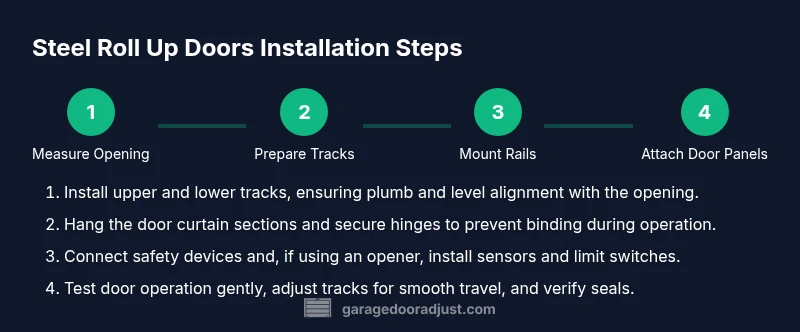
Take measurements at three points across the width and height to account for framing irregularities. Compare measurements to the chosen door size and ensure there is enough headroom for the door to roll up without scraping the ceiling or trim. This step prevents misfit and binding later in the installation.
Tip: Document all measurements with a quick sketch and photo for reference. - 2
Prepare the area and gather tools
Clear the workspace, remove any obstructing items, and set up a stable ladder. Verify you have all required tools and hardware before starting to minimize trips to the toolbox. A prepared workspace reduces mistakes and speeds up installation.
Tip: Place a helper nearby to assist with heavy panels. - 3
Remove existing hardware or old door (if replacing)
If replacing, carefully detach the old tracks, panels, and hardware. Keep track of mounting points and reference marks so the new system aligns with the existing openings. Do not force components through misaligned openings.
Tip: Take photos of the old setup to compare alignment with the new installation. - 4
Install track system and frame
Mount upper and lower tracks, ensuring each is square to the frame and level along its length. Secure with appropriate fasteners and verify that the tracks are aligned before proceeding. Poor alignment can cause binding and uneven door travel.
Tip: Use a laser level or spirit level to confirm plumb every few inches as you tighten fasteners. - 5
Hang door panels and secure hinges
Attach the door curtain sections to the track assembly, making sure hinges and connection points are tight and properly aligned. Ensure panels sit flush against weather seals with minimal gaps to maximize energy efficiency and security.
Tip: Work with a partner to hold panels in place during initial mounting. - 6
Install safety devices and opener connection
If using an opener, install sensors and confirm the unit’s compatibility with the door arrangement. Wire safety features per the manufacturer’s instructions and test the auto-reverse function in a controlled environment before full use.
Tip: Never bypass safety devices; this could cause serious injury. - 7
Test operation and perform final adjustments
Manually operate the door to confirm smooth travel along tracks. Make minor adjustments to tracks and hinges if the door binds or wobbles. Recheck all fasteners and ensure the door latches securely when closed.
Tip: Document any adjustments for future reference. - 8
Clean up and schedule maintenance
Return tools, wipe down the door surface, and apply weather seals if needed. Set up a maintenance schedule for lubrication and inspections to extend the door’s life.
Tip: Create a calendar reminder for 6-month checks.
Got Questions?
What is a steel roll up door?
A door built from interlocking steel slats that roll up into a coil above the opening. It provides security, durability, and weather resistance for many garages.
A steel door made of hinged steel slats that roll up into a coil above the opening, offering security and weather resistance.
Can I install a steel roll up door myself, or should I hire a professional?
Basic door replacements can be doable for handy homeowners, but torsion springs and precise track alignment require professional expertise to ensure safety and proper operation.
DIY is possible for simple installs, but for safety and precise alignment, hire a professional.
What maintenance does a steel roll up door require?
Regular cleaning, lubrication of tracks and rollers, and inspection of seals and hardware help extend door life and prevent binding.
Keep it clean, lubricate moving parts, and inspect seals regularly.
How long does installation typically take?
Time varies with door size, existing hardware, and whether you’re replacing components. Plan for several hours to a full day for a complete install.
Most installs take a few hours to a full day depending on complexity.
Are steel roll up doors energy efficient?
Insulated options improve energy performance. Core materials like polyurethane or polystyrene help reduce heat transfer when paired with good weather seals.
Insulated doors help reduce drafts and energy loss.
What safety precautions should I follow?
Disconnect power to the opener when working on the door, wear PPE, and never stand under a door while testing or adjusting components.
Turn off the opener and wear safety gear to prevent injuries.
Watch Video
Quick Summary
- Measure opening precisely before ordering.
- Choose the right gauge and insulation for climate needs.
- Keep safety devices engaged and test regularly.
- Maintain tracks and weather seals for longevity.
- Verify opener compatibility to avoid performance issues.