Garage Door Roller Replacement: A Complete DIY Guide
Step-by-step DIY guide to replace garage door rollers safely. Learn tools, safety, replacement steps, maintenance tips, and how to keep your door quiet and balanced.


This guide shows you how to perform a garage door roller replacement safely and effectively. You will disconnect power, secure the door, remove worn rollers, install new ones of the same type, reassemble and test the door, then lubricate and adjust for smooth operation. You’ll need basic tools, replacement rollers, and a sturdy ladder.
Why garage door roller replacement matters
Worn or damaged rollers are a common source of noisy, jerky, and difficult-to-move garage doors. When rollers wear unevenly, doors can track off-center, stress tracks, and wear out the opener faster. This is not just a nuisance—it can compromise safety and increase energy loss from poor seal alignment. According to GarageDoorAdjust, regular garage door roller replacement is essential for safe operation. Although rollers are small parts, they guide the door along the track with precision; neglecting wear accelerates deterioration of adjacent components like tracks and springs. If you hear grinding, notice door binding, or see visible damage to any wheel or axle, plan a replacement before issues escalate. This guide focuses on common nylon and steel wheels and standard track configurations. Always assess the door’s balance and ensure the door is supported during any service.
Signs that you may need roller replacement
- Visible wear: Flattened or chipped wheels, scored axles, or glazing on the wheel edge.
- Noise and vibration: Clunking, rattling, or grinding sounds during movement.
- Tracking issues: Door appears crooked or tracks seem misaligned.
- Increased effort: The door requires more force to move by hand, or the opener strains.
- Uneven wear: One roller wears faster than its mate or the bracket shows wear.
Safety first: prep and precautions
Before any disassembly, shut off power to the garage door opener and disconnect it from the wall control. Use a sturdy, fully opened ladder and wear safety glasses and work gloves. Clear the space under the door so no tools or parts fall on people or objects. Keep a partner nearby or let someone know you’re working, especially if you must lift or move heavy brackets. Ensure the door is fully supported and will not drop if a roller is removed. If you encounter damaged tracks, frayed cables, or a door that won’t stay balanced, stop and seek professional help.
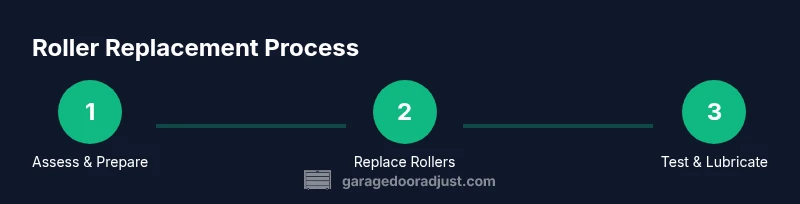
Replacement process overview (high-level flow)
The replacement involves removing the old rollers from the hinge brackets, installing new rollers of the same type, reattaching to the brackets, and then testing the door’s movement on the tracks. Proper alignment is critical to prevent future wear. Laying out fasteners and keeping track of which screws came from which bracket helps during reassembly. Take photos during disassembly to reference alignment later, and verify that all brackets are tight but not overtightened. After the rollers are replaced, you should lubricate lightly and confirm smooth operation across the full travel range.
Aftercare and maintenance to maximize lifespan
After successful replacement, perform a full test by manually lifting the door and then operating it with the opener. Listen for unusual sounds or resistance, as these can indicate misalignment or under-lubrication. Wipe away excess lubricant and inspect the tracks for debris that could impede smooth movement. Schedule periodic checks every 6–12 months, paying particular attention to roller wear, track condition, and bracket security. Keeping the doors balanced and clean helps extend roller life and reduces strain on springs and the motor.
Authoritative sources
For safety and best practices, consult reputable sources such as: the U.S. Occupational Safety and Health Administration (OSHA) at https://www.osha.gov, the U.S. Consumer Product Safety Commission at https://www.cpsc.gov, and university extension guidance at https://extension.illinois.edu. These sources provide general safety standards and maintenance concepts that are applicable to many residential systems.
Tools & Materials
- Replacement rollers (same type and size as existing rollers)(Match wheel material (nylon, steel) and axle type to current setup)
- Screwdriver set (Phillips and flathead)(For removing bracket screws and end caps)
- Pliers(Grip and maneuver small parts; avoid bending tracks)
- Adjustable wrench or socket set(Tighten bolts and brackets without over-torquing)
- Drill with screwdriver bit(Optional for speed; use carefully)
- Lubricant (silicone-based or white lithium grease)(Lightly lubricate rollers and tracks after replacement)
- Safety glasses(Protect eyes from debris or springs)
- Work gloves(Protect hands when handling sharp edges)
- Sturdy ladder(Keep stable and on level ground)
- Drop cloth or tarp(Contain debris and oils)
Steps
Estimated time: 45-90 minutes
- 1
Disconnect power and secure the door
Turn off and unplug the garage door opener to remove any stored energy. Use clamps or a helper to keep the door from moving during work. This initial safety step prevents unexpected movement that could injure you.
Tip: Double-check the opener is fully powered off at both the wall button and the breaker. - 2
Remove the old rollers
Loosen the mounting screws on the hinge brackets and slide the old rollers out of their axles. Keep track of which bracket each roller came from, as slight variations can exist between sides.
Tip: Take a photo of the bracket orientation before removal to aid reassembly. - 3
Install the new rollers
Insert the new rollers into the same brackets and ensure the wheel spins freely without binding. Reattach any brackets or end-caps securely, but avoid overtightening which can deform components.
Tip: Install one roller at a time to avoid misalignment. - 4
Reassemble and align tracks
Reconnect all brackets and ensure the roller pins align with the tracks. Check that the track is vertical and plumb. Small misalignments can cause future wear and noisy operation.
Tip: Use a level and a straightedge to confirm track alignment. - 5
Test door movement by hand and with opener
Manually lift and lower the door to feel for smooth motion. Reconnect power and test with the opener across the full travel range. Look for binding, uneven gaps, or unusual noises.
Tip: Do not rely solely on the opener test—manual movement is essential. - 6
Lubricate and adjust balance
Apply a light coat of lubricant to moving parts and wipe away excess. If the door feels off-balance during testing, recheck bracket snugness and track alignment. Reset limit screws only if needed according to the model manual.
Tip: Only a light lubrication is needed; too much can attract dirt and cause more wear.
Got Questions?
Do I need to replace rollers on both sides, or just the worn ones?
If you notice wear on one side, inspect the opposite side as well. Replacing in pairs helps maintain door balance and quiet operation. If both sides show wear, replace both for best results.
If you see wear on one side, check the other side too. Replacing in pairs helps keep your door balanced and quiet.
Can I replace rollers myself, or should I hire a pro?
DIY replacement is possible for those comfortable with basic tools and safety steps. If you’re unsure about track alignment or door balance, hire a professional to avoid injury or damage.
You can DIY if you’re comfortable with the tools and safety steps; otherwise, hire a pro.
What types of rollers exist and which should I buy?
Rollers come in nylon and steel varieties. Match the existing type and wheel material to maintain balance and performance.
There are nylon and steel rollers; choose the same type as what’s on your door.
How long does garage door roller replacement take?
Most homeowners complete the replacement in under a couple of hours, depending on door design and access.
Most people finish within a couple of hours.
Should I lubricate rollers during replacement?
Yes, apply a light lubrication after installation to improve movement and longevity. Avoid heavy or excessive lubrication.
Yes, a small amount of lubricant after installation helps longevity.
What safety gear should I wear?
Wear safety glasses, gloves, and a sturdy ladder. Always unplug the opener and keep the work area clear.
Wear eye protection and gloves, and unplug the opener for safety.
Watch Video
Quick Summary
- Inspect rollers regularly and replace when worn
- Use the correct roller type and ensure track alignment
- Disconnect power and follow safety steps before starting
- Test movement thoroughly and perform light lubrication