When to Replace Garage Door Rollers: A Homeowner's Guide
Learn how to tell when your garage door rollers need replacement, how to inspect wear, and a practical, safe, step-by-step guide to replace rollers yourself. Pro tips and safety checks help homeowners keep doors balanced and quiet.


Replace garage door rollers when you notice grinding, excessive play, jittery movement, or visible wear such as cracks, flat spots, or cracked wheels. If tracks are bent or rollers seize, replace them as well. For many homes, a proactive replacement every 5–7 years is wise, especially in high-use or extreme environments. This guide covers safe inspection, tools, and steps to perform a secure roller replacement.
Anatomy of a garage door roller system
The roller system is the wheel-driven path your door travels along as it opens and closes. Each roller sits in a track attached to the door and rotates on a stem or axle that fits into a bracket. If you're wondering when to replace garage door rollers, start by evaluating the overall health of the tracks, brackets, and wheels. Over time, exposure to dirt, humidity, and metal-on-metal wear can degrade wheels, bushings, and axles. When you’re evaluating whether to replace garage door rollers, start with the overall health of the tracks and brackets, because worn tracks make roller wear worse and can cause misalignment.
Signs of wear and when to replace the rollers
Look for visible cracks in plastic wheels, glazing or flat spots, wobbling wheels, or wheels that don’t spin freely. Listen for grinding or crunching sounds during operation. If the door travels with side-to-side wobble or the bottom of the door drags on the floor, the rollers or tracks are likely compromised. Remember that even if only a few rollers show wear, replacing all rollers is often more reliable than patching a few faulty wheels.
Environmental and usage factors that accelerate wear
High humidity, salty coastal air, and dusty garages accelerate corrosion and grit buildup, speeding wear on rollers and tracks. Frequent use—especially multiple cycles per day—reduces roller life. If you park a heavy vehicle in front of the door or slam the door shut, bearing stress increases. In older homes with metal tracks, rust can seize the wheels, making replacement inevitable sooner than expected.
Safety considerations before you begin
Garage door work can be dangerous if springs or tracks are damaged. Always unplug the door opener and disconnect the manual release so the door cannot fall unexpectedly. Wear safety glasses and gloves, and keep children and pets away. If your door uses torsion springs, do not attempt to adjust springs yourself; contact a professional.
How to inspect rollers, tracks, and brackets
With the door closed, inspect each roller and its mounting bracket for looseness, cracks, or rust. Check the tracks for dents, bends, or gaps between the wheel and the track. Ensure mounting bolts are snug but not overtightened. Move each roller by hand to confirm it spins smoothly without wobble. Any binding or resistance warrants further action.
When to replace: decision criteria
If two or more rollers show excessive wear or fail the spin test, plan a full roller replacement. Cracked wheels, deep grooves, or a consistently noisy ride indicate imminent failure. Compare the cost of replacement versus operating with worn wheels; replacing all rollers at once minimizes mismatch and improves door balance.
Step-by-step replacement overview
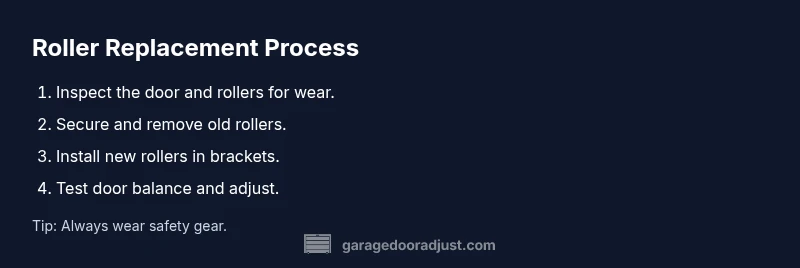
This section provides a high-level overview of the process without listing every action. First, prepare and secure the door, then remove old rollers from the brackets, install new rollers, and finally realign tracks and test balance. Always follow the manufacturer’s guidelines for your model. The actual step-by-step instructions are provided in the dedicated STEP-BY-STEP section below.
Post-replacement testing and adjustments
After installing new rollers, test the door manually for balance. Open and close slowly to feel for binding or misalignment. Reconnect power to the opener and test auto-reversal functionality. If you notice persistent noise, recheck track alignment and roller seats. A small amount of silicone-based lubricant on the rollers and tracks can reduce noise, but avoid over-lubrication.
Maintenance to extend roller life
Schedule regular inspections every 6–12 months, cleaning tracks and removing debris. Wipe tracks with a dry cloth, lubricate lightly with a silicone spray, and avoid petroleum-based lubricants that can attract dust. Keep the door balanced by tightening brackets as needed and replacing worn rollers promptly. Proactive maintenance reduces unexpected failures and keeps operation smooth.
Authority references and safety resources
For safety guidelines and best practices, consult reputable sources such as OSHA and university extension programs. Always prioritize practical, hands-on care and never improvise around spring systems or damaged tracks. See the linked references for detailed safety considerations.
Tools & Materials
- Safety glasses(Impact-rated if possible)
- Work gloves(Grip and protection)
- Step ladder(Stable base, non-slip feet)
- Socket wrench or adjustable wrench(Common sizes 1/4"–3/8")
- Pliers(Needle-nose preferred)
- Phillips and flathead screwdrivers(Varied tip sizes)
- Replacement rollers set(Match axle size and wheel type to door)
- Allen/hex keys(If brackets use hex bolts)
- Silicone-based lubricant(Light spray for tracks and rollers)
- Rags or shop towels(Clean surfaces and wipe excess lubricant)
- Marker or tape(Label bolts during removal)
Steps
Estimated time: 45-60 minutes
- 1
Prepare and secure the door
Unplug the garage door opener and engage door bracing to prevent accidental movement. Clear the area, and confirm your ladder or support is stable. This reduces the risk of injury when the door shifts during roller removal.
Tip: Always have a second person ready to hold the door or hand you tools. - 2
Support the door and remove brackets
Place clamps on the tracks below the rollers to hold the door in place. Remove screws or bolts securing the roller brackets to free the old rollers. Do not force brackets if bolts resist; back off and inspect for rust or stripped threads.
Tip: Work on one side at a time to keep door balance as you proceed. - 3
Extract old rollers
Carefully lift the roller out of the bracket stem or pin. If the roller sticks, use pliers to gently rotate it free, avoiding contact with the torsion system. Set the old rollers aside for disposal.
Tip: Do not twist or pry forcefully—damage can occur to brackets. - 4
Install new rollers
Insert the new roller into the bracket and align with the track guide. Reinsert the mounting bolt or pin and snug it until there is no play. Ensure wheels spin freely before reassembling.
Tip: Handle wheels by the axle to avoid contaminating the bearings. - 5
Reassemble and align tracks
Reattach brackets to the door with bolts, ensuring the track remains true and aligned. Use a level to confirm the track is vertical and straight. Tighten fasteners gradually to avoid overtightening.
Tip: If tracks are bent, address that before finishing—misaligned tracks wear new rollers quickly. - 6
Test the door and finalize
Reconnect power to the opener and run the door through a few cycles in a safe, controlled setting. Listen for smooth operation and look for wobble or rubbing. Adjust as needed and lubricate lightly as appropriate.
Tip: Test the auto-reverse safety feature to ensure proper function.
Got Questions?
How do I know when my garage door rollers need replacement?
Look for cracking, glazing, or flat spots on wheels, hearing grinding, and door wobble. If two or more rollers show wear, plan replacement rather than patching one wheel.
Watch for cracked wheels, grinding sounds, and door wobble. If several rollers look worn, replacement is advised.
Is it safe to replace rollers myself, or should I hire a professional?
DIY roller replacement is possible for standard doors if you follow safety steps and avoid working with tensioned springs. If you’re unsure, hire a professional to assess track alignment and spring safety.
You can replace rollers yourself if you're careful, but if you’re not confident, a pro can ensure safety and proper alignment.
What safety steps are essential before starting a replacement?
Unplug the opener, secure the door, wear eye protection, and keep children and pets away. Do not attempt work if torsion springs show signs of damage.
Unplug the opener and secure the door; wear eye protection, and keep others away.
What signs indicate bent tracks or misalignment after replacement?
Persistent rubbing, uneven door height, or wheels catching on the track indicate misalignment. If tracks are bent, straighten them or call a pro.
If the door rubs or sits unevenly, the tracks may be bent and need realignment.
How often should I lubricate the roller wheels and tracks?
Lubricate with silicone-based spray during routine maintenance. Avoid petroleum-based lubricants that attract dust and grime.
Lubricate with silicone spray during maintenance, not oil-based products.
What should I do if the door still makes noise after replacement?
Recheck track alignment, brackets, and spin of every roller. If noise persists, there may be misalignment or damaged tracks requiring professional evaluation.
If noise remains, check alignment and brackets; you may need a pro.
Watch Video
Quick Summary
- Inspect rollers before replacing to avoid unnecessary work.
- Replace all rollers for balanced operation and quiet performance.
- Follow safety steps to prevent injuries during replacement.
- Check tracks and brackets for alignment as you reassemble.
- Schedule regular maintenance to extend roller life.