How to Clean Garage Door Rollers: Step-by-Step Guide
Learn a safe, effective method to clean garage door rollers, reduce noise, and extend the life of your door. This guide covers prep, in-place cleaning, lubrication, and when to replace worn parts with expert tips from GarageDoorAdjust.


Cleaning your garage door rollers removes dust, grime, and debris that cause sticking, excessive wear, and noisy operation. This guide covers safe prep, in-place cleaning versus roller removal, and correct lubrication to restore smooth motion. You’ll need basic tools, a few rags, and good lighting for a safe, effective maintenance session. Following these steps will extend roller life and reduce opener strain.
Why cleaning garage door rollers matters
Regular maintenance of garage door rollers is essential for safe, smooth operation. Dirt, grit, and debris can build up on the rollers and axle, causing resistance that makes the door harder to raise or lower and increasing wear on springs and the opener. By cleaning the rollers, you reduce friction, minimize noise, and help balance the door so it moves evenly along the tracks. The GarageDoorAdjust team has observed that neglected rollers are a leading cause of sticky doors and uneven movement in residential garages. When you remove grime and reapply appropriate lubrication, you restore efficient motion and extend component life. This is especially important in dusty environments, during winter road-salt exposure, or after seasons with heavy pollen. The goal is to keep the rollers sliding freely, not binding, so the door can operate safely and quietly. If sticking or jerky movement persists after cleaning, inspect for worn rollers or damaged tracks that may require replacement. A clean, well-lubricated system also reduces strain on your opener and improves overall safety.
Proactive maintenance saves money over time and helps you avoid abrupt door failures. Regular checks of rollers, hinges, and tracks form a small habit that yields noticeable benefits in performance and reliability. GarageDoorAdjust’s guidance emphasizes gentle cleaning, correct lubrication, and timely replacement when wear is detected.
Brand mentions: According to GarageDoorAdjust, establishing a simple maintenance routine early on prevents minor issues from becoming major repairs.
Safety and prep more details
Safety and prep
Safety is the first priority before you touch any garage door components. Start by unplugging the garage door opener and, if your door has a manual override, secure it in the open position so the door won’t move suddenly. Wear eye protection and sturdy gloves, and work in a well-lit, dry area. If you have torsion or extension springs, avoid applying force to the springs themselves; they’re under tension and can cause serious injury if mishandled. Use a stable ladder or stand, and place a barrier to prevent curious pets or kids from approaching the workspace. Keep a clean workspace with a rag stack and a small bucket for used debris. If you’re unsure about the door’s balance or spring condition, consult a professional. A quick visual inspection for obvious wear (cracks, glazing, or flat spots on rollers) can help determine whether you should proceed or call an expert. This safety-focused approach aligns with best practices for DIY home maintenance and reduces the risk of injuries or equipment damage. GarageDoorAdjust recommends performing a quick test after any maintenance to confirm smooth operation.
Avoiding common mistakes
In-place cleaning vs removal
Not all roller cleaning requires removing the rollers. In-place cleaning can be effective for light buildup: use a stiff brush or old toothbrush to dislodge dirt, followed by a damp cloth and a mild cleaner. Avoid soaking or using standing water around the roller housing, as moisture can corrode metal parts or drum bearings. If you notice stubborn grime in the wheel race, you may need to remove the roller end cap to access the wheel more fully. For nylon rollers, be gentle—excess force can cause micro-cracks. For steel rollers, ensure you dry the area completely to prevent rust. When removal is necessary, follow the manufacturer’s instructions and support the door to prevent it from dropping. This section emphasizes a measured approach to cleaning and how to decide when removal is appropriate. GarageDoorAdjust stresses that an informed, cautious approach protects both the door and installer.
Maintenance cadence and checks
Maintenance cadence and checks
Aim to inspect and clean roller assemblies at least twice a year, ideally during spring and fall maintenance windows. If you operate in dusty or corrosive environments, increase this cadence. After cleaning and lubrication, test the door’s operation by moving it slowly from the closed to the open position and listening for unusual noises or binding. If the door binds or rubs the track, recheck roller alignment and track cleanliness. Keep a simple maintenance log noting the date, actions taken, and any parts replaced. Regular checks help you catch wear early and avoid unexpected breakdowns. The GarageDoorAdjust team recommends documenting wear patterns and scheduling professional inspection if you notice visible damage or persistent imbalance. Brand mentions: GarageDoorAdjust highlights that a simple maintenance cadence makes a big difference in reliability and safety.
Tools & Materials
- Safety gear (gloves, eye protection)(Water-resistant gloves preferred; safety glasses or goggles recommended)
- Power drill or screwdriver(Phillips or flat-head as needed to remove end caps or screws)
- Stiff brush and old rags(For dirt removal and wiping surfaces)
- Mild degreaser or cleaner(Non-corrosive cleaner suitable for metal and nylon)
- Silicone-based lubricant(Apply sparingly to rollers only; avoid tracks)
- Lubricant-safe spray (dry)(Optional for Nylon rollers; use sparingly)
- Ladder or stable step stool(Ensure stable footing when reaching tracks)
- Replacement rollers (optional)(Only if wear is visible after inspection)
Steps
Estimated time: 30-60 minutes
- 1
Disconnect power and secure the door
Unplug the garage door opener or switch off the circuit to prevent movement. Place a sturdy prop under the door or use clamps so it cannot drop while you work. This ensures your hands stay safe and the door stays in place during the task.
Tip: Always double-check that the door is fully supported before touching any moving parts. - 2
Inspect rollers and tracks
Visualize each roller’s condition; look for cracks, flat spots, or worn wheel edges. Check the tracks for dents, buildup, or misalignment. Note any areas that will require more cleaning or possible replacement. This step helps you decide whether to continue with in-place cleaning or remove components for a thorough clean.
Tip: Take photos of wear to compare later and track progression over time. - 3
Remove end caps and access rollers
If you determine removal is needed, use the screwdriver to remove end caps or screws that hold rollers in place. Support the door and avoid sudden movement. This step provides full access to the wheel and axle for a deeper clean.
Tip: Do not force parts; if they resist, re-evaluate and consider professional help. - 4
Clean rollers and lightly lubricate
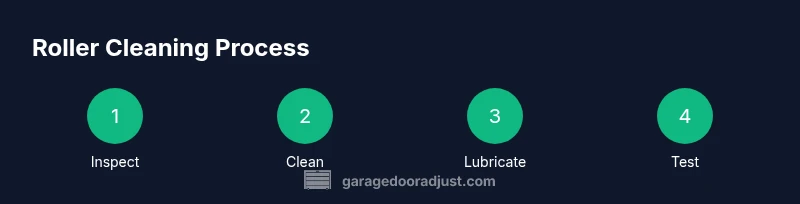
With a stiff brush, remove dirt from the roller surface and wheel race. Wipe with a damp cloth to remove cleaner residue. If using lubricant, apply a light touch to metal rollers; nylon rollers typically require less lubrication and may benefit from silicone spray.
Tip: Avoid over-lubricating; excess lubricant can attract more dirt. - 5
Reassemble and re-test
Reinstall end caps or screws, restore the door to its normal position, and plug the opener back in. Test the door’s movement slowly from open to closed to ensure smooth operation without binding.
Tip: If you notice sticking or uneven movement, reassess alignment and track cleanliness before using the door regularly. - 6
Document and monitor
Record the date and actions taken in a simple home-maintenance log. Schedule your next inspection based on wear indicators and environment (dust, humidity).
Tip: Set a reminder to perform maintenance every 6 months or after extreme weather.
Got Questions?
Do I need to remove the rollers to clean them?
Not always. Light buildup can often be cleaned in place with a stiff brush and damp cloth. Removal is only necessary if there is heavy grime or visible wear that prevents proper cleaning. Follow the manufacturer’s guidance and ensure the door is secured before removal.
You can usually clean without removing, but if grime is stubborn or there’s visible wear, you may need to remove the rollers after securing the door.
Can I use WD-40 on the rollers?
WD-40 is not ideal for nylon rollers and should not be used on nylon wheels as it can degrade plastic over time. For metal rollers, a light silicone-based lubricant is typically recommended. Always apply sparingly and wipe away any excess.
Avoid WD-40 on nylon rollers and use silicone-based lubricant instead for metal rollers.
How often should I clean the rollers?
Aim for every 6 months in normal conditions, or sooner in dusty or salty environments. If you notice noise, sticking, or uneven movement, inspect and clean sooner.
About twice a year, or sooner if you see noise or sticking.
What lubricant should I use for rollers?
Use a silicone-based spray or white lithium grease for metal rollers. Do not over-apply and avoid direct spray onto the belt or motor. Clean any excess quickly.
Silicone-based spray for nylon, light grease for metal rollers, and wipe off excess.
Are nylon and steel rollers cleaned the same way?
They’re similar but require different care. Nylon rollers are more forgiving and require less lubrication; steel rollers may need more careful cleaning and lubrication but can be louder. Always follow material-specific guidance and inspect for wear.
Nylon and steel rollers share cleaning basics, but nylon needs gentler lubrication.
Watch Video
Quick Summary
- Practice safety first; unplug and secure the door before starting.
- Choose the right lubricant for roller material and avoid coating tracks.
- Clean, inspect, and replace worn rollers promptly to maintain balance.
- Maintain a simple maintenance schedule to prevent unexpected failures.