How to Make a Roll-Up Garage Door
A practical, homeowner-friendly step-by-step guide for making a roll-up garage door, covering planning, materials, framing, installation, and safety checks to complete a durable DIY project.


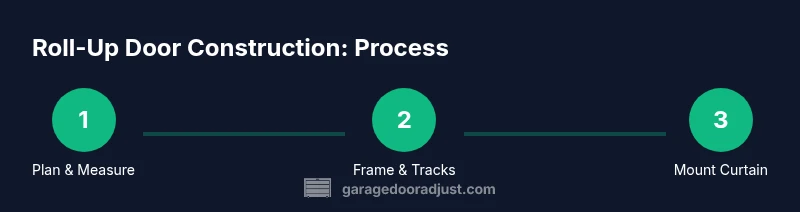
This guide teaches you how to make a roll-up garage door from scratch, covering planning, measurement, framing, rolling mechanism installation, panel mounting, and safety testing. You’ll learn material choices, track alignment, hardware selection, and timing estimates to complete a durable DIY project safely and efficiently. The steps emphasize precision, proper tool use, and adherence to safety guidelines to prevent door failure or injury.
What is a roll-up garage door and why build one?
A roll-up garage door uses a continuous curtain that coils around a drum mechanism as it opens, saving space and delivering a clean, modern look. Unlike traditional sectional doors, a roll-up design can be simpler to manufacture in some home workshops, though it requires precise framing, a reliable drum and track system, and careful tensioning of the rolling components. Building your own roll-up door is an ambitious DIY project suitable for experienced hobbyists who enjoy carpentry, metalworking, and basic mechanical assembly. Before you begin, consider your climate, the weight you want, and the level of insulation you need. Budget, tools, and the risk associated with moving parts should guide your decision to undertake the project. The GarageDoorAdjust team emphasizes that successful DIY door projects rely on thorough planning and strict adherence to safety standards.
Planning and site assessment
Successful DIY roll-up door projects start with a careful plan. Assess the existing opening, ceiling height, and any obstructions that could affect clearance. Create a scaled sketch showing where the tracks, drum, and panels will live, and note potential heat loss areas if insulation matters in your climate. Confirm local building codes and, if needed, obtain any required permits. A realistic timeline helps you sequence framing, parts fabrication, and assembly without rushing critical steps. The GarageDoorAdjust team recommends documenting all measurements and decisions in a project notebook to stay organized.
Materials and system layout
Roll-up doors rely on a few core systems: a rolling curtain (panels or slats), a drum with a spring or counterweight, and tracks that guide the curtain. The door’s fabric or panel material should balance weight, durability, and climate. Choose a compatible track width and drum diameter based on the panel thickness and weight. Consider weather sealing at the header and sides to improve energy efficiency. The layout must ensure the door stacks neatly without contacting framing or other structures when fully open.
Accurate measurements and sizing rules
Accurate sizing is essential when designing a roll-up system. Measure the rough opening at multiple points and record the smallest width, height, and depth. Confirm that the door stack height will fit inside the existing ceiling cavity when the curtain is fully rolled. Determine the required drum size by dividing the curtain width by panel thickness and plus extra margin for clean winding. Double-check clearance around corners, lighting fixtures, and garage sensors.
Framing the opening and supporting structure
Begin by constructing a rigid header that runs the full width of the opening. Build vertical jambs that are square and plumb, then attach sturdy side supports to resist the door’s weight when opening and closing. Use treated lumber or steel framing rated for outdoor exposure, depending on climate. Secure all joints with proper fasteners and verify alignment with a level before proceeding. A solid frame prevents misalignment and reduces wear on moving parts over time.
Installing the roll-up mechanism and tracks
Mount the header and vertical tracks first, ensuring they are perfectly plumb. Install the drum assembly above the opening, then route the curtain or slats into the tracks. Attach the counterweight or spring system according to the design you chose, taking care to keep tension within safe limits. Confirm that the tracks guide the curtain smoothly and that drum rotation is unobstructed. Do not skip the alignment checks, as a misaligned drum or tracks will cause binding and premature wear.
Fabricating or selecting door panels and mounting
Fabricate or acquire door panels that match your design and thickness. If fabricating from sheets, cut panels with clean edges and deburr any sharp corners. Attach hinges or joints to connect panels if using a panel curtain, ensuring uniform spacing. Mount the curtain to the drum using the supplied hardware, and test a few cycles by hand to observe how it winds and unwinds. Check that panels lay flat when closed and roll without sagging.
Assembly sequence: attach panels, tracks, and drums
With the frame and tracks in place, secure the curtain to the drum and thread it into the tracks. Install any end bearings, guide pins, and stop mechanisms. Tighten fasteners to the manufacturer’s torque recommendations to avoid slippage, but avoid overtightening that could warp components. Perform a dry run to confirm the curtain rises and lowers without rubbing, and adjust the track angles if necessary.
Safety checks, testing, and fine-tuning
Test the door in controlled steps: start with light manual movement, then introduce the rolling mechanism at a slow speed. Verify that the door stops cleanly at the fully open and closed positions, and listen for unusual noises or binding. Check that wind load and weight distribution are balanced to prevent sudden drops or jerks. Keep hands away from moving parts and maintain a clear workspace during testing.
Maintenance, troubleshooting, and long-term care
Create a simple maintenance schedule that includes lubrication of tracks, drums, and hinges every few months, plus annual inspections for wear on cables or springs. Replace worn hardware promptly and store spare parts in a dry location. Document any adjustments for future reference and reuse the project notebook for ongoing improvements. Regular checks reduce the risk of unexpected door failure and extend the life of your roll-up system.
toolsMaterialsAccessDeniedReasoningNoteShotListAToZIfThisSectionExceedsTheLimit...???
Tools & Materials
- Measuring tape(at least 25 ft; for wide openings)
- Pencil/marking tool(for precise marks on framing and tracks)
- Sawhorse or workbench(stable surface for cutting and assembly)
- Drill/driver with bits(for screws, metal connectors, and mounting hardware)
- Level(to confirm square and plumb frames and tracks)
- Hammer(for fasteners and adjustments)
- Marker or chalk line(helps with straight alignment lines)
- Metal/wood framing lumber(for door frame, jambs, header, and supports)
- Roll-up door hardware kit(tracks, drum, springs or counterweight, cables (generic kit))
- Panels material(steel, aluminum, or composite sheets; ensure thickness and weight compatibility)
- Lubricant (silicone/WD-40)(for moving parts and pivot points)
- Weatherstripping(optional for energy efficiency and sealing)
- Safety gear (goggles, gloves)(protective equipment for cutting, drilling, and assembly)
- Clamps(to hold pieces steady during assembly)
Steps
Estimated time: 6-10 hours
- 1
Take accurate measurements
Begin by measuring the rough opening at multiple points (top, middle, bottom) to account for any irregularities. Record the smallest width and height to ensure the door fits without rubbing or binding. Document chosen panel thickness and track dimensions to ensure compatibility with the rolling mechanism.
Tip: Measure twice, cut once to avoid costly mistakes. - 2
Design your door layout
Create a scaled plan showing where tracks, panels, and the drum will sit. Decide on panel material, seal choices, and whether you’ll insulate. A clear layout helps prevent late-stage redesigns and ensures all components align.
Tip: Use a simple grid sketch or digital drawing for clarity. - 3
Prepare the frame and header
Construct a rigid header across the opening and plumb vertical jambs. Use weather-resistant or treated lumber for outdoor durability. Verify square corners with a level and secure fasteners properly to avoid future misalignment.
Tip: A square frame is the foundation of smooth operation. - 4
Install vertical tracks and header supports
Mount vertical tracks parallel to each other and securely to the frame. Ensure each track is plumb and aligned with the opening. Attach header supports that bear the door’s weight when closed.
Tip: Check alignment before fully tightening fasteners. - 5
Mount the rolling drum and counterweight
Position the drum above the opening and secure it per the design. Attach counterweights or springs as specified, keeping tension within safe, manufacturer-approved limits. Ensure the drum rotates freely without rubbing.
Tip: Keep hands away from spring areas during tensioning. - 6
Thread and secure the curtain
Feed the curtain material into the tracks and attach it to the drum. Check that the curtain winds evenly and sits flush in the tracks when closed. Trim any excess curtain length to avoid binding.
Tip: Test a few gentle lifts to confirm even winding. - 7
Attach end bearings and guides
Install end bearings and guide pins to center the curtain inside the tracks. Secure all fasteners and verify smooth movement through the full travel range.
Tip: End bearings prevent side-to-side drift during operation. - 8
Fine-tune alignment and tension
Adjust track angles and spring/tension settings for balanced operation. Ensure there is even gap around the edges and the door stops cleanly in open and closed positions.
Tip: Small adjustments can dramatically improve performance. - 9
Test safety and function
Manually operate the door first, then re-test with the motor or rolling mechanism engaged. Look for misbindings, unusual noises, or jerky movement. Address any issues before regular use.
Tip: Never operate a door that binds or loosens under load. - 10
Finalize maintenance plan
Create a maintenance schedule for lubrication, inspection of springs/cables, and weatherstripping checks. Document your steps and keep spare parts handy.
Tip: Preventive maintenance saves time and reduces risk.
Got Questions?
Is it safe to DIY a roll-up garage door?
DIY can be safe if you follow a well-planned design, use proper PPE, and respect moving-part hazards. Do not attempt steps that involve high-tension components without guidance. If in doubt, consult a professional.
DIY can be safe if you follow a solid plan and wear protective gear; avoid dangerous steps without guidance.
What materials work best for a roll-up door?
Common options include metal or laminated panels for durability, with a weather-sealing curtain. Choose materials that balance weight, climate, insulation, and cost. Compatibility with tracks and drum is essential.
Metal or laminated panels with a secure curtain work well, but always check compatibility with your rolling system.
Do I need a permit for building a roll-up garage door?
Permit requirements vary by locality. Check with your city or county building department to determine if structural work or major changes require approval.
Local codes vary—check with your local building department to be safe.
How long does a DIY roll-up door project take?
Project duration depends on skill level and complexity, but plan for several hours across multiple sessions. Break tasks into design, fabrication, and assembly to stay organized.
Most DIY projects take a weekend or two, depending on your setup and materials.
What tools are essential for this project?
Essential tools include a drill, level, saw, measuring tools, clamps, and basic hand tools. Additional specialty tools may be required for your chosen materials.
You’ll need standard carpentry and some metalworking tools to handle the rolling mechanism.
How can I tell if the door is misaligned after installation?
Look for uneven gaps, rubbing noises, or the door drifting to one side. Recheck track alignment and ensure the curtain winds evenly on the drum.
If you see rubbing or gaps that vary along the edges, re-check alignment and tension.
Watch Video
Quick Summary
- Plan thoroughly before start to prevent late-stage redesigns
- Accurate measurements are essential for a proper fit
- Balance safety with effort; use proper PPE and follow guidelines
- Choose compatible materials and hardware for climate and load
- Test movement repeatedly and adjust for smooth operation