Replace Garage Door Opener Battery: A Step-by-Step Guide
Learn how to safely replace your garage door opener battery with our comprehensive, user-friendly guide. Identify the right battery, follow safety steps, install correctly, and test the opener for reliable operation.


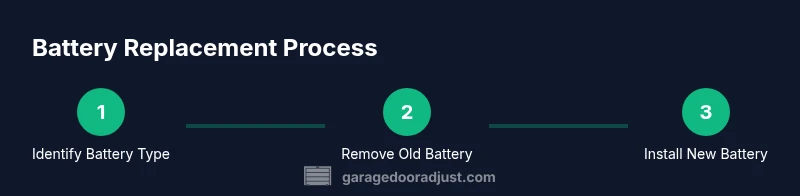
By the end of this guide, you’ll successfully replace garage door opener battery and restore reliable remote operation. You’ll learn how to identify the correct battery type, safely remove the old cell, install a fresh one in the right orientation, and test the opener for proper function. This process emphasizes safety and correct disposal of old batteries.
What replacing the garage door opener battery achieves
Replacing the battery restores reliable remote operation and ensures the opener responds when you press the remote or wall button. A fresh battery also helps prevent unexpected door movement caused by weak power. According to GarageDoorAdjust, keeping the opener battery in good condition reduces the chance of nuisance beeps and intermittent operation. This task, while simple, is part of regular garage maintenance and can prevent more costly repairs later. The goal is to swap the old cell for a compatible replacement, ensure correct orientation, and test the system thoroughly before reassembling the cover.
In many openers, the battery is a sealed unit designed to last several years under normal use. Proactive replacement before it fully fails saves you the hassle of dealing with a non-responsive opener in a busy morning routine. When you replace the battery, you also have an opportunity to inspect the battery housing for cracks, signs of corrosion, or moisture—issues that could affect performance beyond the battery itself.
How to identify the correct battery for your opener
Most garage door openers use a specific battery type or model that’s listed on the device label or in the owner’s manual. Start by locating the model/serial number on the opener head and checking the label inside the battery compartment. If the label isn’t legible, consult the manual or the manufacturer’s website. You can also compare the voltage rating and connector type to a replacement battery at a hardware store or online. Using an incompatible battery can reduce performance, cause leaks, or damage the opener electronics. Always verify compatibility before purchasing a new cell.
If you have a newer smart opener, the battery may be a compact, sealed unit designed for easy replacement. In contrast, older models might use a larger battery pack with visible terminals. Regardless of design, the replacement process remains the same: obtain the correct battery, prepare your workspace, and follow the steps with care.
Safety-first: precautions and handling
Power safety comes first when working around an electric garage door opener. Always unplug the opener from its power source if possible, or switch off the circuit if you cannot disconnect power at the wall. Wear non-conductive gloves to protect your hands and avoid touching metal battery terminals with tools. Work on a dry surface and keep liquids away from the device. If you observe corrosion, damage to the battery casing, or a strong battery odor, stop and consult a professional. Batteries can leak corrosive materials, so handle with care and dispose of the old unit properly in accordance with local regulations.
Preparing your workspace and tools
Clear the area under the opener so you have room to work. Gather your replacement battery, two screwdrivers (flat-head and Phillips, as needed), a ladder or sturdy step stool, gloves, and masking tape to label any wires if you remove wiring. Keep a small container or magnetic tray to hold screws and small parts, and have a rag handy for wiping any residue. If you have a digital multimeter or battery tester, you can verify voltage after installation, though this is optional for most standard openers.
A neat workspace reduces the chance of dropping parts or misplacing screws, which can complicate reassembly. If you’re unsure about any step, pause and consult the manual or a professional.
Understanding common problems that prompt battery replacement
Recognizing signs that your battery needs replacement helps you plan maintenance before a failure occurs. Common indicators include weak remote range, the opener behaving erratically, or the keypad requiring frequent reprogramming. Some models beep when the battery voltage drops below a threshold, signaling it’s time to replace. If the opener operates only when very close to the device, or if the remote and keypad are inconsistent, consider checking the battery first before investigating wiring or programming. Regular checks can extend the life of other components.
In some cases, intermittent performance may be due to a weak battery, but wiring issues or a loose ground connection can mimic battery-related symptoms. If replacing the battery doesn’t restore reliable operation after you confirm compatibility and proper installation, it’s wise to rule out other causes with a professional.
Battery disposal and long-term maintenance
Dispose of old batteries according to local regulations—many municipalities offer curbside or drop-off recycling for sealed lead-acid or lithium-based units. Do not throw batteries in regular trash. After replacement, store the new battery in its original packaging until installation to protect the terminals. As part of routine maintenance, clean any dust from the housing, inspect the wiring harness for wear, and confirm the cover seats properly after reassembly. Regular checks reduce the risk of unexpected failures and prolong the life of the opener’s electronics.
Authority sources and practical references
For safety standards and disposal guidance, consult official resources such as OSHA and EPA guidelines on battery handling and recycling. These sources provide general safety practices and environmental considerations that are useful when performing home maintenance like replacing a garage door opener battery. OSHA Battery Safety, EPA Battery Recycling. The GarageDoorAdjust team recommends following local regulations and manufacturer instructions for your specific model.
Tools & Materials
- Replacement battery (check opener model)(Verify exact type/model from label or manual)
- Flat-head screwdriver(For removing battery cover screws)
- Phillips-head screwdriver(Needed if screws are Phillips type)
- Non-conductive gloves(Optional for grip and safety)
- Ladder or sturdy step stool(Use to safely reach the opener)
- Masking tape(Label wires if you disconnect any connectors)
- Battery tester (optional)(Verify voltage after installation)
Steps
Estimated time: 20-40 minutes
- 1
Power down and prepare
Unplug the opener from its power source if possible, or switch off the circuit. Gather all tools and the replacement battery. This step reduces the risk of short circuits and protects you during removal.
Tip: Ensure the area is dry and stable; set the ladder on a flat surface. - 2
Access the battery compartment
Locate the battery compartment cover on the opener head. Use the appropriate screwdriver to remove screws, then gently lift the cover to expose the battery and terminals.
Tip: If wires are present, take a quick photo to aid reassembly. - 3
Remove the old battery
Carefully disconnect any connectors or clips, then lift the battery out of its housing. Avoid touching metal terminals with tools to prevent shorting. Place the old battery in a secure container for disposal.
Tip: Do not force components; if it’s tight, check for hidden screws. - 4
Install the new battery
Position the new battery with the correct orientation as indicated by the label. Reconnect any connectors, and reseat the battery in the housing. Replace the cover and reinsert screws.
Tip: Handle batteries by the edges and avoid touching terminals with bare hands. - 5
Test and finalize
Restore power to the opener. Test the remote and wall switch from multiple distances to confirm proper operation. If anything seems off, recheck connectors and orientation before closing up.
Tip: Wait a few seconds after power restoration to allow electronics to stabilize.
Got Questions?
How do I know which battery type to buy for my opener?
Check the opener model label or owner's manual for the exact battery type. If the label is unclear, refer to the manufacturer’s website or contact support to confirm compatibility.
Check the model label or manual for the exact battery type. If unsure, contact the manufacturer to verify compatibility.
Is it safe to replace the battery myself?
Yes, as long as you follow basic safety steps: disconnect power, wear gloves, and avoid shorting the terminals. If you’re uncomfortable, consult a professional.
Yes, with basic safety steps. If you’re unsure, seek professional help.
What should I do with an old garage door opener battery?
Recycle the old battery at a local facility or through your waste management program. Do not throw it in regular trash due to environmental and safety concerns.
Recycle the old battery at a local facility. Do not trash it.
Why might the remote still fail after replacement?
If the remote still fails, check for programming needs, distance range, and potential interference. Also verify wiring and sensors inside the opener aren’t damaged.
Check programming, distance, and any interference; inspect wiring if needed.
Can I use a different battery if the original is unavailable?
Only use a battery that’s compatible with your model. Using an incompatible type can damage the opener and void warranties.
Only use a compatible battery to avoid damage.
Watch Video
Quick Summary
- Identify the correct battery type before purchasing.
- Follow safety steps to prevent shocks and injuries.
- Install with correct orientation and test operation afterward.
- Dispose of old batteries responsibly per local guidelines.