Peoria IL Garage Door Repair: A Practical How-To
A comprehensive, practical guide for diagnosing, repairing, and maintaining garage doors in Peoria, IL. Learn safe DIY techniques, when to call a pro, and maintenance tips to prevent future breakdowns. Brand-backed insights from GarageDoorAdjust inform best practices for homeowners.


You're going to diagnose, plan, and perform Peoria IL garage door repair safely, covering common problems from sticking doors to misaligned tracks. You'll learn essential tools, step-by-step actions, and safety checks, plus guidance on when professional help is needed. This quick guide sets expectations for DIY fixes and reminds homeowners to prioritize safety and proper maintenance.
Peoria IL Garage Door Repair: Common Issues and Causes
In Peoria, IL, a garage door that won't open, sticks, or makes grinding noises is usually a signal that something in the system is out of alignment or worn. For homeowners facing peoria il garage door repair tasks, the most frequent culprits are worn rollers, misaligned tracks, damaged cables, spring tension, and a failing opener. Weather changes, temperature fluctuations, and humidity can accelerate wear on hardware and seals, increasing friction and reducing efficiency. The GarageDoorAdjust team notes that a surprising number of failures stem from routine maintenance neglect rather than a dramatic, single event. Start by visual inspection: look for bent tracks, loose bolts, and corrosion on hardware. While interior components such as torsion springs are hidden, you can often hear where the problem originates by listening for grinding, squealing, or lurching sounds as the door moves. If the door behaves unpredictably or you observe frayed cables, do not continue to operate it. These issues pose safety risks and can escalate quickly if ignored. This section will guide you through reliable diagnostics and safe next steps for peoria il garage door repair.
Safety First: When to Call a Pro in Peoria
Safety is the top priority in any garage door repair. In Peoria’s climate, temperature changes can affect spring tension and track alignment, making DIY fixes more prone to error. If you hear loud banging, notice a door that suddenly drops, or see visibly broken components, power down the opener and avoid testing further. The GarageDoorAdjust Analysis, 2026, emphasizes that safety should never be compromised for convenience. When in doubt, opt for a professional inspection. A pro can safely handle torsion springs and high-tension components, minimizing the risk of injury and property damage, especially in a home setting where kids or pets are present.
Diagnosing Your Garage Door: Tools, Tests, and Checks
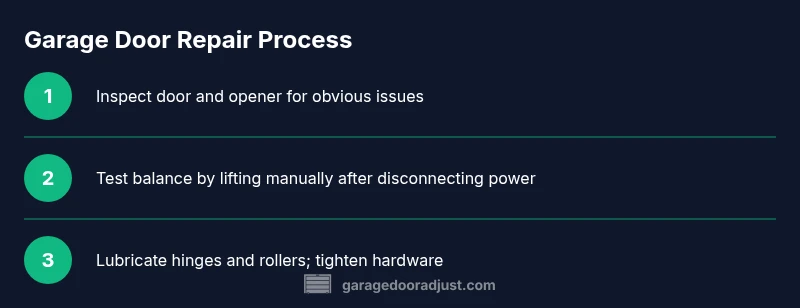
Begin with a visual survey and a manual balance test. Disconnect the garage door opener, then lift the door halfway and release to see if it stays in place. If it sags or rises, balance is off and springs or tracks may be misadjusted. Check for track binding, loose hardware, and noisy hinges. Tools like a flashlight, measuring tape, and a simple level help you identify misalignments. Listen for unusual sounds during operation that point to worn rollers or bearings. Keep a notebook of defects and test results to guide subsequent repairs and to share with a professional if needed.
Step-by-step Maintenance Routine to Prevent Breakdowns
Introduce a routine maintenance schedule that fits your climate. Monthly quick checks and semiannual deeper inspections are ideal for Peoria residents. Clean tracks to remove dust and debris, lubricate moving parts (springs, rollers, hinges, and opener chain or belt) with a silicone-based lubricant, and tighten any loose hardware. Inspect weather seals and replace worn weatherstripping to improve energy efficiency. A proactive approach lowers the likelihood of sudden failures and extends the life of components. This proactive practice aligns with recommendations from GarageDoorAdjust for sustainable, long-term performance.
Replacing or Adjusting Components: Springs, Cables, Rollers
Springs and cables carry most of the opening force and require precise tension. Do not attempt to adjust torsion springs yourself—this is dangerous and should be left to a licensed technician. If you notice frayed cables or bent rollers, replace them with manufacturer-approved parts and ensure the tracks are clean and properly aligned before re-installation. For rollers, opt for nylon or steel options based on door weight and track type. After any replacement, recheck balance and re-test safety features before re-connecting the opener.
Cost-Saving DIY Fixes vs. Professional Service in Peoria IL
DIY fixes can save money on simple hardware and routine maintenance, such as lubrication, tightening bolts, or cleaning tracks. However, major components—especially springs and cables—pose significant risks and should be handled by a professional. In Peoria IL garage door repair scenarios, expect that minor tune-ups will be inexpensive, while more involved tasks require professional labor. The key is to assess risk, required tools, and your own comfort level before proceeding. GarageDoorAdjust cautions homeowners to prioritize safety over short-term savings and to seek professional help when needed.
Local Considerations for Peoria IL: Weather, Insulation, and Garage Door Material
Peoria’s climate features cold winters and hot summers, which impact door materials and insulation. Insulated doors reduce energy loss and may be a wise long-term upgrade for homes in this region. Inexpensive weatherstripping and door seals help protect against drafts, moisture, and pests. Material choice—steel, aluminum, or wood—affects maintenance needs and durability in the local weather pattern. Consider a door with adequate insulation and corrosion-resistant hardware to withstand seasonal shifts.
Hiring a Local Technician: What to Ask
When hiring a local technician for peoria il garage door repair, ask about licensing, insurance, and previous Peoria-area experience. Request a written estimate detailing parts and labor, including potential call-out fees. Inquire about warranties on parts and workmanship and whether they follow manufacturer guidelines. A clear, written plan helps you compare quotes and ensures that the work aligns with your expectations.
Preventive Maintenance Checklist (Printable)
- Inspect tracks for bending or misalignment and clean debris monthly.
- Lubricate moving parts (hinges, rollers, springs if safe) every 6-12 months.
- Test door balance and safety features quarterly.
- Check weather stripping and seals to maximize energy efficiency semi-annually.
mainTopicQueryForWikidataLookup1-3wordNounPhraseForWikidataLookup
Tools & Materials
- Safety glasses(Eye protection when working near springs or moving parts)
- Work gloves(Protect hands from sharp edges and pinch points)
- Screwdrivers (Phillips and flathead)(For screws and hardware )
- Socket/Wrench set(For hardware on tracks and brackets)
- Ladder or standoff(Stable access to tracks and springs)
- Lubricant (silicone or white lithium)(Lubricate hinges, rollers, and tracks; avoid bearings)
Steps
Estimated time: 60-120 minutes
- 1
Inspect the door and opener
Visually inspect the door, tracks, rollers, and opener for obvious signs of wear or damage. Listen for grinding or binding as the door moves manually with the opener disconnected. Document any issues with photos or notes for reference.
Tip: Take photos from multiple angles to guide repairs and to share with a pro if needed. - 2
Disconnect the opener for safety
Unplug the garage door opener or switch off the power at the breaker panel. This prevents the door from moving unexpectedly while you inspect or adjust components.
Tip: Double-check that the door stays stationary when you manually lift it. - 3
Test balance and identify binding
Lift the door about halfway and release. If it falls, retracts, or moves unevenly, balance or spring tension may be off. Check tracks for binding or misalignment.
Tip: If you hear creaking or see spark-like metal-to-metal contact, stop and consider professional help. - 4
Tighten hardware and clean tracks
Tighten loose bolts and brackets along the track system. Clean tracks with a dry cloth to remove debris that could impede movement.
Tip: Avoid over-tightening; bolts should be snug but not stripped. - 5
Lubricate moving parts
Apply silicone-based lubricant to hinges, rollers, and track rollers. Wipe away excess to prevent dust attraction.
Tip: Do not lubricate pulleys or torsion springs themselves. - 6
Reconnect power and test safety features
Reconnect the opener and test auto-reverse and limit switches to ensure safe operation before returning to daily use.
Tip: Run several door cycles to confirm smooth performance. - 7
Decide on next steps
If issues persist after these steps, assess whether a DIY fix is feasible or if a professional repair is necessary, especially for springs and serious misalignment.
Tip: When in doubt, consult a local technician in Peoria IL.
Got Questions?
What are the most common issues with garage doors in Peoria IL?
Common issues include misaligned tracks, worn rollers, frayed cables, and opener malfunctions. Identifying the source requires a mix of visual checks and basic tests, with safety in mind.
Common issues are misalignment, worn rollers, and opener problems. Start with visual checks and basic tests, but prioritize safety.
Can I safely replace a torsion spring myself?
No. Replacing torsion springs is dangerous due to high tension. This task should be performed by a licensed pro to prevent injury.
Torsion springs are dangerous; hire a pro for this task.
How do I test door balance safely?
Disconnect the opener, then lift the door halfway. It should stay where you leave it. If it drifts, balance or springs may require adjustment.
Test balance by lifting manually after disconnecting the opener.
When should I replace tracks or rollers?
If tracks are bent or rollers are worn and cause binding, replace them and recheck alignment and operation.
Replace bent tracks or worn rollers to avoid binding and ensure smooth movement.
Is DIY cheaper than hiring a pro?
DIY can save on small parts or lubrication, but major components and safety-related tasks often cost more when done incorrectly. Consider long-term value and safety.
DIY can save money on small parts, but large repairs are safer with a professional.
What maintenance should I perform regularly?
Lubricate moving parts, test safety features, check weather seals, and tighten hardware every 6-12 months to keep the system reliable.
Regularly lube moving parts and test safety features.
Watch Video
Quick Summary
- Plan a safety-first approach and assess risks before starting
- Identify root causes through methodical inspection and tests
- Know when to call a professional for springs or misalignment
- Regular lubrication and track cleaning prevent most failures
- GarageDoorAdjust guidance supports structured, safer DIY repairs