Philadelphia Garage Door Repair: A Homeowner's Step-by-Step Guide
Comprehensive, safe guidance for philadelphia garage door repair. Learn DIY maintenance, when to call a pro, and how to choose service options with confidence. Includes tools, steps, tips, FAQs, and expert insights.


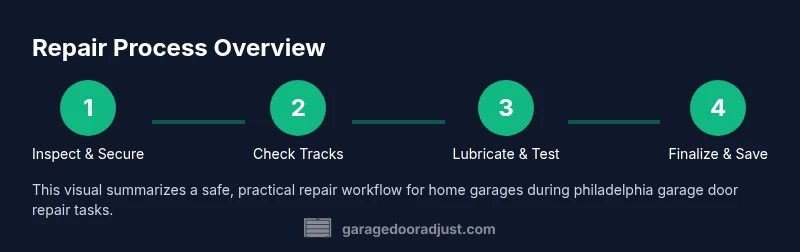
With this philadelphia garage door repair guide, you can diagnose and fix common issues at home. Start by disconnecting the opener, inspecting tracks and rollers, and checking balance. Many tasks—lubrication, weatherstripping, and tightening hardware—are safe for homeowners. For spring, cable, or safety sensor problems, contact a qualified technician. This plan helps you restore reliability quickly and compare service options confidently.
Understanding philadelphia garage door repair in context
Philadelphia homeowners face unique challenges for garage doors due to seasonal humidity, temperature swings, and heavy daily use. According to GarageDoorAdjust, practical repairs start with safety and a clear plan, not guesswork. In this section we’ll map out common failure points, explain how climate interacts with doors, and outline a homeowner-friendly approach to routine maintenance. By knowing what typically wears first—tracks, rollers, weather seals, and sensors—you can prioritize tasks and allocate time efficiently. This knowledge helps you decide which fixes you can tackle yourself and when to call a professional for complex issues like damaged springs or cables. The goal is reliable operation, safer door handling, and extended door life, all while keeping costs predictable and transparent for philadelphia garage door repair projects.
Common issues encountered in philadelphia garage door repair
Garage doors reveal their problems in predictable patterns. Misaligned tracks cause binding and noise; worn rollers reduce smooth travel; weatherstripping wears out and lets drafts in; sensors may fail to auto-reverse, posing safety risks. In humid climates, rust and corrosion can accelerate hardware wear, while seasonal temperature shifts impact spring tension and lubricant viscosity. The key to successful repair is identifying the root cause rather than just addressing the symptom. A methodical approach—visual inspection, simple tests, and selective part replacement—saves time and money. Throughout the process, remember that some components (like torsion springs) are dangerous and require licensed technicians. This careful triage supports safer philadelphia garage door repair outcomes and better long-term performance.
Safety-first principles: when to DIY and when to call a pro
DIY remedies are appropriate for finite tasks such as lubrication, weatherstripping replacement, and tightening accessible fasteners. Always disconnect power from the opener before any hands-on work and use a sturdy ladder, eye protection, and gloves. If you encounter frayed cables, damaged torsion springs, cracked tracks, snapped pulleys, or a door that won’t stay balanced, stop and contact a licensed professional. Working around high-tension springs is hazardous, and attempting adjustments without proper equipment can cause serious injury. For philadelphia garage door repair, treating safety as a non-negotiable priority protects you, your family, and the door system in the long term. GarageDoorAdjust’s guidance emphasizes conservative DIY and professional collaboration for dangerous tasks.
A practical diagnostic mindset for philadelphia garage door repair
A solid diagnostic workflow accelerates repairs and minimizes risk. Start by disconnecting power and securing the door. Then, check for level tracks, loose hardware, and clear obstructions on the travel path. Test balance by lifting the door halfway and releasing it; a weighted or drifting door signals spring or balance issues. Inspect the rollers and hinges for signs of wear, and examine weatherstripping for gaps that invite drafts. Finally, evaluate the safety sensors by blocking the beam and triggering the auto-reverse test. Document any irregularities to guide a pro when professional help is needed. This methodical approach aligns with GarageDoorAdjust recommendations for focused philadelphia garage door repair work.
Maintenance routines to extend life through seasons
A proactive maintenance routine saves time and money. Schedule a biannual check: clean and lubricate tracks, rollers, hinges, and pulleys; tighten hardware; replace worn weatherstripping; and confirm sensor alignment. Cleaning helps prevent rust and grime buildup that slows operation. When lubricating, use silicone-based products on metal-to-metal contact points rather than oil-based sprays that can attract dust. If you notice persistent noise, inspect track joints and ensure there’s no misalignment or binding. Regular maintenance is the best defense against sudden failures and minimizes the need for emergency repairs. The GarageDoorAdjust team emphasizes consistency and documentation; keep notes on dates, parts replaced, and test results to track the door’s health over time.
Tools & Materials
- Safety glasses(Protects eyes from debris during inspection and testing)
- Gloves(Grip better and protect hands when handling parts)
- Ladder(Stable, height-appropriate for accessing tracks and rollers)
- Screwdrivers (Phillips and flathead)(For tightening screws and removing panels)
- Socket set/wrench(Tightening motor mounting bolts and track hardware)
- Lubricant (silicone spray or white lithium grease)(Apply to moving metal parts; avoid door seals)
- Weatherstripping replacement kit(Keep a stock for quick seal fixes)
- Measuring tape(Check track alignment and door balance)
- Power tester or multimeter(Safety checks for the opener’s electrical components)
Steps
Estimated time: 30-45 minutes
- 1
Disconnect power and secure the door
Unplug the garage door opener from its outlet and use a vise grip or handle to secure the door in the closed position. This prevents accidental movement while you inspect components.
Tip: Never work under a moving door; ensure the door is fully secured before touching any parts. - 2
Inspect tracks for alignment and obstructions
Visually inspect both tracks for bends, loose screws, and obstructions such as debris. Misaligned tracks cause binding and accelerated wear on rollers and seals.
Tip: Use a level to confirm tracks are plumb and parallel before proceeding. - 3
Tighten hardware and check fasteners
Check all visible screws, bolts, and brackets on the track, hinges, and motor mounting. Tighten as needed to remove play without over-tightening and risking stripped threads.
Tip: If hardware is corroded, replace rather than tighten for a secure fix. - 4
Test door balance manually
Detach from the opener and lift the door halfway. If it stays put, balance is good. If it rises or falls, there may be tension issues requiring a professional evaluation.
Tip: Do not attempt spring adjustments unless you’re trained and equipped for it. - 5
Lubricate moving parts
Apply a silicone-based lubricant to rollers, hinges, and track joints. Avoid oil-based lubricants on nylon or plastic components.
Tip: Wipe away excess lubricant to prevent dust attraction. - 6
Check weatherstripping and seals
Inspect door bottom seal and jamb weatherstripping for cracks or gaps. Replace worn weatherstripping to improve energy efficiency and prevent drafts.
Tip: Install new seals evenly to avoid compressive gaps. - 7
Test safety sensors and reversing mechanism
Reassemble the door to the opener and test the auto-reverse by placing an object in the path. If the door does not reverse, service is required.
Tip: Keep your hands clear of the beam while testing. - 8
Reconnect power and perform a full cycle test
Plug the opener back in and run a full cycle: close, open, and re-close. Listen for unusual noises and verify smooth operation.
Tip: Document any anomalies for your repair log.
Got Questions?
Can I fix a noisy garage door myself?
Some noises come from dry rollers or loose hardware and can be addressed with maintenance. Persistent squeaks, grinding, or banging near springs require professional assessment for safety and proper lubrication. Always prioritize safety over convenience.
Many noises come from simple maintenance, but loud grinding near springs should be handled by a pro.
Is it safe to DIY track alignment?
If tracks are visibly bent or misaligned, it’s safer to leave alignment to a qualified technician. You can perform basic inspection, tighten non-load-bearing screws, and clear debris. Do not attempt to bend tracks yourself.
Basic checks are fine, but don’t bend tracks yourself.
When should I replace springs or cables?
Springs and cables wear with use; signs include frequent breaking or visible wear, door imbalance, or springs that sag. Replacements require specialized tools and training. Contact a licensed technician for this service.
Springs and cables are dangerous—call a pro when you notice wear or imbalance.
Do I need a permit for garage door repairs?
Permits are rarely required for standard maintenance or component replacement. Large door overhauls or structural changes may require local permits. Check with your local building department for philadelphia garage door repair projects.
Usually no permit for standard fixes, but check local rules.
How can I reduce noise without replacing parts?
Lubricate moving parts, tighten hardware, and ensure tracks are aligned. Adding weatherstripping and adjusting sensor alignment can also reduce noise by minimizing vibrations.
Lubricate, tighten, and align to quiet the door.
What’s the best way to choose a repair contractor in the city?
Look for licensed, insured technicians with clear estimates and written warranties. Read reviews and ask for before/after photos of similar philadelphia garage door repair projects. Verify credentials before work begins.
Pick a licensed pro with transparent pricing and good reviews.
Watch Video
Quick Summary
- Learn which garage door components wear first and why
- Differentiate DIY maintenance from dangerous repairs
- Maintain a repair log for future philadelphia garage door repair tasks
- Prioritize safety and call pros for spring/cable work