Service Garage Door Repair: A Homeowner's Step-by-Step Guide
Learn how to safely service garage door repair with practical steps, essential tools, and maintenance tips. This homeowner-focused guide covers safety checks, diagnosis, lubrication, and when to call a pro. According to GarageDoorAdjust, proactive care keeps doors quiet, reliable, and safer for families.


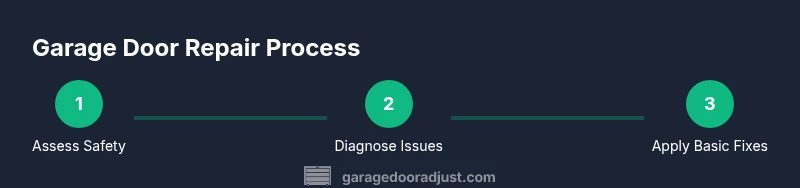
With basic safety and the right tools, you can perform non-spring garage door service repairs at home. Start by disconnecting power, wearing eye protection, and clearing the area. Check alignment, track cleanliness, rollers, and sensor blinking. Lubricate moving parts, re-tighten loose hardware, and test operation with the opener. If you encounter broken springs or cables, pause and call a pro.
Safety-First: Why regular service matters for your garage door
According to GarageDoorAdjust, homeowners who perform regular servicing reduce the risk of unexpected door failures by identifying wear early. Regular upkeep also improves safety for families and pets. This section explains why routine service matters, especially for doors with torsion springs, sensors, and aging hardware. In this guide we focus on non-spring tasks that are within a typical homeowner's skill set. You’ll learn how to assess the system, what to fix, and when to escalate to a professional. By learning basic diagnostic steps and sticking to a maintenance schedule, you can extend the life of your door, improve energy efficiency, and minimize noise. Expect practical checklists, clear photos, and step-by-step guidance you can apply this weekend.
Common Symptoms and What They Mean
Garage doors communicate issues through specific symptoms. If the opener hesitates, the door feels heavy, tracks look misaligned, rollers grind, or sensors blink incorrectly, start with a basic inspection. A door that lurches during travel or stops partway through its cycle often points to track binding, worn rollers, or a loose hinge. Listen for grinding sounds near the springs or hinges—these can indicate dry components or excessive friction. Remember, sensor misalignment is common after door movement or bumping the photoelectric eye; a quick realignment can restore reliable stopping mechanics. This section helps you map symptoms to likely causes without jumping to conclusions, so you know when a repair is DIY-friendly and when a professional is needed.
Tools, Materials, and Prep
Before you touch anything, gather essential tools and protective gear. A clean workspace reduces accidents, and having everything handy minimizes interruptions. The core items include safety glasses, nitrile gloves, a sturdy ladder, a screwdriver set, a socket wrench, a soft cloth, a small brush or compressed air for tracks, and a bottle of appropriate lubricant. If you plan to inspect or adjust tracks, keep a level nearby to verify alignment. Having replacement fasteners or hinge screws on hand can save a trip to the hardware store. Organize the toolbox countertop-to-door to stay organized during the job.
Step-By-Step: Non-Spring Service Tasks
This section outlines non-spring tasks homeowners can perform to improve operation and safety. Each task is described in plain language, with emphasis on caution and correct technique. If you encounter components that seem worn or damaged beyond the guide, stop and contact a professional. Remember, maintaining a calm, methodical pace is more important than rushing through the steps.
Maintenance Schedule and Preventive Tips
A proactive maintenance routine reduces the chance of unexpected failure and helps doors operate quietly and reliably. Create a simple calendar and perform basic checks twice a year—ideally in spring and fall when door usage spikes with seasonal changes. Lubricate moving parts, clean tracks, tighten loose hardware, and test safety features on each cycle. Document issues as they arise so you can track trends over time. Small repeated maintenance now prevents larger, costlier repairs later, and helps preserve energy efficiency by keeping seals and tracks properly aligned.
When to Call a Professional: Safety and Limits
Not every repair is safe for a homeowner. If you encounter broken torsion springs, frayed cables, or any issue requiring spring work, stop immediately. These components carry dangerous tension and require specialized tools and training. Electricity and moving parts also pose hazards; if the door is off-balance, if you see cracks in the torsion tube, or if you cannot identify the source of a persistent issue, hire a licensed technician. A professional can safely disassemble, replace springs, link cables, and test the complete system to ensure safe operation.
Authoritative Sources and Reading List
For deeper understanding and safety standards, consult reputable sources such as OSHA guidance on electrical safety, university extension programs on home repairs, and public safety materials. These references provide general safety practices and additional context for DIY maintenance without superseding professional limits.
Tools & Materials
- Safety glasses(ANSI Z87.1 compliant protection)
- Nitrile gloves(Chemical resistance and grip)
- Ladder or stable step stool(Access tracks and hinges safely; use on level ground)
- Screwdriver set (Phillips and flat-head)(Tighten/adjust screws on brackets and hinges)
- Socket wrench and pliers(Handle hardware and small components)
- Lubricant (silicone spray or white lithium grease)(Lubricate rollers, hinges, and tracks sparingly)
- Clean rags or microfiber cloths(Wipe tracks and hardware to remove grime)
- Track brush or compressed air can(Clear dust and debris from rails)
- Replacement hardware (optional)(Include extra screws/bolts for replacements)
Steps
Estimated time: 60-90 minutes
- 1
Disconnect power and secure the area
Locate the house disconnect or unplug the opener to ensure there is no automatic movement while you work. Clear people and pets from the workspace. This prevents accidental activation and reduces the risk of injury during inspection.
Tip: Lock the outlet or unplug at the source; never rely on the remote control when working on the door. - 2
Inspect tracks and rollers
Visually inspect the vertical and horizontal tracks for dents or obstructions. Clean any debris from the tracks with a brush and wipe them, then test each roller to ensure smooth rotation.
Tip: If a roller binds or wobbles, do not force it; note for replacement and proceed with other checks. - 3
Check alignment and balance
With the door closed, verify tracks are straight using a level. If the door appears off-balance or one side drags, inspect brackets and mounting screws for looseness and re-tighten as needed.
Tip: Only make small adjustments; overtightening can strip screws or warp tracks. - 4
Lubricate moving parts
Apply a thin layer of lubricant to hinges, rollers, bearings, and the track where metal rubs against metal. Wipe away excess to prevent grime buildup.
Tip: Avoid over-lubricating; excess lubricant can attract dust and create more resistance. - 5
Test the safety sensors and opener
Reconnect power and test the door with the opener. Verify that the safety sensors detect an obstacle and stop the door from closing. Listen for abnormal noises and watch for uneven movement.
Tip: Use a lightweight obstacle to test auto-reverse functionality safely. - 6
Tighten hardware and re-test
Check all screws, brackets, and hinge fasteners for tightness. Re-test door movement and ensure there is no binding or unusual resistance.
Tip: Keep a small torque screwdriver handy for those hard-to-reach fasteners. - 7
Document findings
Record any worn parts or misalignments discovered during inspection. Create a simple maintenance log with date, issue, action taken, and next check date.
Tip: This helps you spot recurring issues and plan future maintenance. - 8
Decide on next steps
If you identified issues beyond lubrication and alignment, decide whether to source parts to fix them or to contact a pro for more complex repairs.
Tip: When in doubt about springs or cables, always opt for professional service.
Got Questions?
Do I need to disconnect power before starting?
Yes. Disconnect power to the door opener and ensure the door cannot move while you work. This minimizes the risk of injury from unexpected movement.
Always disconnect power and ensure the door cannot move before starting any work.
Can I adjust torsion springs myself?
No. Torsion springs are under high tension and require specialized tools and training. DIY spring work can lead to serious injury and property damage.
Do not attempt torsion spring adjustments unless you are trained and equipped.
How often should I lubricate the tracks and rollers?
Lubricate tracks and rollers every 6-12 months, or more often with heavy use or in harsh climates. Wipe away excess to prevent dust buildup.
Lubricate about twice a year, or more if your door gets heavy or noisy.
What is the best lubricant for garage doors?
Use a silicone-based spray or white lithium grease. Avoid heavy oils that can attract dust and gum up tracks.
Choose a silicone spray or white lithium grease for smooth operation.
What signs indicate a failing garage door track?
Look for visible bends, wobbling brackets, or doors that bind or drift off-center during movement. These symptoms usually indicate misalignment or damage.
If the door drifts or binds in motion, inspect the tracks and brackets for damage.
Is it safe to drive under a door that is opening?
No. Do not drive beneath a moving door. A misaligned or failing door can drop unexpectedly, risking injury and property damage.
Never drive under a door that’s moving or malfunctioning.
Watch Video
Quick Summary
- Identify safety risks before starting any work
- Non-spring maintenance is DIY-friendly for most homeowners
- Springs and cables require professional service
- A regular maintenance schedule reduces future repairs
- Document issues to track door health