Open Garage Door No Electricity: Urgent Troubleshooting Guide
Urgent, step-by-step guide for homeowners to diagnose power-outage garage door issues, safely open manually, and restore operation. Learn quick fixes, safety tips, and preventive steps from GarageDoorAdjust.


Open garage door no electricity is a common safety risk during power outages. The quickest fix is to restore power to the opener’s outlet, reset any tripped breakers, and verify the door can be opened manually. If power is unavailable or the opener still won't respond, use the manual release carefully to open the door and consult a pro if needed.
Immediate Safety Steps for Open Garage Door No Electricity
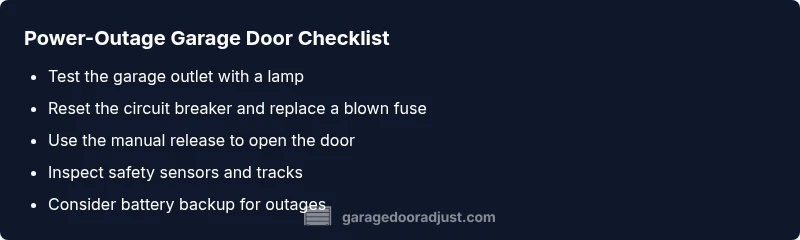
When you encounter an open garage door no electricity during a power outage, safety should come first. Do not place hands near the door as springs and cables hold tension and can cause serious injury if the door moves unexpectedly. Keep children and pets away and avoid standing under the door. If you smell burning or hear buzzing, shut the power off at the main breaker and call a professional. Once you’ve ensured the area is clear, perform the simplest checks first: verify the outage is real by testing another device on the same circuit, locate the garage circuit breaker, and inspect the GFCI outlet in the garage (if present). Reset any tripped breakers or replace a blown fuse, then re-test the outlet with a lamp. If the outlet has power but the opener remains unresponsive, you’ll move to manual opening and controlled testing. Remember, open garage door no electricity still presents risks; proceed calmly and methodically.
Quick Checks: Power, Breakers, and Outlets
The quickest way to identify causes behind open garage door no electricity is to test power at the source. Start by confirming the main power in the garage is live. Check the circuit breaker panel for a tripped breaker or a blown fuse feeding the garage. If the breaker is reset, re-test the outlet with a known device like a lamp. If the outlet delivers power but the opener still does not respond, check whether a GFCI outlet in the garage has tripped and reset it. Inspect the outlet for loose connections or signs of wear. If you find no power at the outlet despite a live breaker, the problem may be in the wiring or the opener’s power supply and requires professional attention.
The Manual Release: How to Open the Door by Hand
Most garage doors have a manual release cord near the opener mechanism. For security, switch off the door’s automatic operation, then pull the release handle downward and away from the door to disengage the trolley. Once disengaged, you can carefully lift the door by hand. Move slowly and keep your body to the side; torsion springs can snap if misused. If the door is heavy or sticks, stop and seek help. After you manually open the door, you should still plan for a professional service to restore power and ensure the system is safe.
Troubleshooting the Opener Itself
Even with no electricity, you can test whether the opener unit is responsive when power returns. Inspect the wall push button and remote control for signs of wear or moisture damage. Ensure the opener’s power cord is plugged in securely and the central receiver is seated. If the opener still doesn’t respond after power restoration, test with a different remote and re-pair the remote if necessary. Do not bypass safety features; the sensors protect against injury. If you are confronted with repeated outages, consider installing a battery backup system.
Common Causes by Symptom
Symptom A: Door won’t move even though the opener is powered. Cause: broken or loose drive belt, jammed track, or blocked safety sensors. Solution: clear obstructions, lubricate moving parts, and test sensors. Symptom B: Door moves slowly or stops mid-travel after power returns. Cause: worn springs or misaligned tracks. Solution: check tracks for debris, ensure tracks are level, and avoid touching springs. Symptom C: Wall switch or remote blinking or unresponsive after an outage. Cause: receiver or battery issues in the opener. Solution: replace remote battery and re-pair; ensure the opener has power.
When to Call a Professional
Power outages can reveal serious issues with torsion springs, track alignment, or safety sensors. If the door is heavy, makes unusual noises, or does not respond after restoring power, stop using it and call a licensed technician. Do not attempt to adjust springs or cables yourself; these components store dangerous amounts of energy. A pro can safely test the limit switches, springs, and cables and confirm the opener is wired correctly.
Preventive Maintenance That Prevents Outages
Regular checks reduce the risk of getting stuck with an open garage door no electricity. Schedule annual inspections to verify the door balance, lubrication, and track alignment. Replace worn cables and springs through a professional, test the safety sensors, and update remote batteries. Keep a backup power strategy, such as a battery backup opener, and train family members on manual release procedures.
Quick Reference Safety Checklist
- Know the location of the manual release and how to operate it safely.
- Keep a flashlight and charged phone accessible in the garage.
- Check the circuit breaker and test the outlet before attempting to restore power.
- Do not bypass safety sensors or force the door to move when a fault is present.
- Schedule regular maintenance to catch issues before a power outage creates a hazardous situation.
Steps
Estimated time: 25-45 minutes
- 1
Verify power at the outlet
Locate the garage outlet that powers the door opener and test with a known device or a voltage tester to confirm power. If there is no voltage, the problem is likely with the circuit breaker or main power feed.
Tip: Use a non-contact voltage tester for quick confirmation. - 2
Reset the circuit breaker or replace a fuse
If the outlet is dead, locate the garage’s circuit breaker panel and reset the breaker. If a fuse protects the circuit, replace it with one of equal amperage. Re-test the outlet to confirm power has returned.
Tip: Always reset power with hands dry and stand on a dry surface. - 3
Check the manual release and disengage
If the opener is unpowered, locate the manual release lever or cord near the opener. Pull the release to disengage the carriage, then attempt to move the door by hand.
Tip: Move slowly and keep your body clear of the door path. - 4
Test the wall switch and remote
With power restored, test the wall switch and a known-good remote. If either still fails, re-pair the remote or replace dead batteries. Ensure the receiver is properly seated in the opener.
Tip: Avoid multiple remotes active at once during testing. - 5
Check for obstructions and door balance
Inspect tracks, rollers, and hinges for obstructions. A misaligned track or jam can mimic a power issue even when power is present.
Tip: Lubricate moving parts with a light garage-door lubricant. - 6
Inspect safety sensors
Safety sensors near the bottom of the tracks should face each other with a clear line-of-sight. Misalignment or obstruction can prevent operation.
Tip: Clean sensor lenses gently if they look dirty. - 7
Test door movement with power restored
Attempt to operate the door with the opener powered. Listen for grinding or popping noises; stop if anything unusual occurs.
Tip: Do not force the door beyond normal travel limits. - 8
Assess need for a backup power solution
If power outages are common in your area, consider a battery-backup opener to ensure basic operation during outages.
Tip: Discuss backup options with a professional to ensure compatibility with your system.
Diagnosis: Garage door won't operate during power outage or no electricity at outlet
Possible Causes
- highTripped circuit breaker or blown fuse
- mediumNo power at the garage outlet due to wiring issue
- lowDead backup battery or malfunctioning backup power supply
- lowManual release engaged preventing automatic operation
Fixes
- easyReset the breaker or replace the fuse and restore power to the garage outlet
- easyTest the outlet with a lamp or meter to confirm 120V; fix wiring if needed
- easyDisengage the manual release and re-engage after power is restored
- easyInspect and replace backup batteries or backup power components if present
Got Questions?
What is the first step when the power goes out and the garage door won't operate?
Start by checking the circuit breaker and the outlet for power. If the outlet is live but the opener still won’t respond, use the manual release to open the door and plan for a professional inspection.
Check the breaker and outlet first; if the opener still won’t respond, use the manual release and call a pro for a safe fix.
Can I manually open the door during a power outage?
Yes. Use the emergency release to disengage the opener and lift the door by hand. Do this slowly and keep clear of the springs and tracks. If the door is heavy, seek assistance.
Yes, you can open manually with caution and help if the door is heavy.
Why do remotes or wall switches sometimes fail after power returns?
Power surges can reset or damage the opener's receiver. Re-pair the remote, replace batteries, and ensure the opener is receiving power. If issues persist, a professional check is advised.
Power surges can disrupt the receiver; re-pair remotes and check power.
Is it safe to bypass safety sensors to get the door open?
No. Bypassing safety sensors can create a dangerous situation for people and pets. If sensors are misaligned or blocked, fix the alignment or obstruction and test carefully with the door unplugged.
No, do not bypass safety sensors.
How can I prevent future power-outage issues with my garage door?
Install a battery backup system, keep a manual release plan, and perform regular maintenance on tracks, springs, and sensors to catch problems before they cause outages.
Install a battery backup and maintain components to prevent outages.
When should I call a professional for a power-outage related issue?
If the door is heavy, unstable, or does not restore after power returns, stop using it and consult a licensed technician. Professional service is essential for torsion springs and cable repairs.
Call a professional if the door is unsafe or not restoring after power returns.
Watch Video
Quick Summary
- Identify power issues before door repairs
- Use the manual release safely to gain access
- Avoid bypassing safety sensors
- Call a pro for springs or major wiring problems