Does Garage Door Work When Power Is Out? A Homeowner's Troubleshooting Guide
Learn how to safely operate and troubleshoot a garage door during a power outage, including manual release steps, safety checks, and pro guidance for when power returns.


Yes, your garage door can work without power, but only if you have a manual override and the door isn’t entirely dependent on an electric opener. In most homes, you can open manually by pulling the release handle to disengage the opener, then lift the door. Be aware that safety features may be unavailable during a power outage.
Understanding the power-outage scenario and the phrase does garage door work when power is out
The question does garage door work when power is out is more than a curiosity; it’s a safety and security concern for homeowners. When the electricity goes out, the opener loses its power, but the door itself may still move if you can disengage the automatic system. This is why the concept of a manual release is critical. Most residential doors feature a simple disengagement mechanism that lets you operate the door by hand, even when the door’s motor is offline. In this section we’ll lay out the fundamentals, including what you can expect from different door types and how to recognize when power loss changes safety expectations. The keyword appears naturally here to establish the core topic, but the practical takeaway remains: know how to disengage and move the door safely before the power resumes. Practicing these steps can prevent injuries and keep your home secure during outages.
Safe Manual Operation: Your First Fix
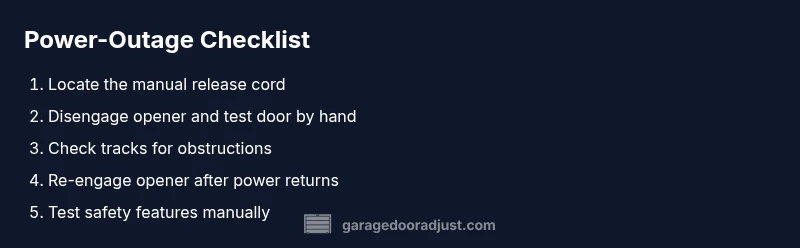
When power fails, the first and most important step is to disengage the opener and test manual operation safely. Locate the emergency release cord or lever near the opener rail or motor. Pull firmly and smoothly to disengage the carriage from the trolley. With the door closed, grip the door firmly and lift—if it rises with consistent resistance, it’s reasonably balanced. If you feel heavy or bind at any point, stop and reassess. Keep hands clear of the track and hinges, and avoid standing directly in line with the door as it moves. After a safe manual lift, plan for service if the door does not move freely, or if you notice uneven gaps or binding.
Common Pitfalls and How to Avoid Them
Power outages bring a set of common pitfalls that can trip homeowners up. First, never yank the release cord; a sudden tug can misalign the trolley or damage the opener hardware. Second, a door that feels heavy or sticks as you lift could indicate misaligned tracks, worn rollers, or a binding spring—these are signs to pause and call a pro. Third, relying on the safety sensors while the system is offline is risky; sensors may not function until power returns, so always test manually in a well-lit area. Fourth, avoid lubricants on the belt or chain while the door is offline, as excess lubricant can attract dirt and impede movement. Understanding these issues helps you act quickly and safely when the power is out.
Restoring Power and Rechecking Safety Features
Once power returns, re-engage the opener correctly and run a few low-speed tests to verify safety features. Reconnect the opener by pulling the release toward the motor to restore the trolley’s connection, then operate the door with the opener to ensure smooth travel and auto-reverse function. Check the auto-reverse by placing a light object on the door’s path; the door should stop and reverse. If the door behaves unpredictably after restoration, shut it down, unplug the opener, and call a professional to inspect the springs, tracks, and sensors. This prevents future failure during the next outage and protects your family.
Quick Recap: Safety, Manual Steps, and Pro Help
The core actions you should remember are to locate and use the manual release, lift with control and balance, and verify safety features after power returns. If anything feels off—excess resistance, unusual noises, or a door that won’t stay balanced—do not force it. Instead, contact a licensed technician for a thorough inspection. By proactively understanding the manual operation and common failure points, you can safely navigate a power outage and minimize risk to people and property.
Steps
Estimated time: 15-30 minutes
- 1
Prepare and locate the manual release
Put on gloves and ensure the area is clear. Find the manual release cord or lever near the opener rail. Understand how it feels—pull with a steady, controlled motion to disengage the trolley.
Tip: Before touching the door, confirm power is safe to handle in the area. If the release seems stiff, Pause and reassess. - 2
Power down the opener and unplug if possible
Turn off the wall switch and unplug the opener if accessible to avoid accidental operation while you’re testing manually. This reduces the risk of the door moving unexpectedly.
Tip: Keep the release cord accessible and within reach in case you need a quick re-engagement. - 3
Disengage and test manual lift
Pull the release handle fully to disengage. Stand to the side and test lifting the door by hand. If it moves smoothly, the door is likely balanced; otherwise, stop and call a pro.
Tip: Ensure no one stands near the door while you test and avoid standing in the doorway path. - 4
Inspect tracks and hardware
With the door manually open or closed, inspect tracks for dents, obstructions, or misalignment. If you see a misalignment, do not force it; note it for professional service.
Tip: Only perform light lubrication on rollers and hinges when the door is removing friction, not the springs. - 5
Re-engage the opener and test
After confirming manual operation, re-engage the trolley by pulling the release toward the motor and operate the door with the opener to confirm everything works.
Tip: Test the auto-reverse safely with a small object in the door’s path. - 6
Plan for post-outage service
If you detected any binding, unusual noise, or balance issues, schedule a professional inspection to prevent future failures when power is out.
Tip: Document any observed issues and share them with the tech for faster diagnosis.
Diagnosis: Door won’t move or feels binding during a power outage after attempting manual release
Possible Causes
- highManual release not fully disengaged or released
- mediumTrack obstruction or misalignment causing binding
- lowTorsion springs damaged or cables worn
- lowDoor unbalanced or heavy due to age or damage
Fixes
- easyFully disengage the opener using the manual release and test the door lift by hand
- easyClear tracks of debris, realign if needed, and lubricate rollers/hinges
- hardDo not attempt spring work; call a professional for springs/cables or structural concerns
Got Questions?
Will a garage door open during a power outage?
Yes, you can open manually if you disengage the opener and the door isn’t bound. If the door is heavy or the springs feel off, stop and seek help.
Yes, you can open manually by disengaging the opener, but if the door is hard to move or you notice damage, call a pro.
What should I do first if the power goes out?
Safely disengage the opener, unplug if possible, and check the door for smooth manual movement before proceeding.
First, disengage the opener and verify you can move the door by hand.
Are safety sensors affected by a power outage?
Sensors rely on power; during an outage they may not function. Do not rely on them for automatic stopping until power returns.
Sensors may not work during a power outage; use manual checks instead.
When should I call a professional?
If the door binds, won’t stay balanced, or you smell burning, stop and contact a professional.
If you notice binding or burning smells, call a professional.
Is manual release safe for all door types?
Most doors can be released manually, but heavy springs or damaged tracks can be dangerous; consult a pro if unsure.
Manual release can be risky if the door is damaged or overly heavy.
Watch Video
Quick Summary
- Disengage safely and lift by hand.
- Manual operation depends on door condition.
- Power outages disable auto-safety features.
- Call a professional for springs or major damage.