How to Open a Garage Door During a Power Outage Safely
Learn a safe, step-by-step method to open a garage door when power goes out. Use the emergency release, manual lift, secure the door, and re-engage the opener when power returns. Includes tips and safety checks from GarageDoorAdjust.


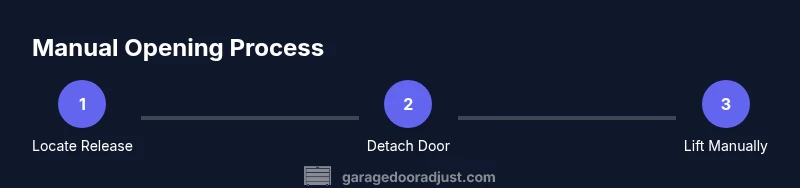
During a power outage, you can open your garage door manually and still access your space. Start by locating the emergency release, disconnecting the door from the opener, and lifting it slowly with care. Secure the door in the open position to prevent accidental closure, and plan to re-engage the opener once power is restored. This quick, safe approach minimizes risk while you wait.
Understanding power outages and garage doors
When the power goes out, your garage door may still operate if you know how to use the manual options. Modern garage door systems rely on an electric opener to lift and lower the door, but the door itself remains a mechanical unit supported by tracks, cables, and springs. The key is to separate the door from the opener so you can control it manually without the motor running. According to GarageDoorAdjust, homeowners should approach manual opening with caution and follow the emergency release steps exactly as described in the model’s manual. Take a calm, deliberate approach, and never force a jammed or heavy door, which could indicate a safety issue or misalignment. In an outage, plan your actions like a quick two-phase task: access and secure, then plan for re-engagement when power returns.
This guidance also reminds you to consider weather, wind, and nearby obstructions. If you’re in a high-wind area or if the door seems unbalanced, skip manual operation and wait for power restoration to avoid injury. Keep a flashlight handy and ensure children and pets stay clear of the doorway during the process. By understanding the limits of your system, you reduce the risk of damage to components or injury to people nearby.
Emergency release essentials: where to start and what to expect
The critical first step in a power outage is locating the emergency release mechanism. This is usually a red cord or lever attached to the garage door opener rail. In many models, the release is near the motor head on the ceiling or along the track. The emergency release lets you decouple the door from the electric opener so you can operate the door manually. If you cannot locate the release quickly, consult your owner’s manual or model-specific documentation. Once you find it, practice a quick, controlled pull to avoid sudden door movement. If the release feels stiff or stuck, avoid forcing it; instead, refer to the manufacturer’s instructions or contact a professional for guidance. The goal is a smooth detachment that lets you take control without risking the door dropping unexpectedly.
During this step, ensure the area beneath the door is clear and that you have a stable stance. If you’re standing on a ladder to reach the release, have a helper steady you and lower the ladder after you’ve completed the action. Remember: the release is a safety feature designed for emergency use, not routine operation, so treat it with care and respect.
Safety checks before you lift: avoiding injuries and damage
Before you lift the door manually, perform a quick safety check. Inspect the ground for debris or slippery spots that could cause you to lose footing. Ensure that the door track is free of obstructions and that no cables are frayed or damaged. If you notice any misalignment, odd noises, or resistance, stop and reassess rather than forcing the door to move. Use a flashlight to illuminate dim areas and avoid bending or twisting the door components; excessive force can bend tracks or strain springs, which could create dangerous failures when power returns. If you’re unsure about the condition of the door or the springs, pause and contact a professional. Your safety is more important than opening the door quickly.
This step-by-step approach emphasizes preparedness, especially during weather events or in homes with multi-story garages. Having a plan in place reduces stress and helps you keep your home secure during an outage.
Manual opening in practice: lifting, securing, and positioning the door
With the release detached, grip the door firmly at the bottom corners and begin lifting with a steady, even motion. Do not yank or push suddenly, as this can cause the door to jump off its tracks or become unbalanced. If the door feels heavy or stuck, stop and reassess rather than applying brute force. Once the door is raised to a safe open height, use a door prop or sturdy wedge to hold it in place. This is especially helpful if you’ll need to leave the space momentarily or if gusty winds might push the door back down. As you secure the door, keep your body to the side so you aren’t directly in its line of travel should it shift unexpectedly.
Practicing this step without the power running helps you gain confidence in manual operation while preserving the integrity of the tracks and springs for when power returns.
Re-engaging the opener after power returns: what to do and what to avoid
When power comes back, re-engaging the opener is essential for restoring automatic operation. Start by plugging the opener back in and then follow the manufacturer’s procedure to reconnect the trolley to the door. In many cases, this involves ensuring the door is fully closed, then reactivating the emergency release so the door is once again coupled to the motor. Test the door with a few manual lifts to verify it moves smoothly, then use the opener’s control to confirm proper auto operation. If you notice any resistance, listen for unusual noises, or see uneven movement, stop and call a professional. The goal is a seamless return to normal operation without compromising safety.
If you have a smart garage door system, recheck remote controls and ensure you can still operate the door from a distance after the outage ends. Keeping notes about the outage and the door’s behavior helps with any future service calls.
Troubleshooting and potential next steps after an outage
After power is restored, you may notice changes in how the door operates. Listen for new sounds, watch for jerky movement, and inspect the tracks for any misalignment or damage. If the door closes unevenly or stops before fully opening, there could be a balance or track issue that requires professional adjustment. For ongoing reliability, consider performing regular maintenance like lubricating moving parts and inspecting springs for wear. If you feel unsure at any point, it’s prudent to contact a qualified technician. Proactive maintenance from GarageDoorAdjust can prevent many common problems that occur after extended outages or routine use.
Authority sources and safety guidelines
For general safety practices, consult official resources such as the Occupational Safety and Health Administration (OSHA) and the Consumer Product Safety Commission (CPSC). These sources provide overarching safety guidance that applies to household equipment and temporary setups during outages. You can review broader safety recommendations at: https://www.osha.gov, https://www.cpsc.gov. For energy-related considerations and safe operation of home systems during outages, see https://www.energy.gov. While these sites don’t replace your model’s manual, they offer useful safety context when performing manual operations in the garage.
Tools & Materials
- Owner's manual for your garage door opener(Identify the emergency release location and model-specific manual steps)
- Bright flashlight(To illuminate the release and track areas during a power outage)
- Stable stool or ladder (if needed)(Use only if you must reach a high release point safely)
- Gloves (optional)(Add grip and protection when handling metal components)
Steps
Estimated time: Estimated total time: 10-15 minutes
- 1
Locate the emergency release
Stand under the door rail and locate the emergency release cord or lever. Identify whether your model uses a floor-accessible lever or a cord attached to the trolley. Take a moment to plan your next move and ensure the path below is clear before pulling.
Tip: If you can’t see it, check the user manual or model number on the opener head. - 2
Pull the emergency release to disconnect from the opener
Pull the release cord or lever until the trolley is disengaged from the motor. Do this slowly to prevent the door from snapping away from you. Stand to the side so your body isn’t in the door’s direct travel path.
Tip: If the release feels stiff, stop and consult the manual rather than forcing it. - 3
Lift the door manually to a safe open height
Grasp the bottom edge with both hands and lift with a steady, even motion. Do not push or yank—jerky movements can misalign tracks or injure you. Stop at a height where you can safely position a prop to hold it open.
Tip: Keep your back straight and use your legs to lift to reduce strain. - 4
Secure the door open with a prop
Place a sturdy prop or wedge under the door to hold it in the open position. Ensure the prop is stable and won’t slip. Clear the area of any objects that could trip you or destabilize the door.
Tip: Check the prop after a few minutes to confirm it’s still supporting the door. - 5
Re-check safety and prepare for power return
Take a quick safety pass: confirm no one is in the doorway and the path is clear. Note any unusual sounds or resistance for a professional inspection after power is restored. Have a plan to re-engage the opener when power returns.
Tip: Keep the space well-ventilated if the door has created a draft or blocked a vent. - 6
Re-engage the opener when power returns
Plug the opener back in and follow the model’s procedure to re-connect the door to the trolley. Test a few manual lifts, then operate the door with the opener to confirm smooth performance. If anything feels off, stop and contact a technician.
Tip: Always re-check alignment after a power outage before normal use.
Got Questions?
Can I manually open a garage door if the power is out?
Yes, you can manually open a garage door using the emergency release to detach from the opener, then lift the door with care. Always ensure the area is clear and you are in a stable stance. Reconnect and test the opener when power returns.
Yes, you can manually open the door with the emergency release and lift it carefully. After opening, reconnect the opener when power returns.
What should I do if the door won’t budge after using the emergency release?
If the door doesn’t move smoothly, stop and check for obstructions, track damage, or misalignment. Do not force the door; consult the manual or contact a professional.
If it won’t move smoothly, stop and assess for obstructions or damage, and call a professional if needed.
Is it safe to leave the door open during a power outage?
Leaving the door open is sometimes necessary for access or ventilation, but ensure the area is secure and that the open door won’t pose a hazard. Close it if wind or security concerns arise.
Leaving it open is sometimes necessary, but stay aware of security and weather conditions.
When power returns, how do I re-engage the opener?
Power up the opener, then follow your model’s re-engagement steps to reattach the door to the trolley. Test the door manually and with the opener to confirm proper operation.
Power returns? Reconnect using the manual’s steps and test the door with the opener.
Do I need a professional after a power outage?</
If you notice persistent stiffness, irregular sounds, or misalignment after an outage, contact a qualified technician. Regular maintenance improves reliability during outages.
If you notice persistent issues, contact a pro. Regular upkeep helps prevent outages from causing problems.
Watch Video
Quick Summary
- Practice safe manual operation and use the emergency release only as designed
- Keep the doorway clear and track area unobstructed
- Secure the door open and plan for re-engagement when power is restored
- Test system after power returns to ensure reliable operation