How to Close a Garage Door Without Power
Learn to safely close a garage door during a power outage. Step-by-step instructions, safety tips, emergency release usage, and guidance for reengaging the opener once power returns.


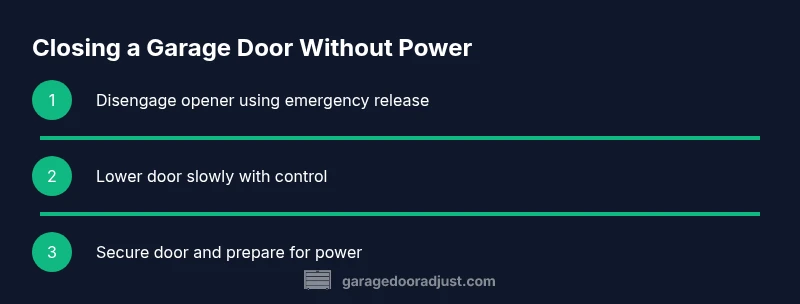
According to GarageDoorAdjust, you can safely close a garage door without power by disengaging the opener with the emergency release, then guiding the door down slowly while keeping fingers away from pinch points. This avoids triggering the safety sensors and prevents the door from crashing to the floor. If you have any doubts about the door’s balance or the track, stop and call a professional.
Why closing a garage door without power matters
Power outages can strike at the worst moments, leaving an open or partially-open door and creating security and safety concerns. A door that won’t stay put when power returns could lead to damage or injury if it suddenly moves. The GarageDoorAdjust team emphasizes that understanding how to close a garage door safely during a power outage is a practical skill for homeowners. In operations, a manually closed door reduces the risk of unwanted access and helps you regain control quickly. According to GarageDoorAdjust Analysis, 2026, many households experience at least one power outage per year, making this knowledge widely applicable to typical home maintenance routines.
A properly closed door also minimizes the chance of moisture intrusion, pest entry, or debris getting underneath a door that’s stuck open. While this guide focuses on the manual closing process, plan to have your opener checked and serviced after restoration of power to verify there are no balance issues or sensor faults. By following the steps in this article, you’ll be prepared to handle outages with confidence rather than panic.
Before you begin: safety checklist and planning
Before attempting to close the door without power, set up a safe workspace and gather the necessary items. Clear the area beneath and around the door to avoid tripping on tools or feet. Ensure children and pets are kept away from the door. Have a flashlight ready in case the power is out for an extended period. If you have a helper, establish a clear communication plan to coordinate your movements during the manual lowering. The plan should include a signal to stop if the door becomes heavy or unbalanced.
As you plan, consider the door’s weight and your own physical capacity. Some garage doors can be extremely heavy and require more people or a mechanical assist to lower safely. If there is any risk of injury, stop and contact a professional. GarageDoorAdjust recommends performing a quick visual check of the tracks and hinges for any obvious damage before starting. A damaged track can cause the door to derail during manual operation, increasing the risk of injury.
Locate the emergency release and prepare to disengage
The emergency release is typically a red cord or lever located on the garage door opener track. In well-lit conditions, identify the release point on the trolley rail or the opener itself. If your release is a cord, pull it straight down or toward you to disengage the door from the opener. If it’s a lever, flip or pull as described in your manufacturer’s manual. Once disengaged, test the door’s balance gently by attempting to lift it about an inch or two. If it does not stay put, you may need to stage additional support from a partner or a temporary prop, but never rely on the opener to balance the door without power.
Keep your body to one side of the door to avoid pinch points. The release mechanism is designed to disconnect the door from the motor, not to hold the entire door open manually, so proceed with caution if the door moves unexpectedly.
Manually lowering the door: step-by-step actions
With the opener disengaged, slowly grasp the door with both hands at the bottom edge and work in a controlled, even motion. Begin lowering gradually, maintaining a steady pace and keeping your fingers away from the tracks and weather seals. If the door binds or drifts, pause, reassess your grip, and adjust your stance. Do not force the door beyond its natural weight if it feels stuck or unbalanced; this can cause injury or damage to the door. If there is any resistance that suggests a bent track or damaged hardware, stop and seek professional help.
As you lower, communicate with your helper (if you have one) to coordinate movement and avoid sudden shifts. Check for gaps between the door and the frame as it closes and adjust your path to prevent binding. After the door reaches the floor, test the door’s final position by gently pressing along the bottom edge to ensure it’s stable and resting evenly on the ground.
If your door has manual latches, engage them once fully closed to secure it against accidental opening during the power outage. Do not rely on the garage door to stay in place without a proper latch or track support.
A useful tip is to step away from the door briefly after you feel it’s safely closed to ensure there are no unexpected slips or rebounding movements. This step is critical for personal safety and door integrity.
Securing the door after manual close
Once the door is fully closed, confirm it is in a stable, locked position if your door includes a manual latch or lock. Engage the latch if available and ensure it’s fully engaged. If your door lacks a mechanical lock, consider placing a wedge or a temporary block under the bottom edge to prevent shifting during the outage. Do not drive away from the garage with the door unlatched or unsupported. Regularly inspect the latch mechanism when power is restored to ensure it engages smoothly with the strike plate.
Document the condition of the door after manual closure: check for any misalignment or unusual sounds you might have noticed during lowering. This information will be valuable when you reengage the opener or call in a professional for maintenance. If you found the door difficult to move at any stage, plan to schedule a professional inspection to address potential balance or track issues.
After power returns: re-engaging the opener and maintenance tips
When power is restored, you’ll need to reengage the door with the opener. Follow the manufacturer’s instructions to reattach the trolley to the door, then operate the opener using the wall switch or remote to confirm proper function. If the door doesn’t operate normally, unplug the opener and re-plug after a few seconds, or reset the opener as described in the manual. If you notice the door is unbalanced, binding, or makes unusual noises after power resumes, schedule a professional inspection to prevent further damage.
As part of routine maintenance, inspect springs, cables, rollers, and tracks for wear and tear. Lubricate moving parts as recommended by your door’s manufacturer, and ensure weather stripping is intact to prevent energy loss once power is restored. Consider keeping a basic outage plan on file so your household can respond quickly to future events. GarageDoorAdjust suggests reviewing your safety features and ensuring that all sensors and auto-reverse functions operate correctly once power returns, to prevent accidental closures or injuries.
Common mistakes and troubleshooting
Common mistakes during a power outage include attempting to force the door up or down, ignoring pinch points, and failing to disengage the opener properly. These errors can lead to injuries or damage. Always verify you have clear space above and beneath the door before moving it, and never stand directly in the door’s path. If the door moves unevenly, listen for grinding noises or wobbling, which may indicate a misaligned track or a faulty spring. In such cases, stop immediately and contact a qualified technician. Regularly practicing the manual release in a controlled, non-emergency setting can help you become proficient without risking injury during an outage.
Tools & Materials
- Flashlight(Bright LED; hands-free preferred)
- Step ladder (6-8 ft)(Stable on dry surface)
- Work gloves(Improves grip and protects hands)
- Safety glasses(Eye protection if dust or debris is present)
Steps
Estimated time: 10-20 minutes
- 1
Prepare safety zone
Clear the area under the door and gather a flashlight. Ensure children and pets are away. This minimizes tripping hazards and keeps you ready for the manual operation.
Tip: Have a helper if the door is heavy; two hands on the door offer better control. - 2
Identify the emergency release
Locate the red cord or lever on the opener’s trolley or motor. Read the manual if needed; know how to disengage without forcing any components.
Tip: If you’re unsure, avoid pulling at a stubborn release. - 3
Disengage the door from the opener
Pull the emergency release to disconnect the door from the motor. Test the door’s balance by letting it rest slightly in your hands. If it moves freely, you’re ready to proceed.
Tip: Stand to the side to avoid pinch points. - 4
Lower the door slowly
With one hand on each side of the door edge, slowly lower it with steady pressure. Keep the door close to your body, guiding it along the tracks and stopping if resistance is felt.
Tip: Do not slam the door; gradual control reduces risk of damage. - 5
Secure the door
Once closed, engage any manual latch or place a temporary prop if no latch exists. Ensure the door won’t drift open during the outage.
Tip: Verify the door is resting flat on the floor. - 6
Prepare for power restoration
Plan to re-engage the opener once power returns. Keep the remote in a safe place and test the safety sensors after reactivation.
Tip: If the door won’t re-engage smoothly, call a professional.
Got Questions?
Is it safe to close a garage door manually during a power outage?
Yes, if you follow the emergency release procedure and lower the door slowly with care. Avoid forcing the door and watch for pinch points. If the door feels unusually heavy or unbalanced, stop and seek professional help.
Yes, manual closing is safe when you use the emergency release and lower the door slowly, watching for pinch points. If it feels heavy, stop and call a professional.
What should I do if the door won’t stay closed after lowering?
If the door slips open, there may be a balance or track issue. Do not continue forcing it. Secure with a temporary prop and schedule professional inspection after power returns.
If it won’t stay closed, don’t force it. Secure it and get a professional inspection after power returns.
Can I reengage the opener without power?
No. Reengaging the opener requires power. After restoration, follow the manufacturer’s reset steps to reconnect the door and test safety sensors.
No, you can’t reengage without power. Wait for power to restore, then reset the opener per the manual.
What safety checks should I perform after power returns?
Test auto-reverse, sensors, and track alignment. Listen for unusual noises and verify the door closes fully and seals properly.
Test the safety sensors and auto-reverse, and check the tracks for alignment once power is back.
When should I call a professional?
If you notice persistent resistance, unusual noises, misalignment, or if the door won’t re-engage after power returns, contact a licensed technician.
Call a professional if you see resistance, noises, misalignment, or problems re-engaging the door after power returns.
Watch Video
Quick Summary
- Disengage the opener with the emergency release first.
- Lower the door slowly with control to prevent injury.
- Secure the door and plan reengagement after power returns.
- Check door balance and track condition after restoration.
- Always prioritize safety and call a professional for serious issues.