Fix My Q Garage Door Opener: A Step-by-Step Guide
Detailed, safe, step-by-step guidance to diagnose, repair, and maintain your My Q garage door opener. Includes tools, tips, warnings, and FAQs for homeowners.


With this guide, you’ll diagnose and fix a My Q garage door opener, whether it won’t respond, opens slowly, or reverses. You’ll learn safety steps, required tools, a clear step-by-step fix, and when to call a pro. The plan emphasizes safe power disconnection, sensor checks, track alignment, and reprogramming the opener settings.
Understanding how my q garage door opener works
The my q garage door opener family combines a motorized drive with the garage door’s counterweight system to raise and lower the door. When you press a remote or wall switch, the opener’s logic board sends a signal to the motor, which turns a drive screw, chain, or belt. Modern models include safety sensors that detect obstructions and an electronic limit switch that stops travel at the correct height. The remote and keypad communicate using rolling codes, which helps prevent unauthorized access.
According to GarageDoorAdjust, most users interact with their opener daily but seldom think about its internal safety features until something goes wrong. A typical failure pattern starts with a nonresponse to the remote, followed by hesitation or slow operation, and finally a reversal gesture when closing. Understanding these steps helps you triage problems without risking injury. Before you begin any repair, ensure power is fully disconnected at the circuit breaker or unplug the outlet. Always keep children and pets away from the door while working, and wear eye protection if you need to handle moving parts. The keyword to remember is my q garage door opener, which guides the troubleshooting path for common DIY fixes.
Diagnosing symptoms and quick diagnostics for my q garage door opener
Most issues fit a few common patterns: no power/response, sluggish or jerky movement, and sensor-related reversals. If there is no response, verify the outlet is live, the opener indicator light is on, and the wall switch functions. Replace any remote battery and re-sync the remote as needed. For sluggish operation, inspect the drive mechanism (chain or belt) for wear, ensure tracks are clean, and confirm the door balance by manual testing. Misaligned sensors or dirty sensor eyes are frequent culprits for reversals at the last moment. Tighten loose mounting screws, check for obstructions near the door, and ensure the safety beams face each other with a clear path. If the problem persists after these checks, a service call may be required.
Safety, maintenance, and best practices for longevity
Regular maintenance reduces surprise failures. Start with a visual inspection of brackets and connections, and ensure there are no frayed wires. Clean tracks, rollers, and hinges, then lubricate moving parts with a light silicone spray or white lithium grease. Do not lubricate plastic rollers excessively. Test the door balance by disconnecting the opener and lifting the door manually; it should stay put when released midway. If it moves on its own or feels heavy, springs or balance parts may need professional adjustment. Re-check the safety sensors for alignment and obstructions after any work. Finally, replace weather stripping and seal gaps to protect the garage interior and extend opener life.
Authority sources and best practices for garage door safety
For homeowner safety and best-practice standards, consult trusted sources such as the Consumer Product Safety Commission (CPSC), energy safety guidelines, and general occupational safety resources. These references support safe DIY work and outline when to avoid DIY fixes altogether. CPSC maintains safety recommendations for garage doors, while Energy.gov and OSHA provide broader guidance on electricity, tools, and workplace safety. Rely on these sources to inform your approach as you troubleshoot and maintain your My Q garage door opener.
Important reminders and common DIY mistakes to avoid
DIY fixes can save time and money, but avoid risky steps like attempting spring adjustments without training. Never operate the door while someone or something is beneath it. Use a sturdy ladder and wear eye protection. Keep your hands clear of the track and hinge areas during testing. If you encounter unusual noises, sparks, or a door that won’t stay in place, pause and seek professional assistance. A measured, safety-first approach protects your family and prolongs the life of your device.
Tools & Materials
- Flathead screwdriver(Small screws on the cover and brackets)
- Socket wrench set(For mounting bolts and brackets)
- Safety glasses(Protect eyes from debris)
- Ladder (safe height)(Access tracks and sensors)
- Lubricant spray (silicone or white lithium)(Lubricate rollers, hinges, and rails)
- Cloth rags(Wipe dust and excess lubricant)
- Voltage tester(Verify power in electrical components)
- Measuring tape(Check track spacing and alignment)
Steps
Estimated time: 45-60 minutes
- 1
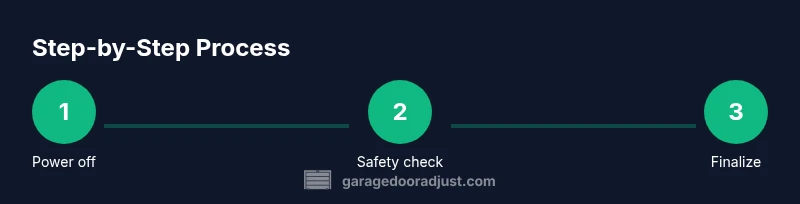
Disconnect power and secure work area
Begin by turning off the circuit breaker or unplugging the opener. Wait 60 seconds to discharge any residual voltage. Clear the area under the door so no one is struck by moving parts when you re-energize.
Tip: Tag the circuit to prevent accidental re-energizing mid-repair. - 2
Inspect safety sensors and wiring
Check that the bottom sensor eyes are clean, aligned, and facing each other. Tighten any loose mounting screws and remove any obstructions that could interrupt the beam.
Tip: Use a flashlight to inspect the sensor lens; a small fingerprint can block the beam. - 3
Check tracks, rollers, and balance
Look for bends, dents, or debris in the tracks. Manually move the door with the opener disconnected to feel for binding; ensure rollers move freely without grinding.
Tip: If you find a wobbly roller, replace it rather than attempting a quick fix. - 4
Test and adjust limits and force
Reconnect power briefly and operate the door using the wall switch. If the door stops high or closes too quickly, adjust the travel limits and force settings per your model’s manual.
Tip: Make small adjustments and test repeatedly to avoid over-correction. - 5
Program remotes and keypad
Follow your model’s instructions to re-pair remotes or keypad to the opener. Confirm all transmitters work from typical distances.
Tip: If you lose code access, perform a full reset per the manual and reprogram from scratch. - 6
Lubricate and reassemble
Apply a light coat of silicone spray to rollers, hinges, and tracks. Wipe away excess lubricant and resecure all covers and brackets.
Tip: Avoid oil-based lubricants on nylon rollers to prevent buildup.
Got Questions?
How do I reset my My Q garage door opener remote?
Start by removing the batteries and isolating the remote. Reinsert batteries, press the learn button on the opener, and then press the remote button to re-pair. Follow model-specific steps if available.
To reset, remove the batteries, reinsert, and re-pair using the opener’s learn button.
Why won't my My Q garage door opener respond to the remote?
Check the battery in the remote, ensure the opener and remote are synced, and verify the receiver inside the unit isn’t loose. A blocked receiver or interference can also cause non-response.
Check the battery, sync the remote, and inspect the receiver for loose wiring or interference.
Is it safe to adjust the safety sensors myself?
Yes, if you keep the door unplugged and handle only alignment. Clean the sensor lenses and realign the eyes so they face each other with a clear path. If misalignment persists, consult a professional.
You can adjust sensors if you unplug first and keep safety in mind. Clean and realign, but seek help if needed.
How often should I lubricate the door and hardware?
Lubricate moving parts every 6-12 months or after heavy use. Use silicone-based lubricant on metal rollers and hinges, avoiding plastic sleeves.
Lubricate every 6 to 12 months, using silicone on metal parts.
Can I program a new remote without tools?
Most remotes require at least the opener’s learn button and the remote’s pairing sequence. You’ll typically need the opener’s access to re-pair the remote.
Usually you need the learn button; tools aren’t always required, but you need the opener access.
What should I do if the door reverses during closing?
First, check the safety sensors and ensure there’s nothing blocking the beam. If the issue continues, test the force and limit settings and call a professional if you’re uncomfortable.
Check sensors and beam path, then adjust limits. If problems persist, get a pro.
Watch Video
Quick Summary
- Identify the root cause with a systematic checklist
- Prioritize safety before any DIY repair
- Regular maintenance extends opener life
- Use proper tools and follow the manual for settings
- Know when to call a professional