How to Open a Garage Door from Outside Manually
Learn to safely open a garage door from outside when the opener is unavailable. This step-by-step guide covers exterior releases, safety, and troubleshooting for DIY homeowners.


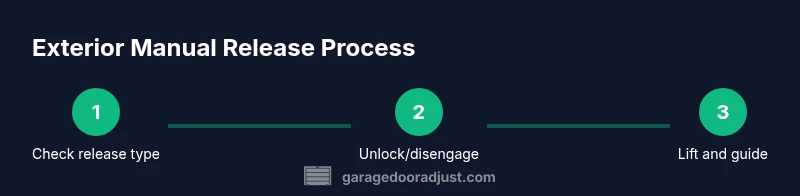
Open a garage door from outside manually only if your model has an exterior emergency release or keyed exterior panel. Locate the exterior release near the header, then unlock or disengage as required, pull the release, and carefully lift the door by hand along the tracks. Stay clear of the springs and cables.
Why You Might Need to Open Your Garage Door from Outside Manually
There are moments when you must access your garage without using the interior switch or the remote opener. Power outages, a malfunctioning opener, or a locked-out garage can leave you stranded outside or inside. According to GarageDoorAdjust, homeowners frequently encounter situations where the outside manual release becomes the safest path to gain entry, provided the system includes an exterior release. Being prepared with knowledge about your exterior release and the correct procedure helps you avoid risky improvisation that could bend tracks, snap cables, or injure yourself. Before attempting any manual operation, consider the door’s size and weight; most residential doors are heavy and move best with a coordinated two-handed grip. If you feel unsure at any point, stop and seek professional assistance. The key is to identify the type of exterior release your door uses and to follow the manufacturer’s instructions for your specific model. This article focuses on common configurations and general safety practices you can apply to most homeowners’ setups.
Tools & Materials
- Exterior emergency release panel/cover(Locate near the door header or exterior wall; check for a small panel or door handle.)
- Exterior release key (if applicable)(Some models require a key to unlock the exterior release; not all systems use a key.)
- Flashlight(A bright light helps locate and identify the release in dim conditions.)
- Safety gloves(Protect hands when gripping the door and hardware.)
- Sturdy footwear(Keep feet protected and stable when lifting.)
Steps
Estimated time: 15-25 minutes
- 1
Locate the exterior release
Find the exterior release panel or handle. Depending on your door, this may be a keyed box, a red pull handle on a rope, or a small lever behind a weatherproof cover. If you’re unsure which option you have, check the door’s manual or inspect the header area for a marked release. Ensure you have adequate lighting and a stable stance before interacting with the release.
Tip: If a key is required, have it ready before approaching the release; never improvise with makeshift keys. - 2
Check area and prepare yourself
Clear the area around the door and beneath the opening. Stand with your feet shoulder-width apart and knees bent to absorb any movement. Have a helper if the door is heavy or if you’re unsure about your balance. Wearing gloves can improve grip on metal components.
Tip: Keep children and pets away from the door during manual operation. - 3
Activate exterior release and disengage
Use the exterior release according to your model—turn a key, pull a lever, or lift the red rope to disengage the door from the opener. If the release requires a panel, open the panel and engage the mechanism as instructed by your model’s manual.
Tip: Do not yank the release; a smooth, controlled action reduces the risk of damage to tracks or cables. - 4
Lift the door manually
Place your hands on the door’s bottom section, keep your back straight, and lift with your legs rather than your back. Guide the door along the tracks slowly and evenly to avoid binding or sudden shifts. Stop if the door feels unusually heavy or uneven.
Tip: If the door begins to bind or drop, release and call a professional—forcing it can cause injury or equipment failure. - 5
Test and secure
Once the door is fully open, verify it remains stable and won’t roll back. If feasible, prop the door open with a safe doorstop or a sturdy object, and recheck the alignment when you’re ready to re-engage the opener or finish the task indoors.
Tip: Re-engage the opener only after you’re inside or when power is stable; otherwise, manual operation remains the method.
Got Questions?
Can I open my garage door from outside if there is no exterior release present on my model?
If your door lacks an exterior release, it is not designed for safe manual operation from outside. For safety and to avoid damaging components, contact a professional technician or the door manufacturer for guidance.
If there’s no exterior release, don’t try to force the door. Call a professional for safe access.
What should I do if the exterior release is jammed or stuck?
Don’t force the release. Check for debris or corrosion around the mechanism, then use a flashlight to inspect the panel. If you can’t free it safely, stop and contact a pro.
If the release is jammed, stop and call a technician to avoid damage.
Is it safe to operate a garage door manually during a power outage?
Manual operation is possible if you have an exterior release, but always use proper technique and keep others clear. If you’re unsure, wait for power restoration or contact a pro.
Yes, manually can be safe with proper technique if the release exists.
Do I need to re-engage the opener after opening manually from outside?
In most cases you should re-engage the door to the opener after you’re back inside or power is restored. Follow your model’s instructions to re-connect the trolley.
Yes, re-engage the opener when you’re ready to resume remote operation.
How do I know if my exterior release is safe to use?
Consult your door’s manual; examine for obvious damage or wear, and ensure you can operate the mechanism cleanly without forcing it. If in doubt, call a pro.
Make sure you can operate the release smoothly and see no damage.
What if the door still won’t move after releasing it from outside?
If the door remains stuck after disengaging, there may be a balance issue or a damaged spring or track. Stop and call a professional to avoid injury or further damage.
If it won’t move, don’t force it—call a garage door pro.
Watch Video
Quick Summary
- Identify your exterior release type before attempting manual opening
- Disengage the opener with a controlled motion, not a yank
- Lift with legs, guide the door along tracks slowly
- Test stability and re-engage the opener only when safe
- If anything feels unsafe, contact a pro immediately