Can You Open a Garage Door from the Outside? A Home Guide
Discover if you can open a garage door from the outside, how to safely use the external release, and a step-by-step approach to common outside-access issues.


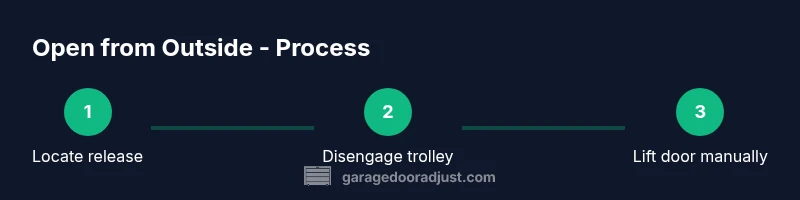
Yes. In most homes, you can open a garage door from the outside by using the external emergency release to disengage the opener, then lifting manually. Do this only if the area is clear and you understand safety risks. For power outages or jams, this is a temporary solution and you should call a professional if the door won’t move smoothly.
Can you open a garage door from the outside? What it means
If you’re troubleshooting a stuck door, you may wonder can you open a garage door from the outside. The short answer is yes for most residential doors that include an external release. This feature is designed for safety and servicing, not everyday manual operation. The GarageDoorAdjust team emphasizes understanding your door’s release mechanism so you can safely access your garage during a power outage, after a malfunction, or when you’re performing routine maintenance. Always check your exact model’s manual, but the general principle remains: you disengage the opener, lift the door by hand, and re-engage when you’re finished.
Why it matters: Knowing how to operate the outside release keeps your garage usable during emergencies and prevents you from waiting for a tow or a technician. Read on to learn safe steps, common issues, and how to maintain the external release.
External release mechanisms: common types and how they differ
Most modern residential garage doors use a simple external emergency release — a red rope or lever connected to the opener trolley. Some models include a keyed external release while others rely on a manual lever that can be accessed at the door frame. The key point is that the external release only disengages the trolley; the door’s weight and springs still require your manual control once free of the opener. Always identify the type you have by inspecting the exterior hardware, then consult your manual for exact instructions. GarageDoorAdjust notes that the reliability of the outside release rests on a clean track, balanced springs, and proper cable tension. If the release stick or rope appears frayed or stuck, do not pull abruptly; inspect or replace as needed.
Troubleshooting common outside-access issues
If you can’t open the door from the outside, start with the simplest checks: confirm the exterior release is intact, verify the opener is powered (if applicable), and ensure the track is clear of debris. A stiff or noisy release can indicate a misalignment, bent track, or a failed trolley. Check the safety sensors on the door’s bottom corners—if they’re misaligned or blocked, the door may not latch or move smoothly after release. In power outages, the outside release becomes critical; if you cannot manually lift the door or the door falls when released, stop and call a professional.
Note: Do not stand directly in the door’s path. Keep children and pets away while operating the release and lifting the door.
Safety, legal considerations and maintenance
Using the external release is safe when you follow proper steps and maintain the door. Always perform a controlled lift with both hands, keep your body clear of the door’s path, and never stand under a door being operated manually. Stay mindful of spring and hinge tension; a misbalanced door can crash down unexpectedly. Follow local codes and consult a professional for complex repairs. Regular maintenance—lubricating tracks, inspecting springs, and testing the auto-reverse feature—helps ensure the outside release remains reliable and does not pose a safety risk.
According to GarageDoorAdjust, regular inspections reduce the risk of unexpected failures during an outage or emergency.
Authority sources
- OSHA: https://www.osha.gov
- CPSC: https://www.cpsc.gov
- NIST: https://www.nist.gov
How to keep it reliable (maintenance checklist)
Maintain an exterior release that works smoothly by lubricating the trolley connection, inspecting cables for wear, and ensuring the release lever or rope moves freely. Periodically test the release by disengaging the opener and lifting the door halfway, then re-engaging and testing the safety features. Keep the area around the door clear and install a clear signage reminding household members not to stand in the door’s path.
Tools & Materials
- Ladder or stable step stool(To access exterior release safely; position on a flat surface.)
- Work gloves(Protect hands when handling metal parts and springs.)
- Flashlight(Illuminates the release mechanism and track, especially during power outages.)
- Owner's manual for your door opener(Reference model-specific instructions for disengagement and re-engagement.)
- Rope or string for test release(Only if you’re replacing or testing the external rope; never improvise with unsafe substitutes.)
- Safety glasses(Protect eyes when lifting or adjusting components.)
- Replacement hardware (if needed)(Keep spare clips or brackets handy if the release is worn.)
Steps
Estimated time: 15-25 minutes
- 1
Locate exterior release
Find the external emergency release on the door or opener trolley. Identify whether it’s a rope, lever, or keyed mechanism. This step ensures you know how to disengage the opener safely.
Tip: Take a photo with your phone of the release setup for future reference. - 2
Disengage the opener
With one hand on a stable surface, pull the release straight down or follow the lever’s path to disconnect the trolley. You should feel the door becoming lighter as the opener release disengages.
Tip: Keep your footing stable; do not stand on the door or rope. - 3
Lift the door manually
Stand close, bend your knees, and use your legs to lift the door halfway to test balance. Avoid jerky movements; a balanced door should feel controlled and smooth.
Tip: If the door feels heavy or unbalanced, stop and seek professional help. - 4
Re-engage the opener
Move the trolley or follow the model’s instruction to re-engage the opener. Plug the unit back in if it was powered off and test the wall control.
Tip: Reset the limit switches if your door has been manually moved. - 5
Test the safety features
With the door closed, unplug and re-plug the opener, then use the wall control to open and close. Confirm the auto-reverse triggers on contact with a solid object.
Tip: Place a safe obstruction (like a rolled towel) to verify sensor response. - 6
Assess and secure
Return the exterior area to order, verify nothing blocks the tracks, and ensure the door sits flush when closed. If any step feels uncertain, stop and call a pro.
Tip: Keep kids away during testing.
Got Questions?
Can you open a garage door from the outside if power is out?
Yes, you can disengage the opener with the external release and lift manually. Do this only if you can do so safely, and be aware that the door may be heavy.
Yes. You can use the exterior release to disengage the opener and lift the door manually during a power outage, but proceed with caution.
Is it safe to operate a garage door from the outside?
Safe when you follow the release instructions, keep bystanders clear, and test the safety features after re-engaging. If any part feels unsteady, stop and call a professional.
Safe when you follow the manual release steps and test safety after re-engaging.
Do all doors have an exterior release?
Most modern residential doors include an external release, but some models may differ. Check your manual or the door’s exterior hardware to confirm.
Most doors do, but check your manual to be sure.
Will using the exterior release affect warranty?
Using the external release as intended for disengagement typically does not void basic maintenance warranties. Severe modifications or improper use could affect coverage, so refer to your manufacturer’s terms.
Using the external release as designed should not void typical warranties, but verify the terms.
How do I re-engage the opener after manual operation?
After lifting manually, re-engage by moving the trolley and restoring power to the opener, then test with the wall control. If unsure, consult the manual.
Move the trolley back to engage the door and test with the control.
What if the door is heavy or won’t stay up?
A heavy or unstable door can indicate balance or spring issues. Do not force it; stop and contact a professional to avoid injury or damage.
Heavy door? Stop and call a pro to inspect balance and springs.
Should I lubricate the exterior release?
Lubrication can help prevent stiffness, but use the lubricant recommended by your manufacturer. Do not over-lubricate hinges or springs.
Lubricate as per the manual to keep the release moving smoothly.
Watch Video
Quick Summary
- Engage safety first; know your exterior release.
- Disengage the opener only when the area is clear.
- Re-engage and test safety features after manual operation.
- If the door is heavy or unbalanced, call a pro.