Can You Raise Your Garage Door Safely? A Step-by-Step Guide
Learn when it’s safe to raise a garage door manually, essential safety checks, and a clear, homeowner-friendly step-by-step approach. This guide from GarageDoorAdjust helps you troubleshoot and decide when to call a pro.


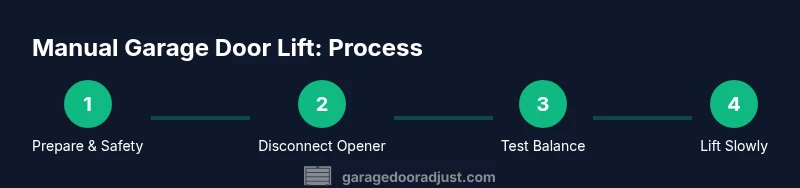
Yes, you can raise a garage door manually in many cases, after safely disconnecting the opener and confirming the door is balanced. Start by unplugging the opener, pulling the emergency release, and having a helper ready. If the door moves smoothly and stays in place, you can proceed cautiously; if it sticks or feels heavy, stop and call a professional.
Understanding When You Can Safely Raise a Garage Door
Can you raise your garage door? The short answer is yes in many scenarios, but only after you verify a few safety conditions. According to GarageDoorAdjust, safe manual lifting starts with disconnecting the opener and confirming the door is balanced and free of obvious damage. If the door feels heavy, binds, or rolls unevenly, do not continue. A balanced door with healthy springs is much safer to lift by hand, reducing the chance of uncontrolled movement or sudden drop.
Understanding the door type (torsion vs extension springs) and how it should feel when you lift it is crucial. While a light, smooth lift is a good sign, a jerky or resistant door signals that professional service is needed. Always consider the weight and the environment—an icy or dusty track can dramatically affect how easy it is to raise the door.
Safety First: Essential Precautions Before Manual Lift
Before attempting any manual lift, put safety first. Unplug the garage door opener to prevent accidental operation, and use the emergency release only after ensuring the area is clear. Keep pets and children away from the door path, and wear sturdy gloves and eye protection. Good lighting helps you spot misalignment or damage in the tracks, springs, or rollers. If the door sits high on a spring system, extra care is essential because a misstep can cause rapid movement.
How to Check Balance and Prepare for Manual Lift
A key factor in can you raise your garage door safely is door balance. With the opener disconnected, test the door’s weight by lifting it slowly to a mid-height (about halfway up). It should stay put with minimal effort, not drift upward or downward. If it sinks, rises, or requires significant force, the spring system or cables may be compromised. In that case, stop and consult a professional rather than proceeding further. If the door holds its position, proceed with a controlled lift in collaboration with a helper, taking care to keep your back straight and feet planted.
Common Scenarios: When Manual Lift Is Feasible vs Not Safe
There are several real-world scenarios homeowners may encounter. A door that moves smoothly and holds its position is a good candidate for safe manual lifting. If the door drifts down slowly, or if it rises only with substantial effort, balance is out of spec and professional intervention is advised. If you hear grinding, popping, or grinding noises during a lift, stop immediately; this often indicates damaged springs or worn hardware and is not safe to continue. Always err on the side of caution—manual lifting is not a substitute for professional repairs when components are compromised.
Aftercare and When to Call a Pro
After testing and any manual adjustment, re-attach the opener and run a cautious test to ensure safety features resume normal operation. If you notice any misalignment, binding, or inconsistent stopping points, schedule a professional inspection. The GarageDoorAdjust team emphasizes that regular maintenance—lubricating tracks, inspecting springs, and checking balance—can prevent issues that force DIY lifts. The key is to know your limits and seek expert help when anything feels unsafe.
Quick Recap: Can You Raise Your Garage Door? Quick Guide
- Disconnect power and check balance before attempting a manual lift.
- Lift slowly with a helper, and stop if the door binds or feels heavy.
- Re-check operation with the opener after reattachment.
- Seek professional help for signs of spring or track damage. According to GarageDoorAdjust, safety and balance are the cornerstones of any manual lift.
Tools & Materials
- Safety glasses(Protect eyes from debris or sudden slips)
- Work gloves(Improve grip and protect hands)
- Sturdy helper(Second person to assist in lifting)
- Non-slip shoes(Stable footing while lifting)
- Flashlight(Illuminate tracks in dim garages)
- Ladder or stable step stool(Needed for high doors or reaching hardware)
- Phone for emergency contact(Call for help if needed)
Steps
Estimated time: 30-45 minutes
- 1
Prepare area and tools
Clear the garage floor, remove anything under the door path, and gather gloves, glasses, and a helper. Ensure good lighting and a flat surface. Confirm you have a clear way out in case the door shifts unexpectedly.
Tip: Stand with your feet shoulder-width apart and keep your back straight to reduce strain. - 2
Disconnect the opener
Locate the trolley and pull the emergency release handle to disconnect the door from the opener. Do not rely on the opener’s motor once released. Confirm the door can be moved freely by hand.
Tip: Hold the handle firmly while guiding the door to avoid pinching fingers. - 3
Test manual movement
With the door released, lift the door to mid-height to test balance. If it requires significant effort or drifts, stop and reassess; you may have a need for professional service.
Tip: Have your helper position at mid-height to support the door if it starts to descend. - 4
Lift the door to the desired height
If the door moves smoothly, lift slowly toward the desired height with your helper. Maintain control, keep your wrists neutral, and avoid sudden jerks. Stop if you feel the weight shift unexpectedly.
Tip: Keep a firm, two-person grip and communicate every movement. - 5
Secure and re-check stability
Hold the door at the chosen height and verify it stays in place without drifting. If you need to pause, do so only momentarily and avoid leaning on the door frame.
Tip: Do not apply sideways pressure that could bend tracks or hinges. - 6
Reconnect the opener and test
Re-engage the opener and run a short test cycle to ensure the safety features work. Observe the door’s motion and stopping points to confirm proper operation.
Tip: If the door jars or reverses unexpectedly, turn off power and call a pro. - 7
Evaluate and plan next steps
If anything felt off during the lift, document and schedule professional inspection. Regular maintenance and timely repairs help prevent the need for future manual lifts.
Tip: Schedule a professional balance and spring check if you noticed any resistance.
Got Questions?
Can I raise my garage door if the power is out?
Yes, you can usually raise the door manually when the opener is disconnected, even if the power is out. Ensure you follow safety steps and have a helper ready.
Yes, you can raise the door manually if the opener is disconnected, even without power; use caution and a helper.
What should I do if the door feels heavy to lift?
A heavy door often signals an imbalance or damaged springs. Stop and call a professional rather than continuing to lift, to avoid injury or worse.
If the door feels heavy, stop and call a pro; it may be an imbalance or bad springs.
Is it safe to adjust springs by myself to make it easier?
No. Adjusting torsion or extension springs is dangerous and should be left to trained technicians. DIY adjustments can lead to serious injury.
Springs should not be adjusted by homeowners; consult a professional.
How can I tell if my door is balanced?
Lift the door to mid-height and release. If it stays in place, balance is good; if it drifts, balance is off and needs service.
Lift to mid-height and release—the door should stay in place if balanced.
When should I call a professional after attempting manual lift?
Call a pro if the door binds, feels heavy, makes unusual noises, or fails to stay in position. Regular maintenance can prevent recurring issues.
Call a pro if you notice binding, heaviness, or odd noises when lifting.
Will manual lifting affect my warranty?
Warranty terms vary by manufacturer. Always check your manual; some warranties require professional service for certain repairs.
Check the warranty; some rules require professional service for certain repairs.
Watch Video
Quick Summary
- Disconnect the opener before manual lifting.
- Check balance and spring health; do not force a heavy door.
- Lift with a partner and use proper stance.
- Test operation after reattachment of the opener.
- Call a professional for any signs of damage.