Can an Electric Garage Door Be Opened Manually? A Step-by-Step Guide
Learn how to safely open an electric garage door manually, when to use the emergency release, and practical troubleshooting tips from GarageDoorAdjust to prevent damage.


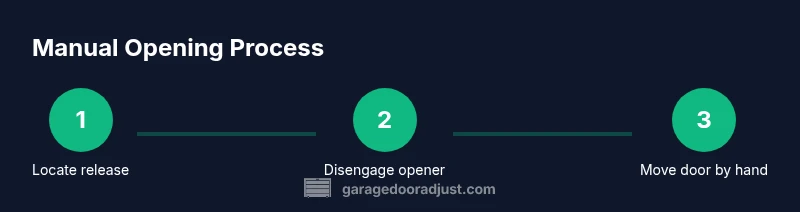
Yes, an electric garage door can be opened manually when needed. According to GarageDoorAdjust, locate the emergency release handle or release cord on the opener, disengage the motor, and carefully lift or lower the door by hand. Ensure the area is clear, the door is closed, and you follow safety steps to avoid injury.
Understanding Manual Opening of an Electric Garage Door
Electric garage doors are designed to be operable even when the power is out or the opener is not functioning. The manual opening process relies on the emergency release mechanism, which disconnects the door from the motor so you can move it by hand along the tracks. This capability is essential for emergencies, deep-storage access, or temporary access while you arrange professional service. The exact location of the release varies by model, but most doors feature a red handle or a cord connected to the trolley. Before attempting any manual movement, take a moment to review your door’s manual and make sure you stand with your feet shoulder-width apart, keeping your back straight and your movements controlled. GarageDoorAdjust emphasizes that the door’s weight is supported by springs, so you must control the movement carefully to avoid sudden shifts or pinching hazards.
Safety Considerations Before Attempting Manual Operation
Safety should come first when you decide to open a garage door manually. Clear the area of people, pets, and obstructions, and ensure you have adequate lighting. Wear gloves to protect your hands from sharp edges and consider eye protection if there are loose components on the tracks. Never stand directly in front of or under the door during manual movement, and never try to force a door that resists. If you feel unusual resistance, stop and reassess rather than applying more force. If the door uses torsion springs, the system is under tension; any movement should be slow and deliberate. GarageDoorAdjust reminds homeowners that bypassing safety devices or modifying hardware to make the door easier to move is dangerous and can lead to serious injury.
When to Avoid Manual Opening and Call a Pro
There are clear cases when manual operation should be avoided altogether. If the door is off its tracks, if you notice bent rails, frayed cables, or loud grinding noises, do not attempt to move it by hand. A misaligned door or worn springs can snap unexpectedly, causing injury or further damage. Similarly, if the release mechanism doesn’t function, or if you cannot reliably disengage the opener, it’s time to seek professional help. In many homes, professionals will check spring tension, track alignment, sensor operation, and the compatibility of the door with the opener. Regular maintenance, performed by a trained technician, can prevent dangerous failures and extend the life of your system.
Scenario Walkthrough: What to Do in Common Situations
Power outages: Use the emergency release to disconnect, then safely move the door by hand. Heavy doors may require two people; keep your back straight and knees bent for lift. Snow, ice, or debris on the tracks can impede movement; clear debris before attempting to move. After manual operation, re-engage the opener by following the manufacturer’s instructions and test the safety features. This is a critical last step to ensure automatic operation remains reliable.
Myths vs. Reality
Myth: Manual opening will void the warranty. Reality: Most manufacturers permit manual operation when done correctly and with safety in mind; never bypass safety systems. Myth: You should bypass safety features to make it easier. Reality: Safety devices exist for a reason and must be preserved. Regular maintenance, lubrication of tracks, and inspection of springs and sensors help keep manual operation safe when necessary.
Tools & Materials
- Owner's manual for your garage door opener(Helpful for model-specific steps and safety cautions)
- Emergency release handle/cord (red)(Know its location and how it disconnects the door from the motor)
- Flashlight(Illumination in dim spaces near the door and tracks)
- Gloves(Protect hands from sharp edges and pinch points)
- Stepladder or stable platform(Useful if the door is high or you need additional reach)
- Second person (optional)(Helpful for heavy doors or guiding movement)
Steps
Estimated time: 20-25 minutes
- 1
Locate the emergency release
Find the red emergency release handle or release cord on your opener or trolley. Identify how it detaches the door from the motor and confirm you understand its orientation before touching anything else. This step minimizes the risk of sudden door movement.
Tip: Stand to the side of the door to stay out of its path. - 2
Disconnect the motor safely
Pull the release handle or cord firmly and steadily to disengage the door from the opener. Avoid yanking; a controlled pull reduces the chance of the door moving unexpectedly. Once disengaged, you should feel no resistance from the motor.
Tip: Keep one hand on the door frame to guide it as you disconnect. - 3
Brace yourself and prepare to move
Position yourself with feet shoulder-width apart and knees slightly bent. Place your hands on the bottom edge of the door or along the rails where you can control its weight. If the door is heavy, recruit a second person to help.
Tip: Maintain a firm stance and avoid placing fingers near hinges. - 4
Move the door by hand along the tracks
Gently guide the door along its tracks, keeping it level and avoiding the springs' wind-up zones. Stop immediately if you feel binding or unusual resistance. Move inch by inch to maintain control.
Tip: Do not push beyond the track limits and watch for obstructions. - 5
Re-engage the opener
Once the door is in the desired position, re-engage the trolley by pulling the opener handle toward the motor or following the manufacturer’s re-engagement steps. Ensure the door moves with the opener smoothly before using remote controls again.
Tip: Double-check that the door is fully seated in the tracks before re-testing. - 6
Test the door and safety features
Plug the opener back in if needed and test the auto-reverse and safety sensors. Have someone gently wave a foot under the door during closing to verify the reverse function works. Stop the test immediately if anything seems off.
Tip: Keep hands clear during the test and stand back from the door path.
Got Questions?
Can I open an electric garage door manually if the power is out?
Yes. Use the emergency release to disconnect the door from the opener and move the door by hand. Be mindful of the door’s weight and follow safety steps.
Yes. Use the emergency release to disconnect the door and move it by hand, but be careful with the door’s weight.
Is manual opening safe for all doors?
Manual opening is not safe for every door, especially when springs or tracks are damaged or misaligned. If in doubt, stop and call a professional.
Manual opening isn’t safe if the springs or tracks are damaged; stop and call a pro if unsure.
What if the release handle sticks or doesn’t work?
Do not force the mechanism. Inspect for damage and refer to the manufacturer’s guidance or contact a technician to avoid injury or further damage.
If the release sticks, don’t force it. Check guides or call a technician.
Do I need to re-engage the opener after manual use?
Yes. Re-engage the trolley and test the opener to ensure proper automatic operation before relying on it again.
Yes, re-engage the opener and test it before relying on automatic operation.
Should I attempt to fix springs myself if the door is hard to move?
No. Sprung components are under high tension and require professional handling to avoid serious injury.
Don’t fix springs yourself; they’re dangerous and should be handled by a pro.
Watch Video
Quick Summary
- Know the exact location of your emergency release.
- Disengage the opener before attempting any manual movement.
- Move slowly and keep hands clear of hinges and springs.
- Re-engage the opener and test safety features after manual use.