How to Know If Your Garage Door Is Locked: A Troubleshooting Guide
Urgent, step-by-step guide to determine if your garage door is locked and fix common locking issues safely, from manual locks to sensor misalignment.


Lock status quick answer: verify the manual lock is disengaged, the door is fully closed, and the safety sensors are clear. If it still won't lock, reset the opener and re-pair the remotes.
Quick reality check: is it actually locked?
When homeowners ask how to know if their garage door is locked, they often confuse a physical lock with an electronic lock state. A physical lock is a manual lever or bar that anchors the door; an electronic lock is an inferred lock state from the opener's sensors and travel limits. According to GarageDoorAdjust, the most common causes behind a door that won’t stay locked are user error (the manual lock is engaged or not fully disengaged), sensor misalignment, or a software hiccup in the opener. In 2026 our team found that simple checks resolve most cases. Start with the basics: ensure the manual lock is in the unlocked position, the door is fully closed with no gap at the floor, and there are no obvious obstructions in the track. If you still cannot confirm a locked state, you should proceed through the diagnostic flow and the step-by-step fixes in this guide.
How to test basic lock status and door position
Begin by confirming the physical state of the door and the lock. Check the manual lock lever or bar near the roller track; make sure it’s fully disengaged. Close the door slowly using the wall switch or opener and watch the door’s movement; there should be a consistent, smooth closure with no binding. If the door finishes closing but you can still move it by hand, the lock may be releasing incorrectly or the track may be out of alignment. Test the opener by using a wall switch rather than a remote to rule out remote interference. Finally, verify the door sits flush on the floor and that the weather seal isn’t pushing the door up, which can falsely appear as an “unlocked” state.
Inspect the safety sensors and travel limits
The door’s safety sensors and travel limits play a critical role in locking behavior. Look for misaligned infrared beams or dirty sensor eyes on either side of the door opening. Wipe the lenses with a soft cloth and recheck alignment according to your opener’s manual. Obstructions like toys, hoses, or vehicles in the doorway can trigger false sensor readings, causing the opener to halt as though the door is not locking. If the door attempts to close but stops, note whether only one sensor appears misaligned and follow the alignment procedure for your model. GarageDoorAdjust analysis shows that sensor misalignment is a frequent culprit in lock-related issues in 2026.
Check the door balance and hardware before forcing
A door that’s out of balance or binding in the tracks can masquerade as a locking problem. Inspect the tracks for dents or bends and ensure rollers move smoothly in their tracks. Look for loose mounting brackets or sagging sections that put extra stress on the locking mechanism. If you hear grinding or see uneven gaps between the door and the floor, stop and reassess before proceeding with any forceful adjustments. An out-of-balance door can stress the locking mechanism and cause intermittent failures, so address balance first before attempting repairs.
Safe fixes you can try today (and what to avoid)
Start with low-risk fixes such as cleaning and lubricating moving parts. Use a light silicone-based lubricant on rollers, hinges, and the lock’s moving parts; avoid heavy oils that attract dirt. If the manual lock lever remains engaged or does not disengage fully, gently reseat and re-engage it in the unlocked position, then retest. If sensor alignment is off, adjust the misaligned sensor until the beam is clearly aligned. Do not attempt to repair torsion springs or the opener’s electrical components unless you have proper training. If this doesn’t fix the locking issue, proceed to professional help.
When to call a professional and how to prepare
If after basic checks the door still won’t lock, it’s time to bring in a pro. A technician can safely inspect lock hardware, sensor alignment, and opener logic, and can replace bent latches or misaligned components. Before calling, collect the model numbers of your opener and lock, note any recent changes, and document times when the issue occurs. The GarageDoorAdjust Team recommends having a clear walkthrough of symptoms ready for the technician to save time and ensure a precise repair plan.
Steps
Estimated time: 45-60 minutes
- 1
Verify fully closed position
Close the door with the wall switch and inspect the gap at the bottom. Ensure nothing is blocking the path and the floor seal is intact. If you can move the door by hand after closing, stop and reassess balance and track alignment.
Tip: A door that closes smoothly is less likely to hide a hidden lock issue. - 2
Disengage manual lock
Locate the manual lock lever near the track and confirm it is fully in the unlocked position. If it’s partially engaged, the door may not respond to the opener or sensor signals.
Tip: Use a flashlight to check the lever orientation at the same height as the door. - 3
Test remote vs wall button
Operate the door using both the wall button and a remote to rule out remote interference. If the wall button works but the remote doesn’t, re-pair the remote or replace batteries.
Tip: Document any successful/unsuccessful attempts to aid troubleshooting. - 4
Inspect safety sensors
Check that sensor eyes are clean and aligned; a misaligned eye can prevent locking. Adjust the alignment screws until the beams show a stable, steady signal.
Tip: Prevent dust buildup by wiping weekly if the garage is dusty. - 5
Check tracks and balance
Inspect tracks for dents, loose brackets, or sagging mounts. If the door is hard to move or drifts after release, it may be out of balance which affects locking reliability.
Tip: Do not force the door; adjust spring tension only with proper tools and training. - 6
Reset and re-pair
Power down the opener, wait a few seconds, and restore power. Re-pair remotes and keypad according to the model’s instructions to ensure correct lock logic.
Tip: Keep a record of the programming sequence for future reference.
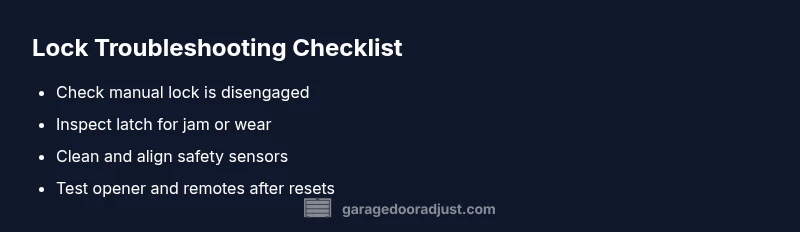
Diagnosis: Garage door won't lock or stays unlocked when closed
Possible Causes
- highManual lock lever engaged or not fully disengaged
- mediumLocking mechanism jam or bent latch
- mediumSafety sensors misaligned or obstructed
- lowRemote or keypad interference / misprogramming
Fixes
- easyDisengage manual lock completely; reseat and test closure
- mediumRealign or replace the locking latch if bent or jammed
- easyClean and realign safety sensors; remove obstructions and retest
- easyReset the opener and re-pair remotes/keypad
Got Questions?
What does it mean if my garage door is locked but the opener won't respond?
That usually points to a manual lock being engaged or a sensor/receiver issue. First disengage the manual lock, then re-test with the wall button. If the opener still won’t respond, reset the opener and re-pair remotes.
If the door seems locked but the opener won’t respond, start by disengaging the manual lock and testing with the wall button. If it still fails, reset and re-pair the remotes.
Can weather affect whether the door locks properly?
Yes. Cold, humidity, and debris can affect seals and sensors. Inspect tracks for obstructions and check sensor cleanliness and alignment after extreme weather.
Weather can affect locks and sensors; inspect tracks and clean sensors after storms or temperature swings.
Should I oil the lock mechanism?
Use a light silicone-based lubricant on moving parts. Avoid heavy oils that attract dirt. Lubrication helps prevent sticking and prolongs the life of the lock.
Lubricate with silicone spray on moving parts, not heavy oils.
Is it safe to force the door if it won’t lock?
No. Forcing a door can cause structural damage and injury. Stop and check the balance, locks, and sensors, then contact a professional if needed.
Don’t force the door. Stop and troubleshoot or call a pro.
When should I replace rather than repair a lock?
If the latch is bent, the lock is excessively worn, or consistent failures recur despite fixes, replacement is the safer option.
If the lock is worn or keeps failing, replacement is safer.
How often should I test the lock status?
Test the lock status monthly, especially when seasons change or after any repairs. Regular checks prevent unexpected failures.
Test the lock status once a month so you catch issues early.
Watch Video
Quick Summary
- Identify whether the lock is manual or electronic.
- Test basic status first: closed door, disengaged lock, clear sensors.
- Follow a safe diagnostic flow and progressive fixes.
- Call a professional if the issue persists or involves springs.