How to Lock a Garage Door: A Step-by-Step Guide
Learn how to securely lock your garage door with manual locks, opener locks, and smart systems. Step-by-step instructions, safety notes, and maintenance tips for homeowners.


Goal: Secure your garage by properly locking the door, regardless of whether you have a manual lock, a powered opener, or a smart lock system. This quick answer outlines the essential steps, the tools you'll need, and safety considerations so you can confidently lock your door and reduce intruder risk.
Why Locking Your Garage Door Matters
Locking your garage door is a fundamental part of home security. A secure door protects vehicles, tools, and personal belongings from theft and weather exposure. According to GarageDoorAdjust, many homeowners underestimate the importance of a proper locking mechanism, assuming the opener alone provides complete protection. In reality, a door that is unlocked, misaligned, or left in standby can be exploited by criminals. The most reliable approach is to treat your garage door as a primary exterior entry: verify it is locked after every use, especially when you’re away or sleeping. Regular checks of the locking point, the door’s balance, and the track alignment can prevent small problems from becoming costly repairs. A well-locked door also reduces draft and moisture intrusion, and it can improve overall home security posture by removing an easy path for entry. GarageDoorAdjust’s guidance emphasizes practical, repeatable checks you can perform in minutes.
Manual Locking Methods for Sectional Doors
Manual locking points vary by door model, but most sectional doors offer interior locking options such as a slide bolt or a hasp lock. To lock manually, close the door fully, then engage the interior bolt into the strike plate. Some doors use a keyed handle that locks the bar when pushed down. For retrofit options, choose a lock kit designed for your door width and mounting style; install per the manufacturer’s instructions. Note that improper installation can bind the door or interfere with safe operation. If you install additional hardware, test the lock by trying to move the door from the outside with the lock engaged. Since some models require drilling, ensure you have the right tools and seal any new openings to prevent moisture intrusion.
Locking with Power Openers and Smart Systems
Even with an electric opener, you should lock and secure your door. Most modern openers include a 'lock' feature that prevents remote operation while you’re away. Enable this feature if you plan to leave the garage empty for extended periods. Some devices support smart-home integration, allowing you to lock or verify the lock status from a phone app. Remember to keep access devices such as remotes and keypads secured and updated with strong codes. If the door is used as a secondary entry, ensure the exterior lock overlay or keypad is protected from tampering. Finally, do not rely solely on the opener; always visually inspect that the door is fully closed after locking.
Installing a Dedicated Lock or Upgrade Kit
For doors without an internal lock, install a retrofit locking kit that matches your door’s construction. Select a kit with rust-resistant hardware and a mounting system compatible with your panel design. Follow the kit’s instructions to attach an interior locking bolt or slide, and install an exterior strike plate or hasp if appropriate. Check clearances so the bolt engages without rubbing on tracks or springs. After installation, test the lock in multiple positions (fully closed, partially closed) to ensure reliable engagement under normal operation. If you notice binding, adjust mounting screws or seek professional help. Keep spare keys in a secure location and label them for quick access.
Troubleshooting Common Locking Issues
If the door won’t lock, start by verifying the door is fully closed and tracks are straight; a misaligned track can prevent the bolt from engaging. Inspect the strike plate for wear or bending and replace if needed. For opener-linked locks, confirm the battery status of remotes and keypads, and ensure the lock feature is enabled in the control panel. Check for free-play in hinges or rollers that may affect alignment. If you cannot resolve the issue, stop and consult a licensed technician to avoid causing further damage to springs, cables, or the track system.
Safety and Maintenance Best Practices
Routine maintenance keeps locking hardware reliable. Lubricate moving parts with a light silicone spray every 6–12 months, focusing on hinges, rollers, and latches. Inspect weatherstripping and seals to prevent drafts that can degrade locks. Schedule a semi-annual lock check to confirm bolts, strike plates, and padlocks engage smoothly. Always unplug the opener before performing any electrical work and keep the ladder, tools, and hardware stored away from children. Finally, test the automatic-reverse safety feature after any adjustment to confirm the door stops on obstruction.
Authority Sources
These sources inform best practices for garage-door security and safe operation:
- National Highway Traffic Safety Administration (NHTSA): https://www.nhtsa.gov
- U.S. Department of Homeland Security (CISA): https://www.cisa.gov
- Oregon State University Extension: https://extension.oregonstate.edu
FAQ Authority Notes
For external validation, rely on authoritative sources listed above and GarageDoorAdjust Analysis, 2026, which synthesizes industry guidance for common homeowner scenarios.
Tools & Materials
- Locking bolt kit (interior)(Interior slide bolt or lever lock compatible with most sectional doors)
- Padlock (weatherproof)(Optional extra security on retrofit installations or older doors)
- Retrofit lock kit(Choose a kit specifically rated for your door type and panel design)
- Screwdriver set(Include Phillips and flat-head drivers)
- Power drill with bits(Used for retrofit installations that require pilot holes)
- Tape measure(For precise placement of strike plates and hardware)
- Silicone-based lubricant(Lubricate tracks, hinges, and latches during maintenance)
Steps
Estimated time: 30-45 minutes
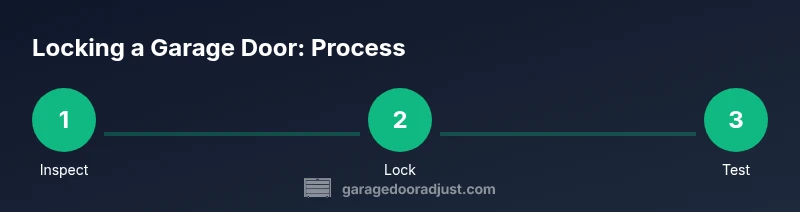
- 1
Inspect locking points
Identify all locking devices on your door (interior bolt, exterior hasp, keypad, etc.). Check for wear, alignment, and compatibility with your door type. Confirm you have the right tools handy before you proceed.
Tip: Take a quick photo of current hardware to reference during reassembly. - 2
Close the door fully
Before applying any lock, ensure the door is completely closed and moves freely along the tracks without binding. A partially open door can prevent the lock bolt from seating properly.
Tip: If the door stalls, stop and inspect tracks for obstructions or damage. - 3
Engage the manual lock
Activate the interior locking mechanism (slide bolt, lever, or keyed lock) so that it engages the strike plate. Test from the outside to confirm the door cannot be opened when locked.
Tip: Double-check that the bolt sits fully inside the strike plate without forcing. - 4
Enable opener lock or smart lock
If using an opener lock feature or a smart lock, enable it and verify status via the control panel or app. This prevents accidental remote openings when you’re away.
Tip: Keep the app updated with the latest security settings and codes. - 5
Test the lock
From inside, attempt to move the door while the lock is engaged. From outside, try the key or remote to ensure the door remains secured. Document any issues for follow-up.
Tip: Run this test in low-traffic hours to avoid blocking family activity. - 6
Secure and store keys
Put keys, remotes, and codes in a secure, known location. If you added a retrofit kit, label components for future maintenance and record the installation date.
Tip: Create a reminder to recheck locks every 6–12 months.
Got Questions?
What is the best way to lock a garage door with a manual lock?
Use a robust slide bolt or hasp lock on the interior. Ensure it fully engages with the strike plate and tests from the outside. If your door lacks a built-in lock, retrofit a compatible locking kit.
Install a solid interior bolt and test its security from both sides. If needed, retrofit a kit designed for your door.
Can I lock from outside using a padlock?
Padlocks can be used on some retrofit installations, especially older doors, but they are not universally compatible. Check clearance and ensure the padlock won’t interfere with opening mechanisms.
Padlocks can work on some doors, but verify compatibility and clearance first.
Will locking affect the garage door opener sensors?
Locking the door is a separate security step and should not disable sensors like auto-reverse. If you experience sensor issues, verify wiring and settings in the opener’s control panel.
Locking won’t usually affect sensors, but check the opener settings if something seems off.
What should I do if the locking mechanism sticks?
Stop and inspect for misalignment or obstructions. Lubricate moving parts and check mounting screws. If sticking persists, contact a licensed technician to avoid damaging springs or tracks.
If the lock sticks, inspect for misalignment and don’t force it. Lubricate and consult a pro if needed.
Is locking the door enough to prevent break-ins?
Locking dramatically improves security but should be part of a broader approach: maintain door condition, use strong codes, and keep entry points monitored. Combine with lights and alarms for better protection.
Locking helps a lot, but team it with maintenance and good security habits.
How often should I test and maintain garage door locks?
Test the lock monthly and perform a full maintenance check every 6–12 months. Regular checks prevent unexpected failures and extend the life of springs and hardware.
Test monthly and maintain every 6–12 months to prevent failures.
Watch Video
Quick Summary
- Locking is essential for garage security.
- Choose the right locking method for your door.
- Test locks after any installation or maintenance.
- Regular maintenance prevents failures.