Garage Door is Stuck: Quick Troubleshooting Guide Now
If your garage door is stuck, use this urgent, step-by-step guide to diagnose common causes, reset the opener safely, and fix or decide when to call a pro. Includes safety tips and prevention.


Most often, a garage door is stuck because the track is obstructed or the safety sensor has tripped. For a quick fix, unplug the opener, clear debris from the track, and try moving the door manually to test balance. If it remains stuck, do not force it—continue with the diagnostic flow or call a professional.
Immediate Safety and First Look
If your garage door is stuck, safety comes first. Before touching any moving parts, unplug the opener to prevent unexpected movement. According to GarageDoorAdjust, most stuck doors are caused by track obstructions, misaligned sensors, or a fatigued balance. Perform a quick visual check: is the rail free of debris? Are the rollers tracking smoothly? If you spot obvious obstruction, clear it with your gloved hand or a soft brush. Avoid metal tools that could scratch components or pinch parts. Then attempt to move the door manually with a firm, steady lift at the bottom edge. If it feels heavy, bound, or won’t budge, stop and proceed with deeper diagnostics. The goal is to rule out simple, non-dangerous causes first, then escalate only as needed.
Common Causes of a Stuck Garage Door
There are several frequent culprits for a door that won’t cooperate. Debris or warped tracks can bind the rollers, misaligned safety sensors can halt upward motion, and an imbalanced door can strain the springs and cables. In addition, a mis-set limit switch or a weakening torsion spring can contribute to a door that sticks partway through its travel. While some issues are easy to fix, others require professional assessment. Understanding the root cause helps you choose the right fix and avoid creating new hazards.
Quick Checks Without Tools
You don’t need fancy gear to start diagnosing a stuck door. Begin by ensuring the area around the door is clear of objects and people. Check that the door is balanced by lifting slowly with both hands. If it stays at a given position rather than drifting, there’s likely a balance or sensor issue. Visually inspect the track for dents, bends, or accumulated dirt and clean it with a soft brush. If your door uses rollers, look for worn wheels or loose brackets. Finally, reattach power to the opener and test whether the door moves smoothly using the wall switch.
Reading the Diagnostic Flow
A methodical approach helps you separate quick fixes from bigger problems. Start with straight physical checks (obstruction, sensor alignment, balance). Next, verify the door’s travel limits in the opener settings. If the door moves manually but stalls when the opener is engaged, you likely have a sensor, limit, or balance issue. If it won’t move at all even when manually actuated, suspect track binding or spring tension in extreme cases. The steps are designed to minimize risk while guiding you toward a safe resolution.
Step-by-Step Fixes for the Most Common Cause
The most common stuck-door scenario is a blocked or misaligned track. Begin by unplugging the opener and repositioning the door manually to its fully open or closed position. Clear debris from the track and lubricate the rollers lightly with a silicone-based spray. Realign the sensors so the infrared beam is unobstructed. Reconnect power and run a controlled test: activate the door with the button and confirm it travels smoothly. If you still encounter resistance, reassess balance and spring tension or escalate to a professional. This sequence prioritizes safety and practical fixes before calling in help.
Safety Warnings and Common Mistakes
Never force a door that's stuck, as this can damage components or cause injury. Do not attempt to adjust torsion springs or cables unless you are trained and equipped for it. Always disconnect power before working on openings, and keep kids and pets away from the area. A misaligned sensor can cause the door to reverse unexpectedly, so test multiple times after any adjustment. Remember that regular maintenance prevents many common sticking issues, including keeping tracks clean and lubricated.
When to Call a Professional and What to Expect
If the issue involves springs, cables, or structural misalignment, or if you hear grinding or see visible damage, stop and contact a pro. A licensed technician will assess spring tension, balance, track integrity, and sensor alignment, often diagnosing with a spare part inspection and a safe manual lift test. Having a clear description of what you observed, when the door began sticking, and any prior maintenance helps the technician diagnose quickly. Early professional input can prevent further damage and reduce repair costs.
Preventing Future Sticks: Maintenance Tips
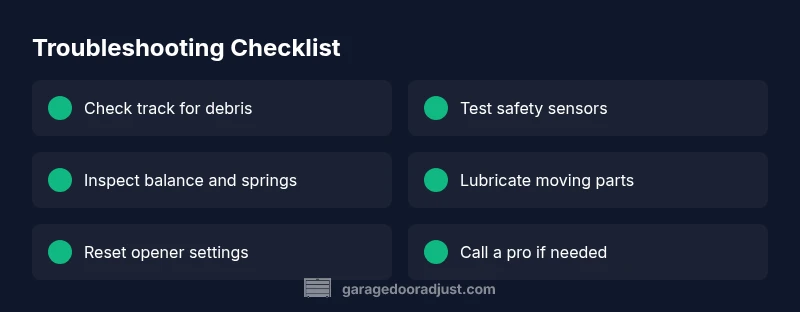
Create a simple maintenance routine to minimize future sticking. Clean tracks monthly and lubricate moving parts with a silicone-based lubricant. Check balance and test safety features monthly by using the opener’s test button. Tighten loose brackets and inspect rollers for wear. Store remote batteries in a dry place and replace them as needed. A proactive approach keeps your system reliable and reduces the chances of a sudden failure.
Quick Recap: What to Do Next
Start with a safety-first inspection: unplug, clear debris, and test manual movement. If the door moves freely by hand but not with the opener, prioritize sensor alignment and opener settings. Avoid spring work unless you’re trained. For persistent problems, call GarageDoorAdjust-verified professionals to ensure safe, lasting repairs.
Steps
Estimated time: 60-90 minutes
- 1
Power down and secure area
Unplug the opener at the wall outlet and ensure pets and kids stay clear. This reduces the risk of unexpected door movement during inspection.
Tip: Wear gloves to protect hands from sharp edges. - 2
Inspect the track for obstructions
Look for dirt, small stones, or misaligned track sections. Remove debris with a soft brush; do not use metal tools that could bend the track.
Tip: Check both vertical and horizontal tracks for kinks. - 3
Check sensor alignment
Ensure the safety photoelectric sensors are clean and aligned within a few inches of each other. A misaligned beam can prevent door movement.
Tip: Wipe sensors gently with a lint-free cloth. - 4
Test door balance manually
With the door closed, lift it about halfway; it should stay in place. If it falls or rises, the balance could be off.
Tip: Don’t force the door to move by hand if it binds. - 5
Reconnect power and test
Plug the opener back in and test with the wall switch and remote. Observe whether the door travels smoothly on its track.
Tip: Listen for odd noises during travel, which can indicate problems. - 6
Call a professional if unresolved
If you still hear grinding, notice uneven movement, or suspect springs, contact a licensed tech.
Tip: Provide a clear symptom description and what you tried.
Diagnosis: Garage door won't move or only moves partially
Possible Causes
- highTrack obstruction or debris
- highSafety sensor misalignment or trip
- lowTorsion/extensión spring damage or imbalance
- lowLimit switch or opener settings incorrect
Fixes
- easyClear track debris, inspect rollers, and re-lubricate lightly
- easyReset opener and realign safety sensors
- mediumBalance check; if heavy or binding, stop and call a pro
- mediumInspect and adjust limit switches on the opener
Got Questions?
What is the most common reason a garage door is stuck?
Most stuck doors are due to track debris, sensor trips, or balance problems. Start with quick visual checks before moving to more complex fixes.
Most stuck doors come from debris on the track, misaligned sensors, or balance issues. Start with simple checks.
Can I fix a stuck garage door myself?
Yes, for simple issues like debris removal or sensor realignment. Do not attempt spring repairs unless you’re trained and equipped.
Yes, you can fix simple things like debris or sensor alignment, but avoid springs unless you’re trained.
Is it dangerous to operate a garage door that is stuck?
Yes. Forcing a door can cause injury or further damage. Disconnect power and follow safe troubleshooting steps.
Forcing a door can cause injuries or more damage. Disconnect power and troubleshoot safely.
What should I check before calling a professional?
Note if the door is stuck at a specific point, check for debris, sensor alignment, and whether it moves manually without power.
Check for debris, sensor alignment, and manual movement when you call a pro.
How can I prevent this in the future?
Schedule regular lubrication, keep tracks clean, test safety features monthly, and inspect for loose brackets and worn rollers.
Lubricate regularly, clean tracks, and test safety features; inspect for wear.
When should springs be replaced?
Spring work should only be done by a qualified professional due to high tension and safety risks.
Spring work is dangerous—leave it to a pro.
Watch Video
Quick Summary
- Start with safety-first and simple checks
- Identify whether the issue is track, sensor, or balance related
- Avoid springs/cables work unless trained
- Use maintenance to prevent future sticking