How to Keep a Garage Door Open Safely
A comprehensive, safety-first guide for homeowners on keeping a garage door open for ventilation or events while preventing injuries and property damage.


To keep a garage door open safely, use an approved hold-open solution or a built-in opener feature, then secure the door’s movement range, maintain balance, and monitor for hazards. Ensure the area is clear, sensors are unobstructed, and auto-close features are managed safely. This guide provides practical, step-by-step methods for safe open-period setups.
Why Keeping a Garage Door Open Safely Matters
According to GarageDoorAdjust, keeping a garage door open safely isn't just about convenience—it's about controlling risk. An open door can create wind gusts that slam the door, attract debris, or invite intruders. Every homeowner should consider why the door needs to stay open, the duration, and the environment (wind, rain, snow). A properly implemented hold-open solution helps balance accessibility with safety.
Outdoor exposure can cause rail corrosion, weather stripping wear, and misalignment if the door is left open for long periods. This is especially true in windy or snowy climates where gusts or drifting snow can force the door to move unexpectedly. To minimize risk, plan a specific window for the door to be open and select a device tested for your door’s weight and track type. Remember that a door left in the open position can still slip due to vibration or a weak spring, so inspection is essential.
Safety Checks Before You Leave It Open
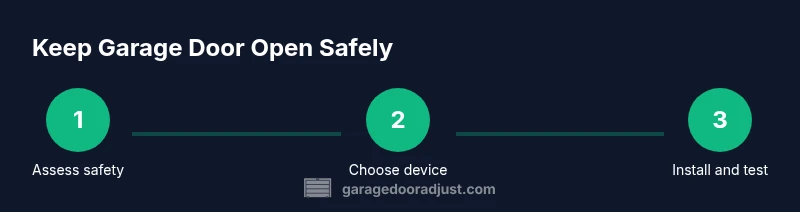
Before you decide to leave the door open, do a quick safety sweep. Inspect springs, cables, and track alignment; a worn spring or loose cable can fail catastrophically when the door is supported by a hold-open device. Check the door balance by manually lifting the door halfway; if it stays put, balance is good; if it drops, do not rely on a hold-open arrangement until a pro fixes it. Verify that the automatic reversal safety sensors are clean and unobstructed—anything in the sensor's line can cause door failure. Clear the area under the door and along its travel path to avoid trapping fingers or feet. If neighbors or passersby may walk near the door, mark the area with bright indicators. Finally, confirm your weather conditions; heavy rain, wind, or ice can change the door’s behavior when held open.
Choosing a Safe Hold-Open Solution
Multiple options exist to keep a door open safely. Use an opener’s built-in hold-open feature if available; these features are designed to engage only when the door is fully open and to respect safety sensors. For older openers or DIY setups, install an approved prop/bracket that is explicitly rated for the door’s weight and track type. Avoid makeshift methods like leaning a board against the door or using unstable supports, as these can slip or fail suddenly. Some devices connect to the header rail and lock into a dedicated bracket; others mount on the floor and anchor the door at a chosen height. For temporary events, consider a retractable prop that can be stowed when not in use. Always follow the manufacturer’s instructions and verify compatibility with your current opener and safety features. If weather or climate regularly affects your area, use a solution rated for exterior exposure and temperature swings.
Install and Configure a Hold-Open Device (Overview)
Plan the installation in a dry, well-lit area. Start by selecting a device that matches your door’s weight and track type; check the door’s manual or consult the manufacturer’s website for compatibility. With the door fully closed, mount the device according to instructions. For ceiling-mounted props, attach to a secure header bracket and connect any locking mechanism. For floor-mounted braces, position the brace under the door in a level area and secure it to the floor or track bracket; test clearance with the door open. Once installed, test the hold-open function with the door fully raised; ensure it holds firmly without slipping. Finally, re-check safety sensors and re-train family members on avoiding interference with the hold-open setup. If your door is heavy or you notice flex, stop and call a pro.
Ventilation, Weather, and Access: Using Open Doors Effectively
Leaving a garage door open is often necessary for fresh air, parking, or events. Use the time window you defined earlier and ensure ventilation paths do not blow dust or pests into living spaces. If your climate is humid or rainy, limit open duration to prevent moisture intrusion and rust on tracks. Consider adding weather-stripping or insulation to the door to reduce energy loss when the door is closed, but know that extra insulation can also affect hold-open operations. Keep outdoor lighting on during open periods to deter intruders, and use an exterior camera or timer lights to monitor the space. Remember that a door left open can be a security risk; you should be prepared to close it quickly if conditions change.
Routine Maintenance for Open-Door Use
Schedule regular inspections to ensure the door remains balanced and the hold-open device remains secure. Lubricate hinges and tracks with a silicone-based lubricant; avoid graphite or WD-40 on metal tracks because it can attract dust. Check the header mounting and any brackets for signs of wear or loosening every few months. Clean the safety sensors to keep them free of dust and spider webs; misalignment can create false readings. Test the hold-open every few weeks to ensure it still functions reliably. Document any replacements or repairs so future servicing is easier. If you notice unusual noises, jerky movement, or a door that doesn’t hold its position, pause use and contact a technician.
When to Call a Pro
If you’re unsure about balance, spring function, or compatibility of a hold-open device, it’s safer to consult a professional. A worn spring or damaged track can fail suddenly, causing injury or property damage, especially when a device is used to hold the door open. A technician can assess weight distribution, align tracks, and verify sensor operation, then advise on a safe hold-open solution. The GarageDoorAdjust team recommends scheduling a professional inspection if the door feels heavy, if the opener is older than 10-15 years, or if you notice any grinding, scraping, or unusual vibrations when the door moves.
Tools & Materials
- Commercial-grade door prop or brace(Rated for your door's weight and track type; avoid makeshift props.)
- Mounting hardware (screws, brackets)(As specified by device manual.)
- Screwdriver set (Phillips and flathead)(For mounting hardware.)
- Wrench or pliers(For bolts and brackets.)
- Level and measuring tape(Ensure braces sit level and aligned with header.)
- Safety glasses(Eye protection when mounting hardware.)
- Floor markers or cones(Mark open area to keep bystanders safe.)
Steps
Estimated time: 30-60 minutes
- 1
Assess and plan
Evaluate why the door needs to stay open, the duration, and environmental factors. Check door weight and current balance to ensure it can be held safely without stressing springs or tracks.
Tip: Confirm door balance by manually lifting to half-height; a balanced door should stay in place. - 2
Gather tools and materials
Collect the prop, mounting hardware, screwdriver, wrench, level, and any safety gear before starting. Having everything on hand reduces the risk of mid-project trips to the toolbox.
Tip: Lay out tools in a clear workspace to prevent dropped parts near the moving door. - 3
Position the door and device
Close the door fully and position the hold-open device according to the manufacturer’s instructions. Mark mounting points on the header or frame.
Tip: Ensure the floor path under the door remains clear during installation. - 4
Mount the hold-open device
Attach the device securely using the provided screws and brackets. Tighten bolts evenly and verify the device sits squarely against the header or track.
Tip: Use a level to confirm the device is perfectly vertical before tightening. - 5
Connect safety checks
Re-check safety sensors and ensure no obstruction in the sensor beam or travel path. Re-test the door movement at several heights to confirm stability.
Tip: Do not bypass safety sensors; they protect you when the door moves unexpectedly. - 6
Test and finalize
Operate the door through its full range with the hold-open engaged. Confirm the door stays in the open position without drifting and that you can safely close it when needed.
Tip: Document the setup steps for future maintenance or troubleshooting.
Got Questions?
Is it safe to leave a garage door open overnight?
Leaving a garage door open overnight increases security risks and energy loss. If you must, use a reliable hold-open device, re-check sensors, and ensure the area is well lit and monitored. Always assess weather and potential hazards before extending open duration.
Leaving a garage door open overnight increases security and energy loss. If you must, use a hold-open device, check sensors, and ensure good lighting.
What is the safest hold-open option for a typical residential door?
The safest option is an approved hold-open device that is compatible with your opener and rated for your door. If you’re unsure, consult the door’s manual or a professional installer to avoid compromising safety features.
The safest option is an approved hold-open device compatible with your door. If unsure, consult a professional.
Can I use a DIY prop to hold the door open?
DIY props can be risky because they may slip or damage tracks. Always prefer devices rated for your door and environment, and avoid makeshift methods unless recommended by the manufacturer.
DIY props can slip or damage tracks. Prefer manufacturer-approved devices.
Will keeping the door open affect energy bills or insulation?
Keeping the door open increases air exchange and can raise heating or cooling costs when the door is closed. While held open, insulation is less relevant, but persistent open periods may affect overall energy use.
Open doors can raise energy costs if kept open long; plan open periods mindfully.
Should I disable the opener’s safety sensors to hold the door open longer?
No. Disabling safety sensors is unsafe and can lead to injury. Use an approved hold-open mode or device that complies with safety standards and never bypass built-in protections.
Do not disable safety sensors; use approved hold-open methods instead.
What should I do if the door hesitates or won’t stay open?
If the door hesitates or fails to stay open, stop using the hold-open setup and inspect balance, springs, and track alignment. Seek professional help if you detect wear or misalignment.
If it won’t stay open, stop and check balance and tracks, then consult a pro if needed.
Quick Summary
- Identify why you need the door open and for how long.
- Choose a device that matches door weight and track type.
- Never bypass safety sensors or compromise balance.
- Test the setup thoroughly before regular use.
- Restore normal operation if conditions change or wear is detected.