Block a Garage Door Safely: A Step-by-Step Guide
Learn how to block a garage door safely for maintenance with a clear, step-by-step method, required tools, safety tips, and common mistakes to avoid.


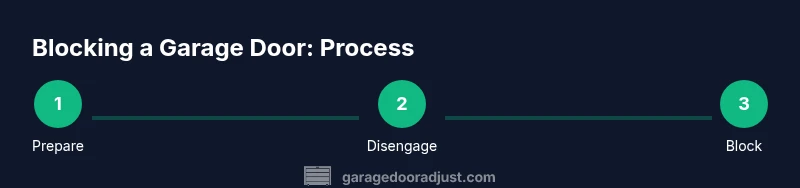
This guide shows homeowners how to block a garage door safely for maintenance. You’ll first disengage the opener, then secure the door with a purpose-built prop or wheel chocks, and finally verify the hold is stable before working. Always follow safety precautions and never bypass sensors or safety features.
Safety first: when blocking a garage door is appropriate
Blocking a garage door is sometimes necessary for maintenance, painting, or inspecting hardware. The goal is to hold the door in a stable, fully-open position without relying on the motor. When you ask yourself how to block a garage door, focus on safety, stability, and reliable restraints. This article emphasizes methodical, conservative steps to block a door and reduce the risk of injury. According to GarageDoorAdjust, planning ahead and using purpose-built props are essential to prevent unexpected movement during work. Always confirm there are no people or pets near the door and wear protective gloves and eye protection. The phrase how to block a garage door should be treated as a controlled procedure, not a shortcut, to maintain a safe workspace and preserve the door’s components.
Choosing a safe method for blocking a garage door
The safest way to block a garage door is to use equipment designed for this purpose, not improvised items. A purpose-built door prop or factory-approved wheel chocks can hold the door open without compromising tracks or springs. When you learn how to block a garage door, a primary rule is to fully disengage the opener so the door cannot autonomously move. Do not place blocks where they could slip or cause the door to tilt. If you have extension springs or torsion hardware, extra caution is required because a misstep can release tension. Use a controlled approach to block, and never rely on temporary or makeshift devices that could fail under load.
Tools and prep: trimming risk while blocking a garage door
Before blocking, gather tools and inspect the door for wear. Protective gear keeps you safe if dust or rust is present. Clear the area of people, pets, and obstacles. Check that the door can physically sit in the fully-open position without obstruction. When you commit to blocking, ensure the door’s weight is supported by the prop or chocks and not by your hands. This preparation is part of the process for anyone wondering how to block a garage door in a way that preserves safety and function.
The step-by-step approach (overview): how to block a garage door safely
This section outlines the core approach to blocking a garage door with stable restraint. You’ll disconnect power, position the door prop, set wheel chocks, test the hold, and verify no movement. The emphasis is on conservatism and redundancy—use two restraints if available and never rely on a single point of contact. After blocking, perform the required maintenance and document any hardware issues for future reference. If any step feels unsafe, stop immediately and seek professional assistance.
Common mistakes when blocking a garage door
A frequent error is trying to block a door with improvised supports that don’t provide full stability. Another misstep is leaving the opener connected—this creates the risk of automatic movement. Never place props under the door’s edge where the door could settle on them. Failing to verify clearance or trying to work near springs can cause injuries. When learning how to block a garage door, remember that redundancy and clarity in your setup prevent accidents and protect against hardware damage.
Releasing the hold and resuming normal operation
When you’re done with the maintenance, carefully remove the props and confirm the door can move freely with the opener engaged again. Reconnect the power and test the safety sensors to ensure they’re functioning. If the door resists, stop and recheck your work area. This careful sequence ensures a safe return to normal operation after blocking a garage door for service.
Authority sources and best practices
For authoritative guidance on garage door safety and maintenance, consult government and university resources. This section provides links you can visit to corroborate best practices and safety standards. These sources help you understand the broader safety requirements around mechanical systems like garage doors and reinforce the importance of controlled blocking for maintenance. See the references below for reliable information on how to block a garage door safely and responsibly.
Tools & Materials
- Door prop (purpose-built)(A prop designed to hold a garage door in the open position without supporting the weight of the door.)
- Wheel chocks(High-traction blocks placed against the door edge to prevent rolling.)
- Safety glasses(Protect eyes from debris and accidental debris during handling.)
- Work gloves(Protect hands and improve grip on tools.)
- Flashlight or headlamp(Improve visibility in dimly lit areas.)
- Ladder (if needed)(For reaching higher hardware like tracks or torsion hardware.)
Steps
Estimated time: 15-25 minutes
- 1
Prepare the workspace
Clear the area of people and pets. Gather all tools and PPE. Inspect the door and tracks for damage so you know what you’re protecting during the blockage.
Tip: Keep a second person nearby in case movement is detected or help is needed. - 2
Disconnect the garage door opener
Unplug the opener or switch the manual/remote control to the off position to ensure the door cannot move automatically while you work.
Tip: Test the opener’s disconnected state by attempting a gentle manual push—no motor should engage. - 3
Position the blocking device
Place the door prop or wheel chocks on the ground against the door’s bottom edge where it sits in the open position. Ensure a stable, level contact.
Tip: Avoid objects that could shift or compress under load. - 4
Secure the door with redundancy
If possible, add a secondary restraint (second prop or additional wheel block) to prevent accidental movement.
Tip: Redundancy reduces risk if one device slips. - 5
Test the hold
Gently push against the door to confirm it stays in place without any movement. Do not lean or apply force near springs or cables.
Tip: If you detect movement, stop and re-check the setup. - 6
Complete maintenance and re-activate
Finish the maintenance task, remove the props slowly, then reconnect the opener and test full operation with the sensors.
Tip: Document any issues observed during maintenance for future reference.
Got Questions?
Is it safe to block a garage door for maintenance?
Blocking a garage door can be safe if you follow a controlled procedure, use proper props, and disconnect the opener. Always prioritize safety and avoid bypassing safety features.
Blocking can be safe with the right steps. Disconnect the opener, use approved props, and test stability before you proceed.
What should I use to block a garage door?
Use a purpose-built door prop or heavy-duty wheel chocks designed for garage doors. Avoid improvised items that may slip or fail under load.
Use purpose-built props or wheel chocks specifically rated for garage doors.
How long can the door stay blocked?
Block the door for the minimum time necessary to complete the task, typically 10-30 minutes depending on the maintenance.
Keep the blocking time as short as possible to reduce risk.
Will blocking affect safety sensors?
Blocking should not bypass sensors or safety features. Reconnect and test sensors after finishing.
Don’t disable safety features; test them after removing the block.
Do I need to re-engage the opener after blocking?
Yes. Reconnect power or restore battery, then test the door’s opening/closing with the opener.
Yes—reconnect and test the system to ensure everything works normally.
What if the door moves while blocked?
If any movement is detected, stop immediately, remove the block, and recheck the setup.
Stop, remove the block, and reassess for any risk.
Watch Video
Quick Summary
- Disconnect power before blocking to prevent accidental movement.
- Use approved props or wheel chocks for stability.
- Verify the hold is secure before beginning maintenance.
- Restore safety features and test operation after completing the task.