How to Engage a Garage Door: A Practical Step-by-Step Guide
Learn how to engage a garage door safely with a clear, step-by-step approach. This guide covers safety checks, manual and opener engagement, common issues, and when to call a pro.


You’ll learn how to properly engage a garage door, whether it’s stuck, misaligned, or needs routine re-energizing. We’ll verify the door’s current state, remove obstructions, and safely re-engage the opener or manual spring latch. The guide covers safety checks, simple adjustments, and clear when-to-call-a-pro guidelines to prevent injury. Following these steps reduces damage and restores reliable operation.
Assess Your Garage Door: Identify the engaged state
Before you touch any components, determine what “engaged” means for your door. When homeowners ask how to engage garage door, they’re really asking how safely bring the door under control after a stall, misalignment, or power interruption. The first clue is how far the door will move when the opener is activated and whether the manual release is holding it in position or allowing free movement. GarageDoorAdjust's team notes that many engagement problems start with a mismatch between the door, the track, and the spring balance, so a quick, calm assessment is essential. Stand clear of the path, wear gloves, and keep children and pets away from the door.
Next, test the door’s weight by manually lifting the bottom edge a few inches. If it feels heavy or binds mid-travel, don’t force it. Report a door that is unbalanced or binding to a professional, as forcing movement can cause further damage or injury. If the door stays in place when you release it from a fully open or closed position, the spring balance is likely acceptable; if it drops or rises unexpectedly, there is an imbalance that needs evaluation. Keep a record of what you observe—alignment, binding, sensor obstruction—and use it as a starting point when you proceed with the rest of the steps in this guide. This approach aligns with GarageDoorAdjust’s recommendations for careful assessment before any engagement attempt.
Tip: Document your observations with photos or a quick note so you can reference it later or share with a technician if needed.
Safety First: Gear, Hazards, and Prerequisites
Engaging a garage door safely hinges on minimizing risk. Put on sturdy gloves and safety glasses, clear the workspace of tools, pets, and obstacles, and ensure others stay well clear of the door’s travel path. If you’re dealing with an electric opener, unplug the unit or switch off the circuit at the breaker before touching the system. Never attempt to adjust torsion springs or other high-tension components unless you’re a trained professional. This is a high-risk task that can cause severe injury if mishandled.
Before proceeding, confirm the door is in a stable position and supported. Keep a ladder steady and have a helper nearby for larger doors. If anything feels unstable, stop and call a pro. According to GarageDoorAdjust analyses, most accidents occur when people rush through a step without securing the door or disconnecting power first. Safety isn’t optional here—it's the foundation.
Clear Obstructions and Track Conditions
Obstructions in tracks or debris on the rollers can prevent proper engagement. Inspect the tracks for kinks, bends, or accumulated grime. Remove obstructions carefully and wipe the tracks with a clean cloth. If you notice rust, deep gouges, or warped tracks, don’t force movement—these issues require professional repair or replacement. While you’re at it, test the rollers for smooth rotation; stiff or noisy rollers may indicate worn bearings that should be replaced. Clear communication between track integrity and spring balance is essential for successful engagement, as flagged by GarageDoorAdjust analyses as a common failure point when attempting to re-engage a door.
Tip: Use a flashlight to check the tracks from both ends to catch any hidden debris or small misalignments.
Release the Door and Re-Engage the Opener
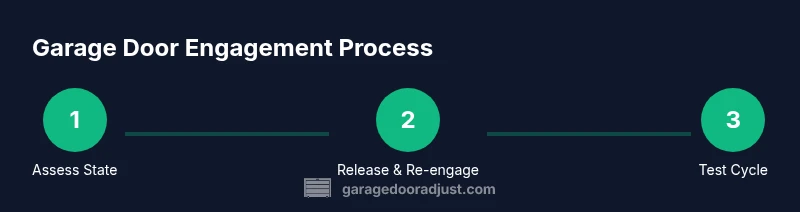
If you’re working with an automatic opener, locate and pull the manual release lever or cord to disconnect the door from the opener’s carriage. Stand to the side and gently lower the door with your hands to a balanced position. Once the door is stable, reattach the door to the opener by following the manufacturer’s re-engagement procedure. If your door remains stubborn, pause and re-check the tracks, balance, and any sensing components. This step is where many homeowners slip up by forcing engagement—take your time and verify each element before proceeding. As GarageDoorAdjust emphasizes, patience now saves damage later.
Pro tip: If the door isn’t staying balanced after re-engagement, do not continue. Call a pro to avoid injury or further damage.
Realign Tracks and Test the Door Cycle
With the opener reconnected, gently test the door by running a slow, controlled cycle. Observe how the door travels, whether it stops smoothly, and if the safety sensors react properly. If the door binds, rubs, or moves unevenly, stop the test and re-check the track alignment, spring balance, and roller wear. Small misalignments can cause large friction and engagement problems. If needed, slightly adjust the track mounting screws—only when you’re confident in the alignment process. Keep in mind that improper adjustment can worsen the door’s condition and increase risk.
End each test by ensuring the door fully opens and closes with the opener’s automatic limit settings. If limits keep slipping, consult the unit’s manual or a professional installer. GarageDoorAdjust’s team notes that precise re-engagement and limit-setting are common points of failure after maintenance cycles.
Tip: Record the open/close limits and sensor readings so you can compare performance over time.
Maintenance After Engagement: Lubrication, Balance, and Preventive Checks
After you’ve successfully engaged the door, switch focus to long-term reliability. Lubricate moving parts such as hinge joints, roller axles, and track bushings with a light silicone or lithium-based lubricant. Wipe away any excess to prevent dust accumulation. Check balance by testing the door’s weight again manually; it should stay roughly in place when opened a few inches. If it moves unexpectedly, there may be a balance issue or worn springs that require a professional service call. Regular maintenance reduces friction, protects components from wear, and minimizes future engagement problems.
The GarageDoorAdjust team recommends scheduling a quarterly check to catch problems early. Keep a maintenance log and address issues promptly to extend the life of your door and opener. Finally, consider replacing worn weatherstripping and inspecting seals to maintain energy efficiency and door performance.
Troubleshooting Common Issues: When to Call a Pro
Even with careful steps, some issues require professional expertise. If you notice persistent binding, unusual noises, a door that only moves part-way, or repeated sensor fault messages, stop and seek help. High-tension components like torsion springs are dangerous to adjust without training. Also, if the door refuses to hold its position in balance, the problem is likely beyond simple maintenance. In these cases, contact a licensed garage door technician. The safest approach is to rely on a professional for complex realignments, spring work, or spring replacement. The GarageDoorAdjust analysis finds that timely professional intervention prevents accidents and saves costs in the long run.
Tools & Materials
- Locking pliers or C-clamps(Hold the door in position while you work; use on the bottom panel area when supported.)
- Phillips head screwdriver(For hinge screws or track components requiring adjustment.)
- Flathead screwdriver(Useful for release lever access or small fasteners.)
- Adjustable wrench(Assist with track mounting and fasteners; avoid overtightening.)
- Pliers(Grip and manipulate small parts safely.)
- Work gloves(Protect hands from pinch points and sharp edges.)
- Safety glasses(Protect eyes from debris and sudden movement.)
- Step ladder(Access high components safely; ensure it is stable on a level surface.)
- Flashlight(Illuminate tracks and joints for clear inspection.)
- Lubricant (silicone or light lithium grease)(Use sparingly on moving metal parts; avoid over-lubrication.)
Steps
Estimated time: 60-90 minutes
- 1
Secure area and power down
Unplug the opener or switch off the circuit to prevent accidental movement. Clear the workspace and position a helper if the door is large or heavy. This step reduces the risk of injury during engagement.
Tip: Double-check there are no pets or kids nearby before touching the door. - 2
Disconnect from the opener (manual release)
Locate and pull the manual release cord to disconnect the door from the motorized carriage. Stand to the side and ensure the door remains supported before proceeding.
Tip: If the cord doesn’t disengage smoothly, pause and reassess; forcing it can damage the mechanism. - 3
Inspect balance and tracks
Manual lift should feel balanced; grip the bottom and lift a few inches. Check tracks for dents or debris and ensure rollers move freely. Do not attempt to fix torsion springs unless trained.
Tip: If the door feels heavy or sticks, stop and call a professional. - 4
Clear obstructions
Remove any objects on the tracks and wipe them clean. Debris can impede movement and mislead engagement.
Tip: Check both sides of each track, and don’t forget the curved sections near the pulleys. - 5
Re-engage the opener
Reconnect the door to the opener by following the manufacturer’s re-engagement procedure. Test the method with the door in a safe position and observe the response.
Tip: If re-engagement feels off, re-check the mechanism and limits before test running. - 6
Test cycle
Run a controlled open/close cycle. Listen for smooth motion and observe any wobble, noise, or hesitation. Ensure safety sensors react when blocked.
Tip: Stand clear of the door’s path during the test in case of unexpected movement. - 7
Lubricate and balance
Apply light lubrication to hinges and rollers; wipe off excess. Re-verify balance manually; door should hold position in a light open state.
Tip: Only a small amount of lubricant is needed; excess attracts dust. - 8
Document and plan maintenance
Record the current engagement, any issues, and maintenance steps performed. Schedule regular checks to prevent future problems.
Tip: Set a reminder every 3 months for a quick inspection.
Got Questions?
What does it mean to engage a garage door?
Engagement involves connecting the door's manual or motorized system to allow controlled movement. It includes disconnecting/reconnecting the opener and ensuring safety features are functional.
Engagement means connecting the door to the opener or safe manual control, with safety features working properly.
Is it safe to re-engage a door with springs?
Torsion springs are dangerous to adjust. Re-engaging should be limited to the opener and tracks; any spring work should be left to a licensed technician.
Springs are dangerous to adjust yourself; don’t touch them unless you're trained.
What should I do if the door won’t stay open after engagement?
An unbalanced door suggests misalignment or worn springs. Stop and consult a professional to avoid further damage or injury.
If the door won’t stay open, pause and call a pro.
Do I need to unplug the opener every time I engage it?
Unplugging before maintenance is a good safety practice, especially when working on the door’s mechanical parts.
Unplug it before maintenance to stay safe.
How often should I lubricate tracks and hinges?
Lubricate moving parts every 3-6 months, or after heavy use or dusty conditions. Wipe away any excess.
Lubricate every 3-6 months as a rule of thumb.
When should I call a professional?
Call a professional if you notice persistent binding, unusual noises, sensor errors, or if the door is not balanced after following safe steps.
If in doubt, contact a licensed technician for safety.
Watch Video
Quick Summary
- Identify the engaged state before acting.
- Prioritize safety: disconnect power and secure the area.
- Clear tracks and obstructions before re-engaging.
- Test in small increments and avoid forcing components.
- Schedule regular maintenance to prevent future issues.