How to service a garage door: A complete step-by-step guide
Learn how to safely service a garage door with a practical, step-by-step guide. Inspect hardware, lubricate moving parts, test balance and safety sensors, and perform opener maintenance. Includes tools, safety tips, and when to call a professional for complex repairs.


By the end of this guide you will be able to service a garage door safely and effectively. You’ll inspect hardware, lubricate moving parts, test balance, and perform basic opener maintenance. Gather essential tools, unplug the opener, and follow the step-by-step process to prevent costly repairs and keep your door reliable. This approach emphasizes safety and long-term reliability.
Why regular service matters
Regular service of a garage door isn’t optional; it’s a safety practice and a long-term investment. When you service a door regularly, you catch worn parts before they fail, keep noise down, and reduce the risk of sudden door failure that could injure someone or damage property. According to GarageDoorAdjust, homeowners who commit to regular service experience fewer emergency repairs and enjoy smoother operation. The GarageDoorAdjust Team emphasizes that routine checks toward the start of each season help identify issues such as loose fasteners, worn hinges, or dry rollers that can escalate into costly repairs if ignored. In this guide, you will learn how to plan a simple maintenance routine, what parts to inspect, how to lubricate correctly, and how to test the door and opener to ensure reliable operation. We’ll cover tools, step-by-step actions, and practical tips, including safety precautions and common mistakes to avoid. By the end, you’ll have a repeatable process you can perform in under an hour for a standard residential garage door.
Safety first: essential precautions
Before you touch anything, make a safety plan. Always disconnect power to the opener and secure the door in the open position so it can’t close unexpectedly. Wear closed-toe shoes and gloves to protect your hands from sharp edges and pinch points. Keep children and pets away from the work area, and avoid standing under the door while you’re servicing it. If you notice frayed cables, corroded springs, or any sharp metal edges, stop and reassess. Patience matters more than speed here; rushing a maintenance task invites mistakes that could lead to injury or damage.
Your toolbox and consumables: what you’ll need
A well-prepared toolbox makes maintenance easier and safer. Gather basic hand tools, a silicone-based lubricant for tracks and hinges, a light penetrant for sticky hardware, clean rags, a sturdy ladder, and safety glasses. If you discover worn rollers or damaged tracks, note them for replacement. This section also covers how to store spare bolts and screws so you don’t mix parts from different locations. Remember, the goal is a clean, well-lubricated system with secure fasteners and no signs of excess wear.
Step-by-step inspection and lubrication
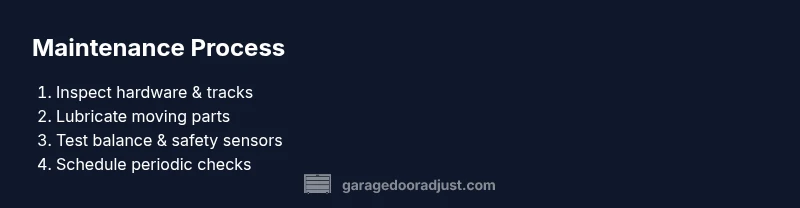
Follow a structured sequence to avoid missing critical components. Start by disconnecting power and securing the door, then inspect springs, cables, and anchors for wear or damage. Move on to tracks and rollers, clearing debris and guiding wheels along the tracks to check for smooth travel. Lubricate hinges, rollers, and pivot points with a silicone-based lubricant, applying sparingly and wiping away excess. Keep diagrams or manufacturer references handy for reference, and compare what you see with a typical wear pattern. If anything looks off, don’t force it. Extending the life of your door is about aligning components, not forcing misaligned parts.
Tension, balance, and fasteners: fine-tuning for reliability
A well-balanced door requires that lifting force is evenly distributed across springs and cables. Check that all fasteners on the door’s panel and in the mounting hardware are snug but not overtightened. If the door feels heavy when lifting manually, or if it closes with a strong jerk, the balance or tension may be off. Use light, gradual adjustments where necessary and confirm the door still travels smoothly in both directions after adjustments. For safety, never attempt to modify torsion springs beyond what you can see in the homeowners’ guide. This is a common area where DIY can go wrong without proper training.
Safety sensors and opener maintenance
Test the door’s auto-reverse sensor by placing an object on the floor in the path of the door and ensuring it stops and reverses. Clean the photo-eye sensors to ensure a clean signal, and align them if needed according to the manufacturer’s specifications. Inspect the opener’s mounting brackets and ensure the rail is free of obstructions. If you notice the door hesitating or the opener struggling to lift the door, this could indicate an issue with balance or internal components. Regular maintenance improves reliability and reduces the chance of sudden failures.
Troubleshooting common issues and when to call a professional
Common issues such as grinding noises, uneven travel, or doors that drift can often be addressed with lubrication or a simple tightening of hardware. However, when you encounter frayed cables, exposed springs, or a door that won’t stay open, it’s time to pause and call a professional. GarageDoorAdjust’s experience shows that complex spring work, pulley systems, and electronic sensor alignment are high-risk tasks suited to trained technicians. Record what you observe, note any noises, and prepare your door’s model and serial number to speed up service calls.
Final testing and routine maintenance plan
After completing servicing, perform a full cycle test: close, open, and re-test the safety features. Listen for unusual sounds, watch the door’s movement, and verify it stops at the floor. Establish a seasonal maintenance routine that includes cleaning tracks, lubricating moving parts, and inspecting fasteners. The goal is to keep the door operating smoothly year-round and to identify issues before they escalate, helping you avoid unexpected breakdowns.
Tools & Materials
- Safety glasses(ANSI Z87.1 rated; protects eyes from debris and springs)
- Work gloves(Grip and protection against sharp edges)
- Sturdy ladder(Stable surface, preferably with a helper at arm’s length)
- Set of screwdrivers (Phillips and flat-head)(For fasteners on hinges and brackets)
- Wrench set(Open-end and box-end wrenches for bolts and fasteners)
- Silicone-based garage door lubricant(Spray on tracks, hinges, and pulleys; avoid overuse)
- Rags or towels(Wipe excess lubricant and clean tracks)
- Light penetrant or penetrating oil(For stubborn bolts; use sparingly)
- Owner’s manual or manufacturer guide(Useful reference for specific parts or torque values)
- Notebook and pen(Document observations and maintenance steps)
Steps
Estimated time: 60-120 minutes
- 1
Disconnect power and secure the door
Begin by unplugging the garage door opener from its outlet and, if possible, disconnecting the emergency release cord to prevent accidental movement. Open the door fully and secure it in place to avoid sudden downward movement during service. This initial safety check protects you from unexpected closures and pinched fingers.
Tip: Keep a helper nearby and double-check that the door won’t move before you start. - 2
Inspect springs, cables, and anchors
Look for any signs of wear, rust, gaps, or deformation on torsion springs (if visible), cables, and anchor points. Do not attempt any adjustments if you see fraying or deformation—these can be dangerous. Document findings with photos to reference later or when contacting a pro.
Tip: If you’re unsure about spring condition, treat it as suspect and proceed with non-spring tasks first. - 3
Check tracks and rollers for debris
Examine the tracks on both sides for dents, corrosion, or obstructions. Manually move the rollers in the track to confirm smooth operation; remove debris with a soft brush or compressed air if needed. Clean and lightly lubricate the track with silicone lubricant, avoiding heavy buildup that could attract more dust.
Tip: Use a flashlight to spot hidden debris in corners of the track. - 4
Tighten fasteners and check alignment
Tighten loose mounting screws and brackets on the door panels and track hardware. Confirm the tracks are straight and properly aligned so the door travels evenly. Do not force misaligned parts; note any misalignment for professional adjustment.
Tip: Tighten in a criss-cross pattern to avoid warping the door frame. - 5
Lubricate moving parts
Apply a light coat of silicone-based lubricant to hinges, rollers, and pivot points. Wipe away excess to prevent drips on the door surface or floor. Avoid lubing torsion springs or bearings not intended for lubrication, as improper lubrication can cause more wear.
Tip: Lubricate sparingly and wipe clean with a rag. - 6
Test manual balance and door weight
Gently lift the door halfway with minimal resistance to check balance. The door should stay in place when unsupported. If it drops or rises rapidly, the balance may be off and should be checked by a professional.
Tip: Keep one hand nearby to catch the door if it begins to move unexpectedly. - 7
Test safety features and opener response
With the door closed, test the auto-reverse feature by placing an object in the door’s path; the door should reverse when contact is made. Inspect safety sensors for clean alignment and clear line of sight. Run the door through a few cycles to confirm reliable operation.
Tip: If the door fails to reverse, stop use and schedule service immediately. - 8
Reconnect power and perform a full cycle
Reconnect the power and run the door through several cycles. Listen for unusual noises and observe any sticking points or jerky movements. Record observations for future reference and schedule turning points for periodic maintenance.
Tip: Aim to complete this test in a calm, controlled environment with a helper ready to intervene if needed.
Got Questions?
How often should I service a garage door?
Most homeowners should perform general maintenance twice a year, ideally before demanding seasons like winter and summer. This helps catch wear early and keeps the door operating smoothly.
Most homeowners should service their garage door twice a year to stay ahead of wear and ensure reliable operation.
Can I service a garage door myself?
Yes for basic tasks like lubrication, tightening hardware, and testing sensors. Do not attempt spring or cable adjustments unless you have professional training.
You can do basic maintenance yourself, but avoid spring or cable work unless you’re trained.
Is it safe to adjust torsion springs myself?
No. Torsion springs are dangerous and require specialized tools and training. Improper handling can cause severe injury or worse.
Torsion springs are dangerous to adjust yourself; call a professional for spring work.
What signs indicate I need a pro?
If you hear grinding, see visible wear, notice uneven movement, or your door won’t stay balanced, it’s time to call a professional.
If you hear grinding or the door behaves oddly, contact a professional.
What tools are essential for maintenance?
A basic tool set plus silicone lubricant, rags, and a ladder cover most maintenance tasks. Keep the manufacturer manual handy for model-specific instructions.
You mainly need a basic toolkit and silicone lubricant for standard maintenance.
Should I replace damaged rollers or tracks myself?
Only if you are trained and have the right safety setup. Damaged tracks or rollers should be replaced by a professional to avoid injury.
Damaged tracks or rollers are a job for a pro if you’re not trained.
Watch Video
Quick Summary
- Inspect hardware for wear before each season.
- Lubricate tracks and hinges to reduce noise.
- Test balance and sensors regularly.
- Do not adjust springs yourself; call a pro for spring work.
- Maintain a simple annual maintenance plan for reliability.