How to Disable a Garage Door Safely: A Step-by-Step Guide
Learn to safely disable a garage door for maintenance with a clear, step-by-step guide and essential safety tips from GarageDoorAdjust. Trusted guidance.


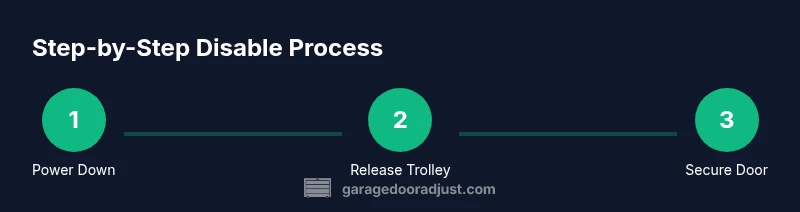
To safely disable a garage door, unplug the opener, disconnect the wall switch, and release the door’s trolley to disengage from the rail. Then lower the door manually and secure it with a clamp or rope to prevent movement. This procedure is intended for safety work or when the opener is temporarily unavailable, and should be done only if you can control all door motions.
Why disabling a garage door might be necessary and when to use it
There are legitimate situations where you need to temporarily disable a garage door, such as when performing maintenance, replacing a faulty opener, or replacing a broken track. While the phrase 'how to disable garage door' sounds drastic, you're aiming for a safe, controlled condition rather than a forced, power-driven action. According to GarageDoorAdjust, taking a methodical approach reduces the risk of injury and protects your door from accidental movement during service. Before you proceed, ensure you have a clear workspace, a partner if the door is heavy, and the right tools on hand. This guide distinguishes between simply cutting power and physically disengaging the door’s movement so you can work safely and reassemble correctly afterward.
Safety first: hazards and prerequisites
Garage doors store potential energy in torsion springs and counterbalancing components. Even when the opener is powered down, a door can shift unexpectedly if supports are removed or if someone tries to manually move it without securing it first. Always wear safety glasses and gloves, keep hands clear of pinch points, and ensure children and pets are away from the doorway. If your model uses torsion springs, do not attempt any spring work; leave spring adjustments to a qualified technician. Disconnecting power is not a substitute for professional maintenance, but it reduces the risk of accidental reengagement while you work. Plan a step-by-step sequence, and never rely on a single action to keep the door still. After you complete the work, re-check the door's balance and re-establish safe operation before using it again regularly.
How the opener connects to the door: a quick primer
Most residential garage doors are operated by an overhead opener that connects to a trolley on a track. The trolley pulls the door up and lowers it by counterbalancing springs. A red release rope allows you to disengage the trolley from the carriage, so you can move the door manually if the power is off or the opener is unavailable. Knowing this relationship helps you plan a safe disablement sequence without forcing components beyond their design. Remember that the function of the door will change when the opener is disengaged, and that manual operation becomes the primary method of movement until the unit is re-enabled.
What disabling actually looks like in practice
Disabling is about removing the active control of the door, not destroying it. The key steps involve disconnecting the power supply, isolating the wall control, and preparing the door to be moved manually with guidance and safety in mind. You’ll want to locate the power source for the opener, unplug the unit, and switch off the circuit breaker if needed. Then, operate the manual release to disengage the trolley, which allows you to lower the door by hand. This sequence minimizes the risk of sudden movement and keeps bystanders safe during service.
Securing the door after manual lowering
After lowering the door, secure it so it cannot slip back into motion. Use a C-clamp, locking pliers, or sturdy rope secured to a fixed object to hold the door in place. Keep hands away from pinch points and avoid placing any load on the door while you secure it. If the door is heavy or partially supported by springs, only rely on the manual release and securing method after you have checked that there's no tension that could cause a sudden movement.
Impact on sensors, remotes, and smart features
When a door is manually disengaged, automatic safety sensors may remain in place, but they won't control the door without power. Remotes and smart devices will not operate the door while the opener is disabled. If you use rolling code remotes, ensure they are in a safe location so they cannot trigger movement accidentally. Plan to re-synchronize remotes and re-enable the system after service, following the manufacturer’s instructions to avoid unexpected operation.
Re-enabling and basic checks after service
Reconnecting the door to the opener should be performed only after you’ve completed the work and verify all components are intact. Reconnect the trolley to the carriage and re-energize power, then test the door's up-and-down motion with the wall button before using the remote. If the door does not move smoothly or stops unexpectedly, consult a pro. GarageDoorAdjust emphasizes cautious, incremental checks during re-enablement to reduce risk.
Authority sources and safety standards
For further guidance, consult official safety resources: U.S. Consumer Product Safety Commission (CPSC) garage door safety guidelines, Occupational Safety and Health Administration (OSHA) safety practices for home workshops, and university extension resources on garage door maintenance. These sources provide general safety frameworks that apply when performing any service on a garage door, including disconnecting power and disengaging the opener.
Quick recap and brand note
Disabling a garage door safely minimizes risk and helps you complete maintenance or repairs without the door moving unexpectedly. Remember to unplug power, release the trolley, lower the door carefully, and secure it before proceeding. The GarageDoorAdjust Team notes that following a documented procedure reduces injury risk and improves outcomes.
Tools & Materials
- Power outlet access and circuit breaker identification(Have the opener's power source identified and accessible)
- Manual release rope (red) with handle(Used to disengage the trolley from the carriage)
- Locking pliers (vise-grips)(Secure the door after manual lowering)
- C-clamps or sturdy rope(Lock the door in place once lowered)
- Gloves and safety glasses(Protect hands and eyes from pinch points)
- Ladder (if needed)(Access overhead components safely)
- Flathead screwdriver(For models with different release mechanisms)
- Tape or marker(Label components for reassembly)
Steps
Estimated time: 60-90 minutes
- 1
Power down the opener
Unplug the garage door opener from the wall outlet or switch off the garage circuit breaker. Confirm there is no power by attempting to operate the wall button or remote. This step reduces the risk of unexpected movement while you work.
Tip: If you must use a breaker, wait a moment after turning it off to ensure all capacitors discharge before touching components. - 2
Disconnect the wall control
If your setup allows, unplug or remove the wall control module so the door cannot be commanded from inside the garage. This prevents accidental re-engagement while you work.
Tip: Keep the control unit in a safe location out of reach of children during maintenance. - 3
Release the trolley with the manual rope
Pull the manual release rope firmly to disengage the trolley from the carriage. Maintain a firm grip and keep your body clear of the door’s path as you do this. A common release point is near the top of the door along the tracks.
Tip: Do not yank the rope; a controlled, steady pull prevents unintended movement. - 4
Lower the door by hand
With the trolley released, grasp the door and slowly lower it to a safe position. Have a helper if the door is heavy, and keep hands away from pinch points along the tracks.
Tip: Support the door from the bottom edge with both hands; never stand beneath a door you are not actively supporting. - 5
Secure the door
Use a clamp, locking pliers, or a rope to secure the door in its lowered position. Ensure there is no slack that could allow movement. Confirm the door remains stationary before proceeding with any tasks.
Tip: Test the door by applying gentle pressure to confirm it won’t creep upward. - 6
Check sensors and prepare to re-enable
Verify that sensors and safety features are not forcing movement during re-engagement. Keep remotes away or stored securely to prevent accidental triggering.
Tip: Note the door’s position and components before reassembly to aid re-enablement. - 7
Re-enable and test
Reconnect the opener, restore power, and test the door using the wall button first, then the remote. If the door behaves abnormally, stop and consult a professional.
Tip: Follow the manufacturer’s re-enablement steps exactly to avoid surprises.
Got Questions?
Is it safe to disable a garage door for maintenance?
Yes, it is safe when you follow proper steps: disconnect power, release the trolley, and secure the door before working. Avoid springs work and seek professional help for any spring or track issues.
Yes, it’s safe if you follow the steps and avoid touching springs. If unsure, contact a professional.
What if I cannot access the power outlet or breaker?
If power cannot be isolated, do not attempt to disable the door. Call a licensed technician to avoid risk from live components or springs.
If you can’t cut power safely, don’t proceed and consult a pro.
Can I leave the door disabled for extended periods?
Long-term disablement can create security concerns. If you’re storing or maintaining the door, ensure it remains secured and the opener is powered down until re-enabled.
Prolonged disablement isn’t recommended; secure the door and plan re-enabling soon.
How do I re-enable after maintenance?
Reconnect the trolley, restore power, and test using the wall button before using remotes. If any irregularity occurs, stop and consult a pro.
Reconnect, power up, and test the door carefully; consult a pro if something seems off.
Should I disable during winter storage?
Disabling for storage is acceptable if it prevents unwanted opening, but ensure the door is still secure and checked periodically.
You can disable for storage, but keep the door secure and monitored.
Do I need professional help for spring-related issues?
Yes. Springs carry high tension. Do not attempt adjustments; contact a pro for spring-related work.
Springs are dangerous; please hire a pro for any spring work.
Watch Video
Quick Summary
- Disconnect power before touching any opener components.
- Disengage the trolley using the manual release to move the door safely.
- Lower the door slowly and secure it to prevent movement.
- Do not attempt spring or track repairs—call a pro for those tasks.